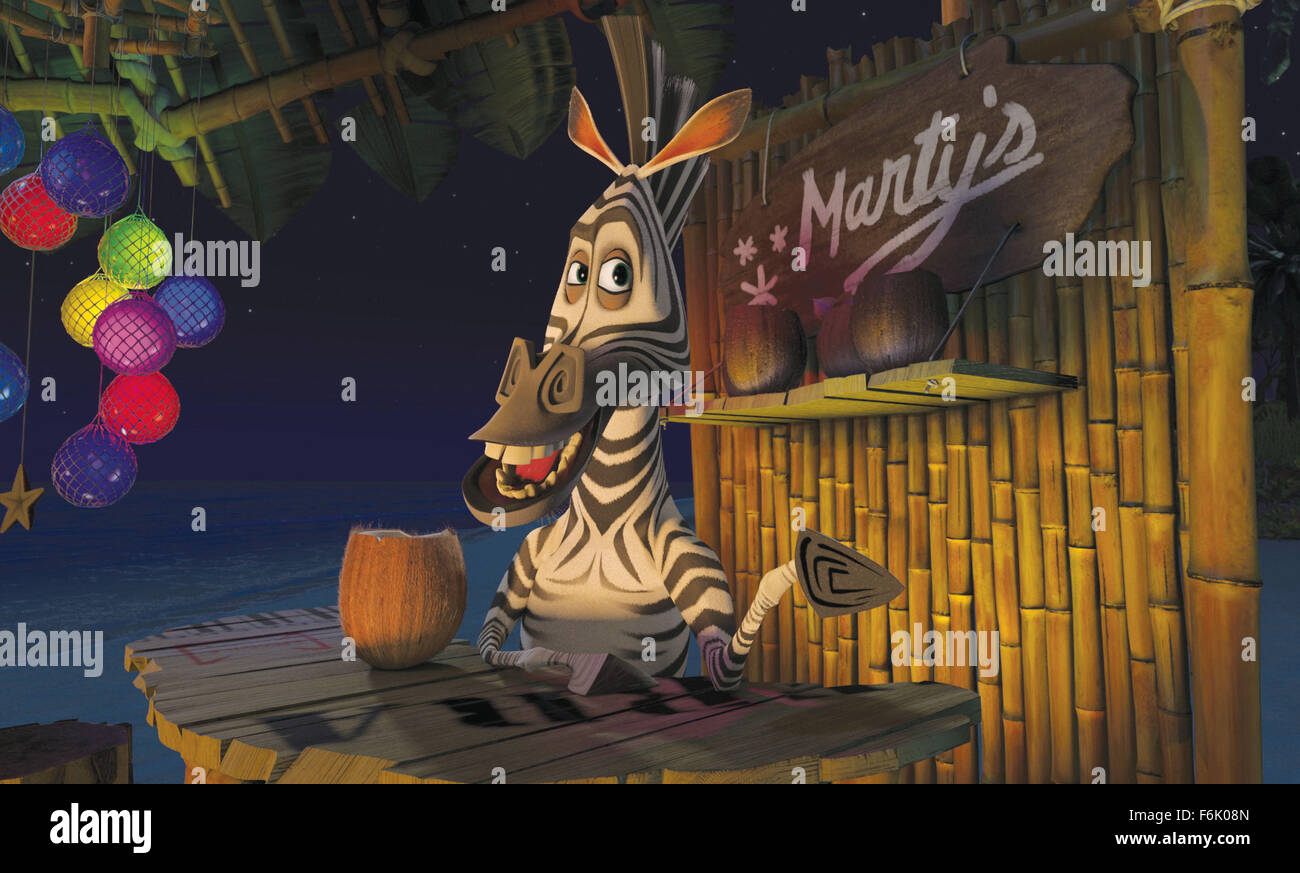
When you think of a zebra with a mid-life crisis, only one voice pops into your head. It’s high-pitched. It’s loud. It’s got that signature Brooklyn rasp that feels like it’s vibrating through the screen. Chris Rock is the man behind Marty, the zebra who decided Central Park just wasn't enough.
Honestly, it’s hard to imagine anyone else doing it.
The year was 2005. DreamWorks was trying to find its footing against the Pixar juggernaut. They needed something punchy. They needed "star power" that didn't just feel like a name on a poster but actually brought a specific energy to the character design. When Chris Rock signed on to play Marty, he didn't just read lines; he basically dictated the rhythm of the entire movie. You can see it in the way Marty moves—the fast-talking, the constant pacing, the wide-eyed optimism mixed with sharp sarcasm.
The Casting Genius: How Chris Rock Became Marty
Casting a voice actor isn't just about finding a famous person. It's about finding a frequency. For Madagascar, the directors—Eric Darnell and Tom McGrath—needed a foil for Ben Stiller’s Alex the Lion. Alex is the "king" of New York, a bit of an ego-maniac but ultimately a creature of comfort. To make the plot work, the zebra had to be the catalyst. He had to be the dreamer.
Who voices the zebra in Madagascar? It's a question people ask because the performance is so distinct that it transcends the animation. Chris Rock brought his stand-up comedy DNA to the recording booth. If you listen closely to Marty’s rants about "the wild" or his "crack-a-lackin" catchphrases, you're hearing the same cadence Rock uses in his HBO specials.
It’s kind of wild when you think about the recording process. Usually, these actors are in the booth alone. They aren't looking at Ben Stiller or David Schwimmer. They’re staring at a script and a music stand. Yet, the chemistry between Marty and Alex feels electric. That’s partly due to the writers tailoring the dialogue to Rock’s specific comedic timing. He has this way of stretching out vowels and hitting consonants hard that animators absolutely love because it gives them so much "squash and stretch" to work with in the facial expressions.
Beyond the First Movie: A Decade of Stripes
Chris Rock didn't just show up for a paycheck once and bail. He stayed with the character through three massive feature films and several specials.
- Madagascar (2005): The origin story where Marty triggers the escape.
- Madagascar: Escape 2 Africa (2008): Where Marty deals with the existential dread of being "just like every other zebra."
- Madagascar 3: Europe's Most Wanted (2012): The psychedelic circus chapter.
- Merry Madagascar and other shorts.
In the second film, there’s a scene where Marty finds a whole herd of zebras that look and sound exactly like him. Chris Rock ended up voicing dozens of zebras in that sequence. It was a meta-commentary on his own voice. How do you make a character stand out when everyone has the same stripes and the same Brooklyn accent? Rock managed to keep Marty’s specific brand of "Alex-obsessed loyalty" at the forefront, even when he was essentially talking to himself for ten minutes of screen time.
Why Marty Resonates So Much Better Than Other Sidekicks
Sidekicks in animated movies can be annoying. Let’s be real. Sometimes they’re just there to sell plush toys or make fart jokes. Marty is different because his motivation is actually relatable. He’s a guy turning ten years old (which is middle-aged for a zebra, apparently) and realizing he’s never actually seen a blade of grass that wasn't manicured by a zookeeper.
Chris Rock plays that yearning with a mix of sincerity and comedy. When he says, "I'm ten years old. My life is half over and I don't even know if I'm black with white stripes or white with black stripes," it’s funny, but it’s also a legitimate identity crisis.
The performance became so iconic that it influenced how zebras are portrayed in pop culture for years. Before Marty, zebras were just "horse-adjacent" background animals. After Rock, they became the cool, slightly frantic, jazz-loving urbanites of the animal kingdom.
The Competition and the "DreamWorks Face"
At the time, DreamWorks was leaning heavily into the "celebrity voice" trend. You had Will Smith in Shark Tale and Mike Myers in Shrek. Some critics argued that this was a lazy way to get adults into theaters. But with Marty, the celebrity isn't a distraction. You forget you’re listening to the guy who hosted the Oscars. You just see a zebra who really, really wants to go to Connecticut (because he thinks that’s where the wild is).
Interestingly, while Chris Rock is the definitive voice, the Madagascar franchise grew so big that other people had to step in for spin-offs.
In the TV series The Penguins of Madagascar, Marty doesn't actually appear as a main character, but in other media like Madagascar: A Little Wild, the younger version of the character is voiced by Shaylin Becton. It’s a different vibe—younger, softer—but you can still hear the echoes of the cadence Rock established back in '05.
The "Crack-a-Lackin" Legacy
Is Marty the zebra the peak of Chris Rock’s career? Probably not if you ask a stand-up purist. But in terms of global reach? Absolutely. There are kids in countries who have never seen a minute of Saturday Night Live who can recite Marty’s lines by heart.
The success of the character also paved the way for more "personality-driven" animation. Producers realized they didn't just need a voice; they needed a brand. Rock’s Marty is a brand. He represents the bridge between the grit of New York City and the vibrant, chaotic energy of the natural world.
What You Might Not Know About the Recording
Producers often mention that Rock was one of the more active performers in the booth. He wasn't just standing still. He was gesturing, jumping, and basically performing a solo show. This is why Marty’s physical movements in the film feel so "human." The animators watched the reference tapes of Rock recording and mimicked his shoulder shrugs and the way his mouth moves to one side when he’s being skeptical.
Also, the "Afro Circus" song from the third movie? That was a viral sensation before TikTok even existed. It’s a nonsensical, earworm-heavy bit of dialogue that Rock turned into a cultural moment. It’s arguably the most famous thing Marty ever did, and it’s basically just Chris Rock being silly for thirty seconds.
Final Takeaways on the Voice of Marty
If you're looking for the short answer to who voices the zebra in Madagascar, it's Chris Rock. But the long answer is that Chris Rock is Marty. He took a character that could have been a generic talking animal and gave it a soul, a nervous system, and a very loud mouth.
To truly appreciate the performance, you have to look at the nuances:
- The Cadence: Rock’s ability to jump from a whisper to a scream in three words.
- The Comedy: He brought "adult" comedic timing to a PG movie without making it inappropriate.
- The Consistency: Over three films, the character grew, but that core Brooklyn energy never wavered.
Next time you're watching, pay attention to the scenes where Marty isn't even talking. Look at his expressions. You'll see the essence of 90s and 2000s stand-up comedy translated into a striped quadruped. It's a masterclass in how to voice an animated character so well that the actor and the animation become inseparable.
If you want to dive deeper into the world of Madagascar, your best bet is to re-watch the original trilogy with the commentary tracks on. You’ll hear firsthand from the directors how much Rock improvised and how many of Marty's funniest lines were actually born from Rock just riffing in the booth because he was bored or inspired. Then, go back and watch his stand-up—you'll never see Marty the same way again.
Check out the behind-the-scenes "Making Of" featurettes often found on physical media or streaming extras. They show the side-by-side comparisons of the voice actors in their booths and the final rendered scenes. It’s the quickest way to see how much of Chris Rock’s physical comedy made it into Marty’s hooves.