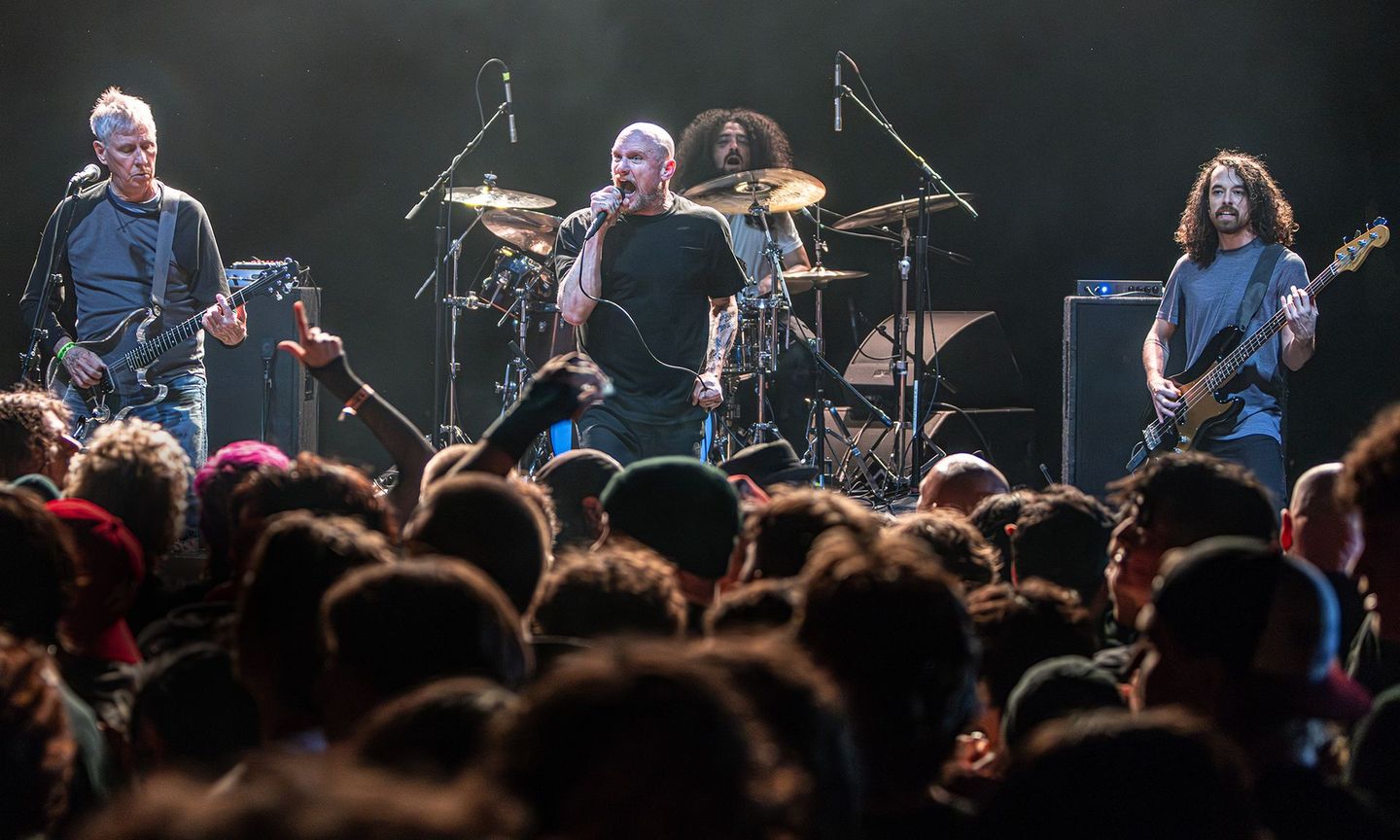
Black Flag wasn't really a band in the way people think of bands today. It was more like a war of attrition. If you look at the list of black flag band members over the years, it looks less like a roster and more like a revolving door in a high-intensity trauma ward. It’s messy. Greg Ginn, the guitarist and the only guy who stayed from the first practice to the bitter end, ran the thing like a boot camp. People didn't just quit; they burned out, got fired, or simply vanished into the California sun because they couldn't take the rehearsal schedule anymore. We’re talking about a group that would practice for eight hours a day in a windowless room just to play a twenty-minute set in a basement. It was brutal.
Honestly, the sheer volume of people who cycled through the group is what gave them that jagged, evolving sound. You can’t swap out a drummer or a singer every six months and expect to sound like the Eagles. Thank god they didn't. From the early Hermosa Beach days to the sludge-heavy experimentation of the mid-80s, the personality of the band shifted based entirely on who was sitting in the van at that specific moment.
The Singers: More Than Just Henry Rollins
When most people think of black flag band members, they immediately picture Henry Rollins. The neck muscles, the black shorts, the intensity. But Rollins was actually the fourth guy to hold the mic. Before him, the band had a completely different energy.
Keith Morris was the original. He brought this snotty, frantic, West Coast beach-punk vibe that defined the Nervous Breakdown era. It was fast. It was catchy. It was suburban angst at its most raw. But Keith couldn't handle the internal pressure—or the rehearsals—and left to form the Circle Jerks. Then came Ron Reyes (credited as Chavo Pederast on some releases), who brought a bit more grit but famously quit mid-show because he was over the violence and the vibe.
Then there was Dez Cadena. Dez is a legend because he actually wanted to play guitar, but he stepped up to sing when they were desperate. His voice was deeper, more of a growl. It changed the texture of the band’s music, moving it away from "pop-punk" (before that was a bad word) and into something darker. When his voice started to give out, he moved to rhythm guitar, which opened the door for a fan from Washington D.C. named Henry Garfield to audition.
Henry, of course, became Henry Rollins. He didn't just join the band; he became the avatar for Greg Ginn's increasingly complex musical visions. Rollins had the discipline to survive Ginn. He was a machine. While previous singers felt like kids having a riot, Rollins felt like a soldier performing a task. That shift is why Damaged sounds like a punch in the face while My War sounds like a slow-motion car crash. Both are brilliant, but they are products of different humans standing at the front of the stage.
The Rhythm Section Meat Grinder
If being the singer was hard, being the drummer for Black Flag was a death sentence for your wrists. Greg Ginn’s writing moved from simple 4/4 punk beats into these weird, polyrhythmic, jazz-influenced nightmares.
The early days saw Brian Migdol and ROBO (Roberto Valverde). ROBO was essential. He had this steady, metronomic style that kept the chaos grounded. He’s the one you hear on Damaged. But because of visa issues—he was Colombian—he got stuck in England after a tour, and the band had to move on. This led to a string of replacements that included Bill Stevenson of Descendents fame.
- Bill Stevenson: He’s arguably the most "musical" drummer they ever had. He brought a technical precision that allowed Ginn to get weirder.
- Chucking Dukowski: We have to talk about Chuck. He wasn't just the bass player; he was the band’s intellectual powerhouse and "vibes" coordinator. His bass playing was huge, clunky, and aggressive. When Ginn pushed Dukowski out in 1983, a lot of people felt the heart of the band left with him.
- Kira Roessler: She replaced Chuck, and honestly, she might be the most underrated of all black flag band members. She was a technical powerhouse. Ginn’s music was becoming incredibly difficult to play—shifting time signatures, atonal solos—and Kira was one of the few people who could actually keep up with him. She played on Family Man and Slip It In, two of the most polarizing albums in punk history.
Why the Lineup Kept Breaking
You sort of have to understand Greg Ginn to understand why no one stayed. Ginn owned SST Records. He wrote the songs. He drove the van. He was obsessed with a work ethic that didn't leave room for things like "having a life" or "making money."
The band was famously broke. They lived in their rehearsal space. They ate dog food sometimes—not as a punk statement, but because it was cheap protein. When you’re living like that, any personality friction becomes a localized earthquake.
By the time they got to the In My Head era in 1985, the band was a trio: Ginn, Rollins, and Anthony Martinez on drums (with Ginn often handling bass duties under a pseudonym on recordings). The "band" had become a vehicle for Ginn's obsession with Free Jazz and Black Sabbath. The fans who wanted "TV Party" were gone, replaced by people who wanted to watch a four-piece instrumental jam for twenty minutes.
The 2013 Fracture: Flag vs. Black Flag
The history of black flag band members gets really weird when you look at the 2013 reboot. This is where the legacy gets messy. Basically, two versions of the band emerged at the same time.
Greg Ginn decided to restart Black Flag with Ron Reyes on vocals. It was... not well received. The album they put out, What If..., was panned for its production and cover art. Meanwhile, the other "alumni"—Keith Morris, Chuck Dukowski, Bill Stevenson, and Dez Cadena—formed a group called FLAG.
They couldn't use the name Black Flag because Ginn owned the trademark. But if you asked the fans? FLAG felt more like the real thing. They had the energy. They had the people who actually liked each other. It turned into a legal battle over the bars logo and the name, which just added another layer of bitterness to a history already defined by conflict. It’s a classic story of "who owns the soul of a creative project?" Is it the guy who started it, or the people who built the house?
How to Listen to the Different Eras
If you're trying to navigate this mess, don't just hit "shuffle" on a playlist. You’ll get whiplash. You have to listen by lineup.
Start with the Keith Morris stuff if you want that high-energy, classic California punk. It’s short, sharp, and fun. Then move to the Rollins era, specifically Damaged. That’s the peak. If you’re feeling brave, dive into the mid-80s stuff with Kira Roessler. It’s heavy, it’s slow, and it’s uncomfortable. It’s meant to be.
The revolving door of black flag band members wasn't a flaw; it was the point. Each new person brought a new way to be angry. Ginn was the constant, the grinding gear in the middle, but the people around him provided the friction that made the sparks fly. Without that constant turnover, the band probably would have gotten bored and turned into a legacy act by 1982. Instead, they stayed dangerous until the day they quit.
Actionable Insights for Fans and Collectors
- Check the Credits: When buying vinyl, look for the names on the back. A "Black Flag" record with Dez Cadena on vocals sounds nothing like one with Ron Reyes.
- The "Flag" Live Recordings: If you find bootlegs or videos of the 2013-2014 "FLAG" tour, watch them. It’s the closest you’ll get to seeing the original 1980 energy in a modern setting.
- Read 'Get in the Van': If you want the visceral, day-to-day reality of what these members went through, Henry Rollins' tour diary is the gold standard. It explains the "why" behind the constant lineup changes better than any Wikipedia entry ever could.
- Trace the SST Connection: Many former members went on to form iconic bands like the Descendents, OFF!, and the Circle Jerks. Following the family tree of black flag band members is basically a masterclass in the history of American hardcore.
The band officially "ended" in 1986, though Ginn has revived the name sporadically with various musicians. But the classic era—that decade of madness from 1976 to 1986—remains a blueprint for how to build something, break it, and build it again, over and over, until there's nothing left to give.