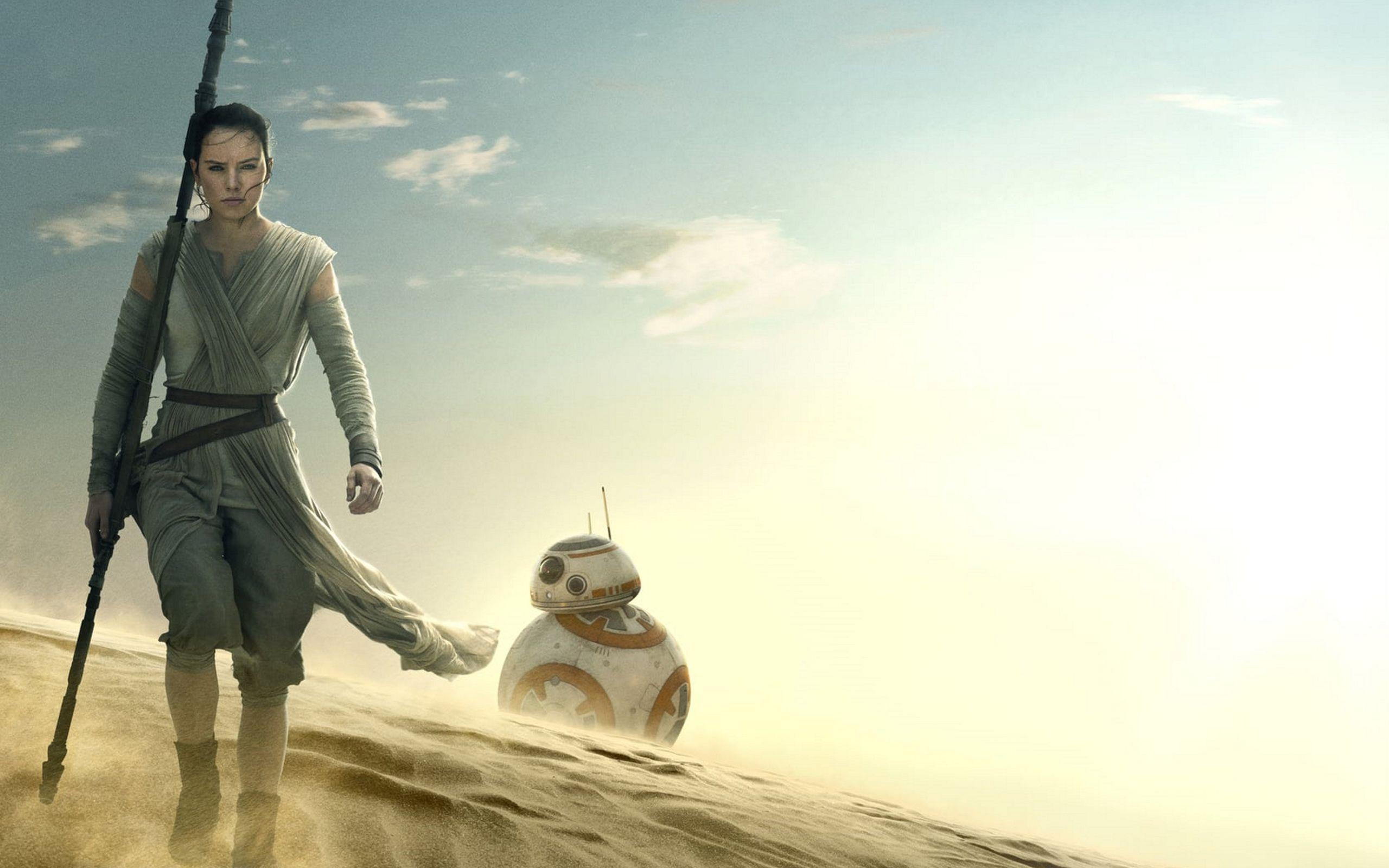
She was nobody. Then she was a Skywalker. Then she was a Palpatine. Then, finally, she was a Skywalker again. If that sounds confusing, you’ve basically summarized the chaotic, decade-long conversation surrounding the protagonist of the Star Wars sequel trilogy. When we first met her in 2015, she was just a scavenger living in a hollowed-out AT-AT on the desert world of Jakku, counting down the days until a family that never intended to return would finally come home.
But who was Rey in Star Wars exactly?
To understand her, you have to look past the lightsaber swings and the Force-healing. Rey represents a specific shift in how Lucasfilm approached the "Hero’s Journey." Unlike Luke, who had a mentor and a clear lineage from the jump, or Anakin, who was a literal child of destiny, Rey was a character defined by a desperate, almost painful search for belonging. She didn't want to be the hero. She just wanted someone to hold her hand and tell her she wasn't alone in the galaxy.
From the Sands of Jakku to the Resistance
Life on Jakku was brutal. Honestly, it’s a miracle she didn't just give up. Rey spent her days stripping old Imperial Star Destroyers for parts, trading her findings to a junk boss named Unkar Plutt for "portions"—tiny, chemical-tasting bread packets that expanded in water. It was a bleak existence. Her entire identity was wrapped up in waiting. She wore an old rebel pilot helmet and played with a small doll she’d made, dreaming of worlds she’d never see, all while refusing to leave the planet because she was terrified her parents might show up and find an empty house.
Everything changed when she met BB-8.
The little droid was carrying a map to Luke Skywalker, the legendary Jedi who had vanished years prior. This kickstarted a whirlwind that saw her teaming up with a runaway stormtrooper named Finn, stealing the Millennium Falcon, and eventually meeting Han Solo himself. Han saw something in her. He saw a pilot with instincts that rivaled his own, and for a moment, it looked like Rey had finally found the father figure she’d been craving. Then, Kylo Ren took that away on Starkiller Base.
The Awakening of the Force
Rey’s connection to the Force wasn't a slow burn. It was a floodgate. During her interrogation by Kylo Ren (Ben Solo), she didn't just resist his mental intrusion—she pushed back. She saw into his mind. This is where the "Force Dyad" concept starts to take root, though we wouldn't get a name for it until much later in the timeline.
When she finally gripped the Skywalker lightsaber in the snows of Starkiller Base, it wasn't just a cool action beat. It was the Force choosing a new champion. The blade that once belonged to Anakin and Luke called to her, specifically through a "Force vision" at Maz Kanata’s castle. She saw the hallway in Cloud City, she heard the voices of Yoda and Obi-Wan Kenobi, and she felt the cold grip of her own abandonment. It’s a lot for one person to handle.
The Mystery of the "Nobody" and the Palpatine Twist
For two years, the entire internet was obsessed with one question: Who are Rey’s parents? Fans speculated she was a Kenobi, a clone, or even a reincarnation of the first Jedi. The Last Jedi, directed by Rian Johnson, took a sledgehammer to those theories.
In a pivotal, rain-soaked scene on Ahch-To and later inside the Supremacy, Kylo Ren tells her the truth—or at least, the truth as he saw it. Her parents were "filthy junk traders" who sold her for drinking money and were buried in a pauper's grave in the Jakku desert. This was a massive narrative pivot. It suggested that you didn't need a special bloodline to be a hero. The Force could choose anyone.
"You have no place in this story. You come from nothing. You're nothing. But not to me." — Kylo Ren to Rey
But Star Wars loves a lineage. The Rise of Skywalker threw a curveball that shifted her backstory yet again.
The Granddaughter of Sheev Palpatine
It turns out Rey’s father was a "strandcast"—a non-identical clone of Emperor Palpatine. This makes Rey the biological granddaughter of the greatest villain in galactic history. Her parents weren't actually drunks who hated her; they were people on the run who gave her up to protect her from the Sith Eternal cult.
This revelation recontextualizes her entire struggle. Suddenly, Rey wasn't just fighting for the galaxy; she was fighting her own DNA. The darkness she felt inside her, the raw power that accidentally blew up a transport ship with Force lightning, had a source. It was the Palpatine legacy.
Why the "Rey Skywalker" Name Matters
The ending of the sequel trilogy sees Rey standing on the sands of Tatooine, near the old Lars homestead where the saga began. An old woman asks her who she is. Rey looks to the ghosts of Luke and Leia, smiles, and says, "Rey Skywalker."
People have feelings about this. Strong ones. Some fans felt it was unearned, or that she should have embraced being a "Nobody" or even "Rey Palpatine" to show that names don't define you. However, from a character perspective, it was the ultimate act of agency. Throughout the movies, Rey was always looking for someone to define her. First, it was her absent parents. Then it was Han Solo. Then it was Luke. Finally, it was the shadow of Palpatine.
By choosing the name Skywalker, she stopped asking others who she was and decided for herself. She chose her found family over her biological one. In the context of Star Wars lore, she became the bridge between the old Jedi Order and whatever comes next.
Her Unique Force Abilities
Rey wasn't just a standard-issue Jedi. She exhibited some of the rarest Force powers ever seen on screen:
- Force Healing: She could transfer her life essence to heal others, a technique she learned from the ancient Jedi texts she swiped from Ahch-To.
- Psychometry: Though more prominent in books and games (like Jedi: Fallen Order), Rey had a version of this where she could touch objects and see their history.
- The Dyad: Her connection with Ben Solo allowed them to pass physical objects through space and time. They were, for all intents and purposes, two halves of a single soul in the Force.
Addressing the "Mary Sue" Criticism
You can't talk about Rey without mentioning the "Mary Sue" label that followed her for years. Critics argued she was too powerful too quickly, noting her ability to fly the Falcon and beat a trained (albeit wounded) Kylo Ren in her first movie.
But if you look at the text, Rey had been flying flight simulators on Jakku for years. She was a master of the quarterstaff long before she touched a lightsaber. More importantly, her "overpowered" nature was explained by the Force "rising" to meet the darkness of the First Order. As Snoke put it, "Darkness rises, and light to meet it." The Force essentially used Rey as a vessel to balance the scales against Kylo Ren. Whether that satisfies every viewer is up for debate, but the internal logic of the films does attempt to ground her abilities in the broader mechanics of the universe.
Real-World Impact and the Future
Rey, played by Daisy Ridley, became a massive cultural icon, especially for a younger generation of fans who finally saw a woman leading the franchise with a lightsaber. Beyond the toys and the Halloween costumes, she changed the "look" of a Jedi—less of the stoic, detached monk and more of a vulnerable, emotional warrior.
The story isn't over, either. Lucasfilm has officially announced a new film set 15 years after the events of Exegol, featuring Rey as she attempts to rebuild the Jedi Order. This is a massive weight to carry. She isn't just a survivor anymore; she's the new Grandmaster.
Actionable Takeaways for Star Wars Fans
If you're trying to piece together the full picture of Rey's journey beyond just the movies, there are specific places you should look. The movies only tell half the story.
- Read "Shadow of the Sith" by Adam Christopher: This novel is essential. It provides the back-story of Rey’s parents (Dathan and Miramir) and explains how they escaped Palpatine's clutches. It makes their sacrifice feel much more earned.
- Watch the "LEGO Star Wars Holiday Special": Okay, it’s semi-canon at best, but it shows Rey’s post-Episode IX struggles with being a teacher, which sets the stage for her upcoming movie.
- Study the Jedi Texts: In the Star Wars: Age of Resistance comics, we see more of Rey’s training under Leia Organa. It fills in the gaps of how she became so proficient between the events of The Last Jedi and The Rise of Skywalker.
- Understand the Force Dyad: Research the "Rule of Two" and how the Dyad is actually the natural state the Sith were trying to mimic. It explains why her connection to Ben Solo was so much stronger than the bond between typical masters and apprentices.
Rey remains one of the most polarizing and fascinating characters in modern cinema. She started as a scavenger waiting for a lie and ended as the guardian of a legacy she wasn't born into. Whether you love the Palpatine twist or wish she’d stayed a "nobody," her impact on the galaxy far, far away is undeniable. She didn't just find her place in the story—she took ownership of the story itself.