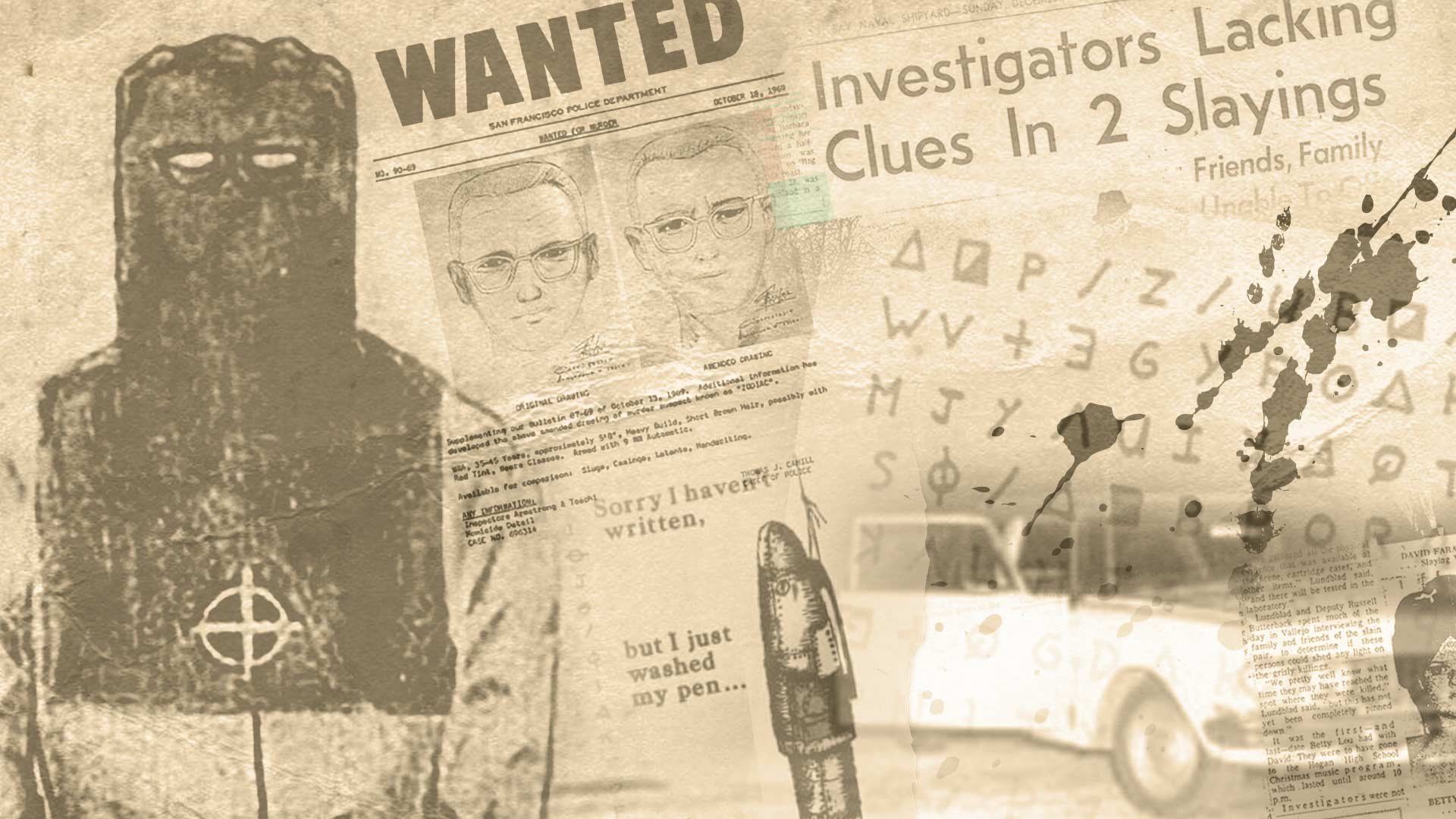
Five decades. That is how long the San Francisco Bay Area has lived with a shadow. It’s a shadow defined by a hood, a crosshair symbol, and a series of taunting letters that mocked the very police meant to protect the public. When people ask who was the Zodiac Killer, they aren’t just asking for a name. They are asking how someone could kill at least five people—and claim to have killed 37—while leaving behind a trail of ciphers that took half a century to crack.
He was a ghost.
Honestly, the Zodiac wasn’t the most "prolific" serial killer in terms of body count, but he was arguably the most effective at weaponizing the media. He didn't just want to murder; he wanted to be a celebrity. By sending bits of bloodied clothing and complex riddles to the San Francisco Chronicle, he ensured his legacy would outlive his crimes. Even now, in 2026, the obsession persists.
The Canonical Victims and the Pattern of Terror
The mystery of who was the Zodiac Killer began in earnest on a gravel turnout in Benicia. It was December 20, 1968. David Faraday and Betty Lou Jensen were just teenagers on a date. They were shot outside their car. No motive. No robbery. Just a brutal, sudden end to two lives.
Six months later, it happened again.
Darlene Ferrin and Michael Mageau were sitting in a car at Blue Rock Springs Park in Vallejo. A man pulled up, flashed a bright light, and opened fire. Mageau survived, miraculously, despite being shot in the jaw, shoulder, and leg. He described a heavy-set man, short, maybe 5'8", with a "beefy" build. But descriptions are tricky things when you're staring down the barrel of a 9mm Luger in the dark.
Then came the letters.
On August 1, 1969, three newspapers received nearly identical letters. "Dear Editor: I am the killer of the 2 teenagers last Christmass at Lake Herman," the writer began. He included a third of a cipher, threatening that if it wasn't printed on the front page, he would "cruse around all weekend killing lone people in the night." This was the birth of a persona. He signed his later letters with a circle and a cross through it—the symbol that still gives people the chills.
The Lake Berryessa Horror
The attack at Lake Berryessa in September 1969 changed the narrative. This wasn't a drive-by. Bryan Hartnell and Cecelia Shepard were relaxing by the water when a man approached wearing a bizarre, hand-stitched black executioner's hood with the Zodiac symbol on the chest. He tied them up. He talked to them. He told them he was an escaped convict. Then, he stabbed them repeatedly.
Before leaving, he walked to Hartnell’s car and wrote on the door:
- Vallejo
- 12-20-68
- 7-4-69
- Sept 27–69–6:30
- by knife
Hartnell survived; Shepard did not. This specific attack is why many experts believe the killer had a background in the military or law enforcement. The knots were sophisticated. The costume was theatrical. The calm demeanor was terrifying.
The Prime Suspect: Arthur Leigh Allen
If you’ve watched the movies or read the books, you know this name. For many investigators, the answer to who was the Zodiac Killer starts and ends with Arthur Leigh Allen. He was a former Navy man and a schoolteacher who had been fired for child molestation.
He was strange. People noticed.
Don Cheney, a former friend of Allen, went to the police in 1971. He claimed Allen had told him about a desire to kill people at random, using a flashlight attached to a firearm, and that he would call himself "Zodiac." That is a massive red flag. When police interviewed Allen, they noticed he was wearing a Zodiac brand watch.
The coincidences pile up:
- Allen was in the area of several killings.
- He owned the same caliber of ammunition used in the crimes.
- He referred to the book The Most Dangerous Game—a story about hunting humans that the Zodiac also referenced.
- He was identified by Michael Mageau in a photo lineup decades later, though Mageau’s reliability as a witness has been debated due to the passage of time.
But here is the problem. The DNA didn't match. The fingerprints found on the Stine cab (the Zodiac's last confirmed murder in San Francisco) didn't match Allen. The handwriting experts were split, but most said it wasn't him. In the world of forensics, "kinda looks like him" doesn't get you a conviction.
The Ciphers: Breaking the Code 51 Years Later
The Zodiac sent four major ciphers. The first, the 408-character cipher, was cracked quickly by a schoolteacher and his wife. It revealed a rambling manifesto about "collecting slaves for the afterlife."
The second one? The 340-character cipher? That one sat unsolved for over half a century.
It wasn't until December 2020 that a team of private citizens—David Oranchak, Sam Blake, and Jarl Van Eycke—finally broke it using sophisticated software. The message didn't give a name. It just said, "I hope you are having lots of fun in trying to catch me... I am not afraid of the gas chamber because it will send me to paradice [sic] all the sooner."
It was a gut punch to those hoping for a confession. It proved the Zodiac was meticulous about his encryption, using a "diagonal transposition" method that was incredibly advanced for a civilian in 1969. This level of skill points back to someone with cryptographic training, perhaps someone who worked in signals intelligence.
Other Names in the Folder
While Allen is the "popular" suspect, he isn't the only one. Not by a long shot.
Gary Francis Poste
In recent years, a group called the Case Breakers claimed Gary Francis Poste was the killer. They pointed to scars on his forehead that matched the police sketch and forensic photos of his darkroom. However, the FBI and local police remain skeptical. They haven't found a "smoking gun" connecting Poste to the crime scenes through DNA.
Richard Gaikowski
A journalist and filmmaker, Gaikowski was a favorite suspect of some researchers, including Tom Voigt of ZodiacKiller.com. He had a background in the military and worked at an underground newspaper called Good Times. Some believe his voice matched the recordings of the killer’s phone calls to police, but again, the evidence is circumstantial at best.
Lawrence Kane
Kane worked in the same hotel as one of the possible (but unconfirmed) victims, Donna Lass. He was a veteran with a history of brain damage from a car accident, which some psychologists argue could explain the sudden onset of a killing spree. A police officer who briefly saw a man fleeing the scene of the Paul Stine murder later said Kane was the closest match he’d ever seen.
The San Francisco Mistake
The murder of cab driver Paul Stine in October 1969 was the Zodiac's biggest blunder. For the first time, he killed in a residential neighborhood (Presidio Heights) rather than a lonely "lover's lane." Witnesses saw him.
Crucially, the police actually drove past a man fitting the description because the initial radio dispatch mistakenly described the suspect as a Black male. By the time it was corrected to a white male, the man was gone. He later mocked them in a letter, saying they "stumbled" right past him.
He left a bloody fingerprint on the exterior of the cab. This is the "Holy Grail" of Zodiac evidence. If a suspect's DNA or prints don't match that cab, it’s almost impossible to secure a legal victory.
Why Haven't We Solved It?
You’d think with modern tech, we’d have him. But the DNA is the sticking point. The samples recovered from the stamps and envelopes the Zodiac mailed are "touch DNA." They are degraded. They are contaminated by decades of people handling them.
In 2018, the success of the Golden State Killer case (using genetic genealogy) gave everyone hope. Investigators in Vallejo and San Francisco have been trying to build a similar profile for the Zodiac. The process is slow. You need a clean sample, and you need a genealogy expert who can navigate the legal hurdles of searching private databases.
The reality of who was the Zodiac Killer might be more mundane than we want to admit. He might not be a mastermind. He might just have been a lucky, disturbed man who died years ago, taking his secrets to a quiet grave in some California suburb.
Practical Steps for True Crime Enthusiasts
If you are diving into this rabbit hole, don't just watch the movies. Look at the source material.
- Read the original police reports: Sites like ZodiacKillerFacts.com and ZodiacKiller.com host digitized versions of the actual FBI and DOJ files. Reading the raw interviews with Michael Mageau and Bryan Hartnell gives you a different perspective than the dramatized versions.
- Study the ciphers: You don't need to be a math genius. Look at how the 340-cipher was cracked. It teaches you a lot about the killer's mindset and his penchant for "homophonic substitution."
- Follow the DNA updates: Keep an eye on the Vallejo Police Department’s official statements. Any real break in the case will come from a lab, not a YouTube theory.
- Visit the locations (with respect): If you’re in the Bay Area, the sites at Lake Herman Road and Blue Rock Springs are still there. Seeing the geography helps you understand the killer’s movement. Just remember these are places where families lost loved ones.
The case remains open. The DOJ still accepts tips. While the man himself may be gone, the search for his identity continues because the families of David, Betty Lou, Darlene, Cecelia, and Paul deserve a name to put on the monster.
***