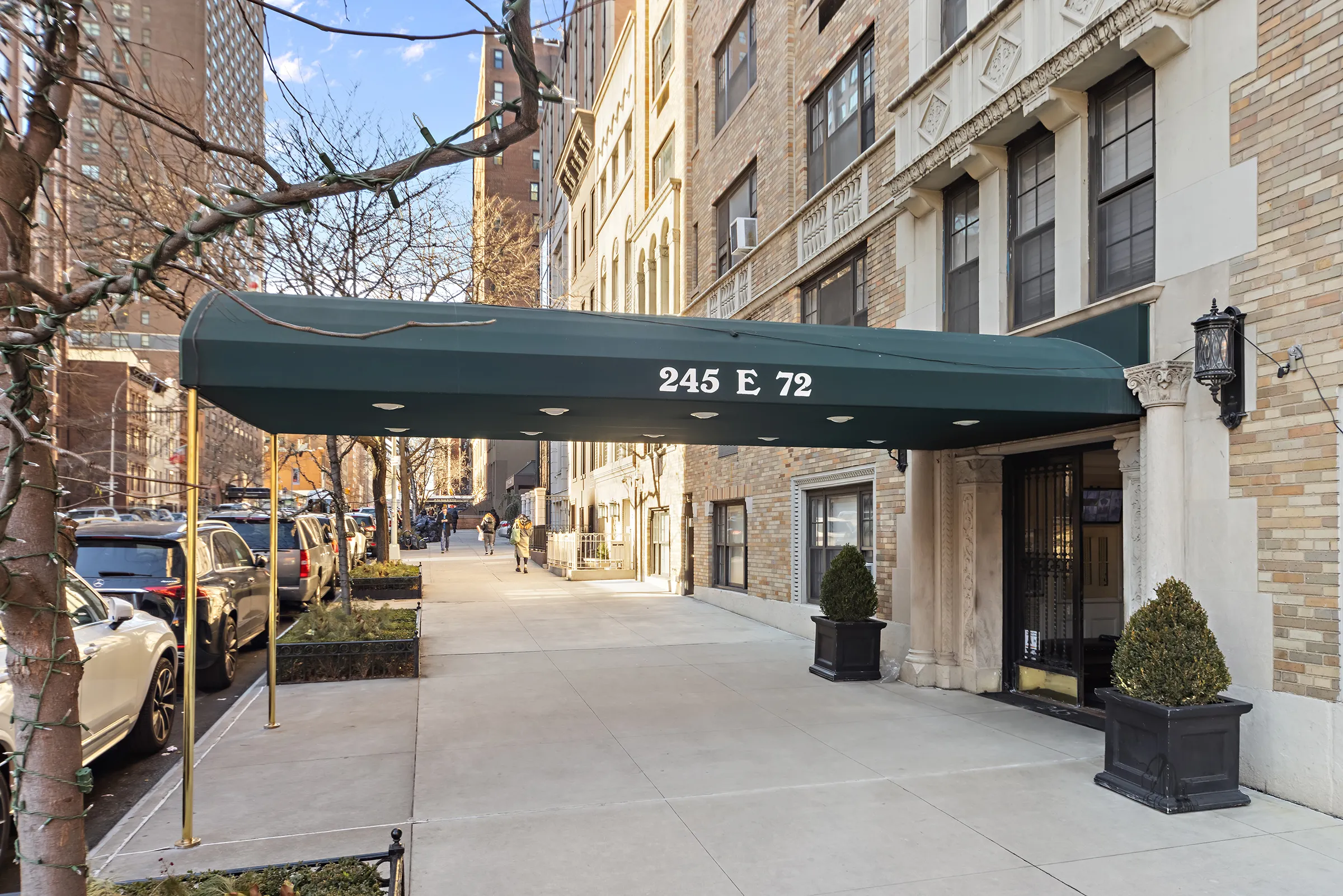
You know that feeling when you're walking through the Upper East Side and everything starts looking like a limestone carbon copy of the building before it? 245 East 73rd Street New York breaks that monotony, but it does it quietly. It’s not the flashy Billionaire’s Row skyscraper trying to touch the clouds. It’s a pre-war classic that actually feels like "Old New York" without the stuffy, gated-community vibe that usually comes with it.
If you’ve spent any time looking at Manhattan real estate, you've probably realized that most buildings are either "shiny and soul-less" or "historic and falling apart." This spot on 73rd sits right in that sweet spot. It’s a co-op. That means it has rules, history, and a board that cares about who’s coming in and out of the lobby.
People get obsessed with the numbers here. Built in the late 1920s—specifically around 1928—it captures that pre-Depression architectural confidence. It’s a brick beauty.
The Reality of Living at 245 East 73rd Street New York
Living here isn't just about the four walls of an apartment. It’s the block. 73rd Street between Second and Third Avenue is surprisingly residential for how close it is to the Q train. You’ve got the 72nd Street subway station just a few minutes away. That changed everything for this neighborhood. Before the Second Avenue Subway, this part of the UES felt like a bit of a hike. Now? You’re in Midtown in ten minutes.
The building itself—often referred to as part of the Eastgate complex—was designed by the legendary Emery Roth. If you don't know the name, Roth is basically the godfather of New York luxury apartment living. He's the guy behind the Beresford and the San Remo. When you walk into 245 East 73rd Street, you see his fingerprints in the proportions. High ceilings. Beamed ceilings. Real wood floors that have survived nearly a century of footsteps.
It’s an elevator building. Obviously. But it also has a full-time doorman. In a city where "luxury" is often a marketing term used to justify a $4,000 studio, having a 24-hour doorman who actually knows your name is the real deal.
The Layouts Are Weirdly Good
Pre-war apartments are famous for having "wasted" space, like long hallways or massive foyers. But honestly? That’s what makes them feel like homes instead of dorm rooms. At 245 East 73rd Street New York, the floor plans often feature windowed kitchens and bathrooms. That’s a rarity in modern builds where the bathroom is usually a dark box in the center of the unit.
You'll find a mix of studios, one-bedrooms, and larger two-bedroom units. Some of the higher floors even have terraces. Imagine having a coffee on a terrace overlooking 73rd Street. It's the kind of thing people move to New York for in the first place.
Why the Co-op Board Matters More Than the Renovations
Let's get real for a second. Buying here isn't like buying a condo. You aren't just buying real estate; you're joining a corporation. The board at 245 East 73rd Street has a reputation for being diligent. Is it a pain to get through the board interview? Kinda. But that’s exactly why the building stays financially healthy.
- Financing: Usually, they require 75% financing. You need some skin in the game.
- Pets: They are generally pet-friendly, but always check the latest house rules because boards change their minds like the weather.
- Amenities: There’s a gym, a bike room, and a laundry room.
Maintenance fees are the silent killer in NYC. At 245 East 73rd Street, the maintenance covers your heat, water, and the staff. Because it’s an established co-op, you don't see the wild, unpredictable spikes you might find in a brand-new building with a massive tax abatement about to expire.
The Neighborhood Context: 73rd Street and Beyond
You aren't just living in a building; you're living in a village. The Upper East Side has this reputation for being "boring" or "for grandparents." That’s a total myth. Or at least, it’s a misunderstanding.
Walk two blocks and you’re at JG Melon for one of the best burgers in the city. Walk the other way and you’ve got the high-end boutiques of Madison Avenue. But 73rd Street itself feels shielded. It’s a tree-lined block. It feels private.
The proximity to Central Park is the big selling point. It’s about a 10-minute walk. If you’re a runner or a dog owner, that’s life-changing. You aren't fighting for a patch of grass in a tiny pocket park; you have the city's backyard.
Surprising Details About the Eastgate Complex
245 East 73rd Street New York is actually part of a larger vision. Bing & Bing, the developers, teamed up with Emery Roth to create a series of buildings on this block. They wanted to create a sense of consistency. This is why the whole street feels so "right." It wasn't built piecemeal; it was a planned aesthetic.
Interestingly, many of these apartments still have their original wood-burning fireplaces. If you find a unit with a working one, keep it. They don't allow those in new constructions anymore. There is nothing like a real fire on a snowy January night in Manhattan. It’s the ultimate "I’ve made it" moment.
Addressing the Common Misconceptions
People think living in a building from 1928 means bad plumbing and drafty windows. Sometimes, sure. But 245 East 73rd Street has been meticulously maintained. The facade work (Local Law 11) is something the board stays on top of.
Another misconception? That it’s too expensive. Compared to the West Village or Soho, the price per square foot on the Upper East Side—especially in these classic co-ops—is actually a bit of a "bargain" by New York standards. You get more space, more light, and more quiet for your dollar.
The electricity is often sub-metered or included in some form, which is a nice perk. You have to look at the "flip tax" too. Most co-ops have one. It’s a fee paid to the building when you sell. It keeps the building's reserve fund fat so they don't have to hit you with a massive assessment when the roof needs fixing.
What You Need to Know Before Buying or Renting
If you're looking at a listing at 245 East 73rd Street New York, look at the exposures. North-facing units get that consistent, painterly light. South-facing units are flooded with sun all day but can get hot in the summer.
Check the closets. Pre-war buildings are hit or miss with storage. Some units have been renovated to include walk-ins, while others still have the tiny original closets meant for people who owned three outfits and a hat.
Actionable Steps for Potential Residents
- Get your financials in a row immediately. A co-op board wants to see your "post-closing liquidity." They don't just care that you have the down payment; they want to know you can pay the maintenance if you lose your job for six months.
- Visit at different times. Walk the block at 8:00 AM on a Tuesday and 10:00 PM on a Saturday. You’ll notice how quiet it stays despite being so close to Second Avenue.
- Talk to the doorman. If you're touring a unit, say hi to the staff. They are the heartbeat of the building. They know if the elevators are acting up or if there’s a noisy neighbor on the 4th floor.
- Hire a lawyer who knows co-ops. NYC real estate is a different beast. You need someone who can read a "board package" like a pro.
- Check the sublet policy. If you think you might move for work in two years and want to rent the place out, 245 East 73rd Street might have restrictions. Most co-ops allow subletting after a certain period of residency, but they aren't "investment properties" in the traditional sense.
The allure of 245 East 73rd Street New York isn't about one specific thing. It’s the combination of Emery Roth’s architectural DNA, the stability of a well-run board, and a location that manages to be both "in the mix" and "out of the way." It’s a building for people who actually want to live in New York, not just own a piece of it.
If you’re hunting for a home that feels like it has a story, this is it. You aren't just getting a zip code; you're getting a slice of the city's history that still functions perfectly in the modern world. It’s a rare find in a city that’s always trying to tear itself down and start over.
Next Steps for Your Search:
To move forward with 245 East 73rd Street New York, your first priority should be requesting the last two years of board meeting minutes through your broker. This is the only way to uncover upcoming capital improvements or planned maintenance increases that aren't listed in the public sales description. Once you've reviewed the minutes, schedule a second viewing specifically to check the water pressure and window seals, as these are the two most common "invisible" issues in pre-war buildings. Finally, ensure your mortgage broker is familiar with the Eastgate complex, as some lenders have specific requirements for co-op buildings with high owner-occupancy ratios.