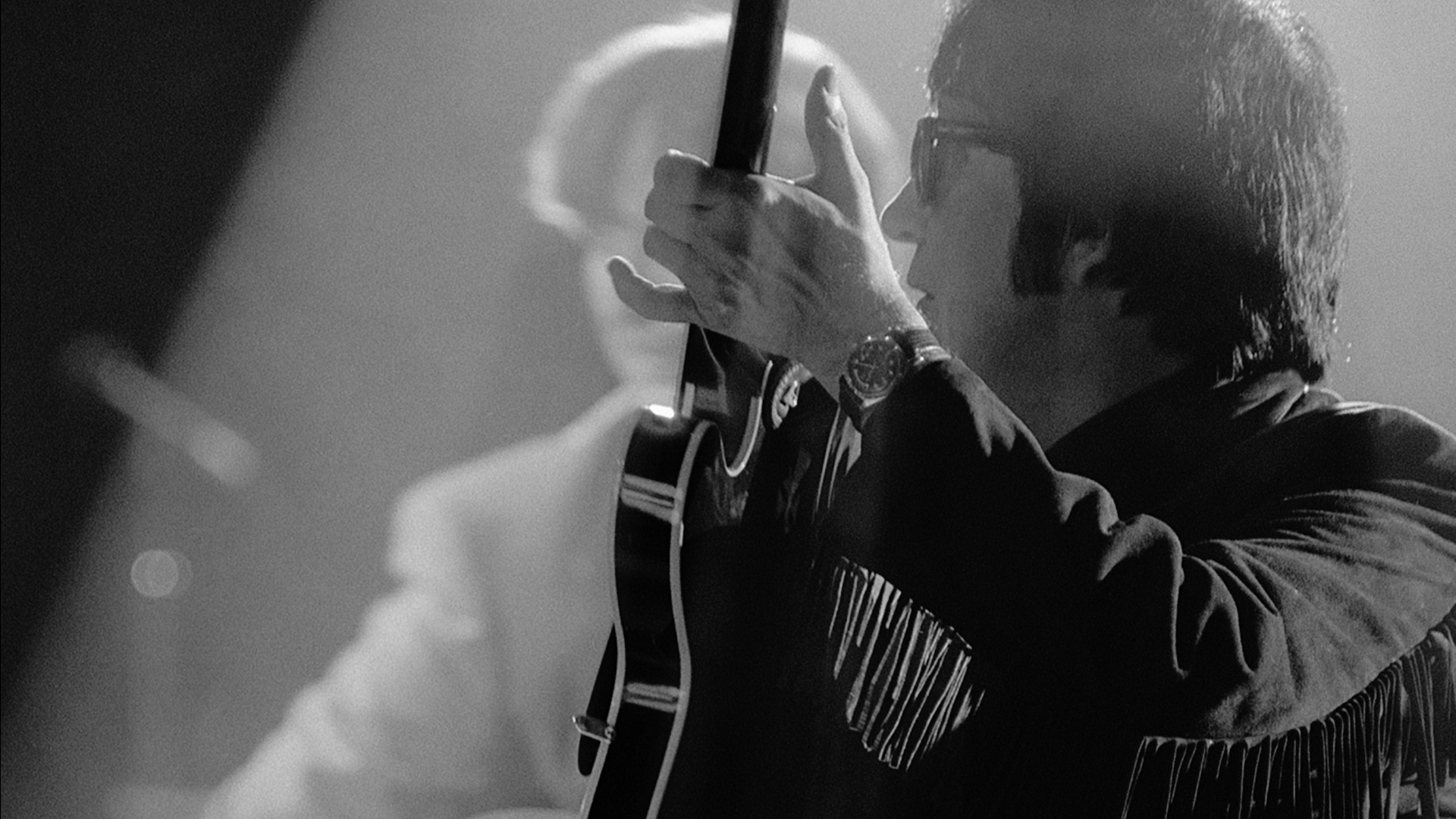
If you’ve ever scrolled through music history looking for that one "perfect" moment where everything aligned—the lighting, the band, the suit, and that haunting, operatic voice—you eventually land on a specific night in 1987. September 30, to be exact. It happened at the Cocoanut Grove in Los Angeles. It was supposed to be a comeback. It turned into a masterclass.
The black and white night roy orbison full concert isn't just a video you watch; it’s a vibe you inhabit. Filmed entirely in high-contrast monochrome, it feels like a noir film where the detective is a man in dark shades singing about heartbreak. But the detective has the best backing band in the history of rock and roll.
The Night the Stars Became the Roadies
Most "all-star" concerts feel messy. Too many egos, not enough rehearsal. This was different. T-Bone Burnett, acting as the musical director, basically assembled a dream team that should have been impossible to book. We're talking about the TCB Band—the guys who literally backed Elvis Presley. James Burton on lead guitar, Ronnie Tutt on drums, Jerry Scheff on bass, and Glen D. Hardin on piano.
Then, you have the "guests."
Calling them guests is almost an understatement. Bruce Springsteen was there, leaning into his guitar like a kid meeting his hero. Elvis Costello was playing the organ and acoustic guitar. Tom Waits was tucked away on the organ, looking like he just stepped out of a rain-slicked alley. Then you had the backing vocals: Bonnie Raitt, k.d. lang, Jennifer Warnes, and Jackson Browne.
Honestly, it’s kind of wild to see the Boss and Elvis Costello standing in the back, content to just be Roy’s rhythm section. They weren't there to steal the spotlight. They were there to serve the songs.
What Really Happened at the Cocoanut Grove
The atmosphere was thick. The Cocoanut Grove was an old-school Hollywood haunt, and the decision to film in black and white was genius. It stripped away the 80s neon and made the whole thing timeless. When Roy walks out in that dark suit with his signature Gibson ES-335, he doesn't look like a guy from the 60s trying to stay relevant. He looks like a legend who never left.
The setlist was a gauntlet of hits. You’ve got:
- "Only the Lonely"
- "In Dreams"
- "Crying"
- "Blue Bayou"
- "Running Scared"
And yeah, they saved "Oh, Pretty Woman" for the end. But the real magic is in the deep cuts. When they play "The Comedians," a song Elvis Costello wrote specifically for Roy, you can feel the mutual respect vibrating off the stage. Roy’s voice hadn't aged a day. If anything, it had gotten deeper, richer, and more full of that "lonely" texture that nobody else can replicate.
That "Secret" Post-Show Set
Here is something most casual viewers miss. After the cameras "stopped" and the audience left, the band didn't just pack up. They stayed. They played a "secret concert" consisting of five songs because they were having too much fun to quit.
For years, this was the stuff of bootleg legend. It wasn't until the 30th-anniversary release that fans finally got to see the alternate takes of "Dream You," "Comedians," "Candyman," and "Uptown." They actually had to stop filming during "Uptown" because they literally ran out of film. That’s how much energy was in that room.
Why the 30th Anniversary Edition is the One to Watch
If you’re looking for the black and white night roy orbison full concert online, you’ll find different versions. The original 1988 Cinemax broadcast was great, but the 30th Anniversary edition (released in 2017) is a different beast.
Roy’s son, Alex Orbison, went back to the original seven camera feeds. He re-edited the whole thing. Why? Because the original edit didn't actually follow the real set order of the night. The 30th-anniversary version restores the flow. It’s more raw. You see more of the interactions between Bruce and Roy. You see the sweat. You see the sheer technical skill of James Burton’s fingerpicking.
It also includes "Blue Angel," a track that was cut from the original release. It’s a crime it was ever left out.
The Technical Brilliance of the Sound
T-Bone Burnett knew what he was doing. They used a mobile recording truck, and the mix is incredibly dry and intimate. You don't get that "stadium echo" that ruins most live albums. It sounds like you're sitting at a table three feet from the stage, sipping a scotch while Roy breaks your heart.
James Burton’s "Paisley" Telecaster cuts through the mix with that signature twang, providing the perfect counterpoint to Roy’s smooth, soaring tenor. And let's talk about those background vocals. Having Bonnie Raitt and k.d. lang harmonizing behind you is basically an unfair advantage.
The Legacy of a Legend
Roy Orbison died just over a year after this concert was filmed. He was only 52.
That gives the black and white night roy orbison full concert a bit of a tragic weight. It was his final crowning achievement before his sudden passing in December 1988. At the time of the filming, he was just starting the Traveling Wilburys project with George Harrison and Bob Dylan. He was on the verge of a massive second career.
This concert proved to the world—and maybe to Roy himself—that his music wasn't just "oldies." It was foundational. When you see a young Bruce Springsteen looking at Roy with pure, unadulterated awe, you realize that without Orbison, half of the rock canon wouldn't exist.
Actionable Steps for the Ultimate Experience
If you want to experience this properly, don't just watch a low-res clip on a phone. Do it right:
- Get the 30th Anniversary Blu-ray: The 2K restoration from the original film elements is stunning. The blacks are deep, and the detail in Roy’s face is incredible.
- Listen for the "Secret" Tracks: If you get the anniversary CD/DVD, look for the alternate version of "Oh, Pretty Woman." It has a different energy than the main set closer.
- Watch the Documentary: The bonus features include a 33-minute mini-doc with rehearsal footage. Watching these legends figure out the arrangements in street clothes is arguably as cool as the concert itself.
- Check the Credits: Pay attention to the string section led by Sid Page. Those swells during "Crying" are what take the song from a rock tune to a full-blown tragedy.
There are very few "flawless" live recordings in existence. This is one of them. It captures a man at the absolute peak of his powers, surrounded by people who loved him, playing the best songs ever written. You can't ask for much more than that.