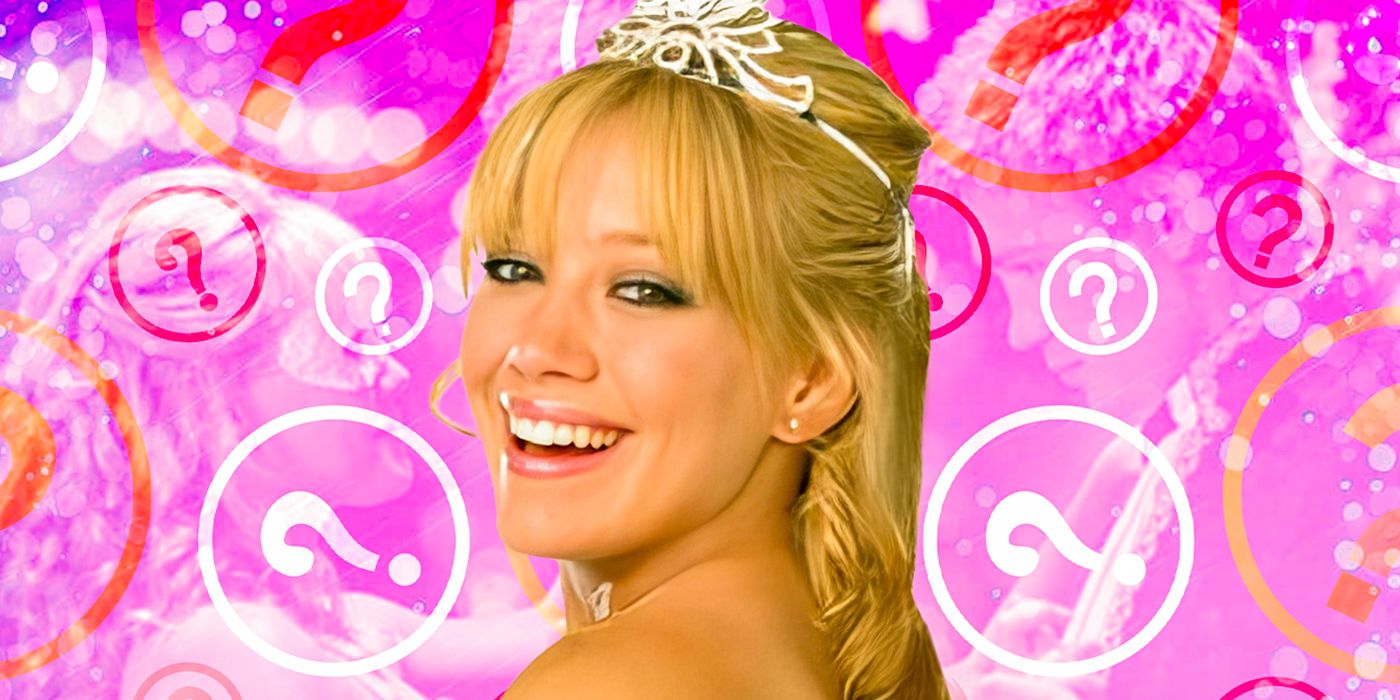
Honestly, if you grew up in the early 2000s, you didn't just watch movies; you lived through the peak of the teen idol era. At the center of that whirlwind was Hilary Duff. She wasn't just another Disney kid. She was the kid. And while Lizzie McGuire made her a household name, it was the 2004 release of A Cinderella Story that cemented her status as a genuine movie star.
It’s easy to look back now and call it cheesy. Sure, the "disguise" was just a tiny lace mask that barely covered her eyes. Everyone in that high school must have had serious facial recognition issues. But that’s missing the point entirely. The film tapped into a specific kind of adolescent yearning. It was about the transition from being "the girl in the background" to someone who finally takes up space.
Warner Bros. knew exactly what they were doing when they cast Duff as Sam Montgomery. They paired her with Chad Michael Murray, who was then the king of teen angst on One Tree Hill. The chemistry was—well, it was early 2000s gold. It was innocent but intense. It was the era of flip phones and "Nomad" chat rooms.
The Cultural Impact of Sam Montgomery
What most people get wrong about A Cinderella Story is the idea that it’s just a fluff piece. Look closer. Sam Montgomery is actually a pretty tragic character if you strip away the bright California lighting. Her father dies in the Northridge earthquake, she’s essentially forced into indentured servitude by her stepmother, Fiona (played with iconic villainy by Jennifer Coolidge), and she’s bullied relentlessly at school.
It’s heavy.
Hilary Duff brought a grounded, "everygirl" quality to the role that prevented it from becoming a caricature. Unlike the original folk tales, Sam isn't waiting for a literal prince to save her. She’s working shifts at a diner to save up for Princeton. That detail mattered. It moved the "Happily Ever After" goalpost from a wedding altar to an Ivy League acceptance letter.
The movie was a massive commercial success despite what critics thought at the time. It grossed over $70 million worldwide on a relatively modest budget. People showed up. They showed up because Hilary Duff represented a version of "cool" that felt attainable. She wasn't an untouchable socialite; she was the girl wearing a diner apron who happened to have a secret pen pal.
The "Duff Era" Aesthetic
The fashion in this movie is a time capsule. We’re talking about cargo pants, layered tank tops, and those specific chunky highlights. But more than the clothes, it was the music. The soundtrack featured Duff’s own tracks, like "Our Lips Are Sealed" with her sister Haylie. This was the peak of the "multi-hyphenate" star model. You didn't just act; you sang the theme song, did the world tour, and launched a clothing line at Target.
Behind the Scenes: What Really Happened on Set
Making a movie like A Cinderella Story wasn't just about glitz. Director Mark Rosman had worked with Duff previously on Lizzie McGuire, so there was a level of trust there. However, the production had to navigate the intense tabloid culture of 2003 and 2004.
Hilary was 16.
Chad Michael Murray was 22.
In hindsight, that age gap is a bit jarring, but at the time, it was standard Hollywood practice for teen dramas. The "rain scene" at the football game—you know the one, where Sam finally stands up to Austin Ames—was actually miserable to film. It was freezing, the "rain" was artificial, and they had to keep the emotional beat high while soaking wet for hours.
And let’s talk about Jennifer Coolidge. Long before her White Lotus resurgence, she was the MVP of this movie. Her portrayal of Fiona was a masterclass in comedic timing. "It's the botox! I can't show emotion for another hour and a half!" That line alone is legendary. She took a trope—the "Evil Stepmother"—and turned it into a satirized version of Beverly Hills vanity.
Why the Mask Scene Works (Even Though It Shouldn't)
We have to address the elephant in the room. The mask. It’s the most debated part of the A Cinderella Story legacy. How did Austin Ames, who had been talking to Sam for months and staring into her eyes, not realize it was her?
Actually, the producers knew it was ridiculous. But the film is a fairy tale. It operates on "fable logic." In the context of the story, the mask represents Sam’s lack of confidence. Austin doesn't see her because she doesn't want to be seen. It’s a metaphorical invisibility that only breaks when she stops hiding behind her "Diner Girl" persona.
The Legacy of the "Cinderella" Franchise
The success of the Duff version sparked a literal decade of sequels. You had the Selena Gomez version (Another Cinderella Story), the Lucy Hale one, and even versions starring Sofia Carson. But none of them hit the same cultural nerve.
Why?
Because the 2004 version was the last one to feel like a "big" cinematic event for teens before everything moved to streaming. It was a shared experience. You went to the theater with your friends, bought the CD at Sam Goody afterward, and changed your AOL Instant Messenger profile to a quote from the script.
- "Waiting for you is like waiting for rain in this drought. Useless and disappointing."
That line was on every MySpace page in America. It was the "angsty teen" anthem.
Critical Reception vs. Fan Reality
Metacritic and Rotten Tomatoes weren't kind to the film upon release. Critics called it derivative and sugary. But critics in 2004 weren't the target audience. The audience was young girls who felt overlooked. For them, Sam Montgomery was a hero.
The film also tackled themes of classism that were surprisingly direct for a PG movie. The "North Valley" vs. the "White Valleys." The "Diner Girl" vs. the "Popular Kids." It highlighted the cruelty of high school hierarchies in a way that felt visceral, even if the resolution was wrapped in a bow.
Practical Takeaways from Sam Montgomery's Journey
If we look past the prom dresses and the pop music, there are actual lessons in this movie that have aged surprisingly well. It’s not about finding a guy; it’s about the "Princeton or Bust" mindset.
1. Define your own identity.
Sam spent the first half of the movie being whatever Fiona or the popular kids wanted her to be. Her breakthrough happens when she realizes that being "the girl from the diner" isn't something to be ashamed of. It’s her reality, and she’s the one working for her future.
2. Digital honesty (The "Nomad" Lesson).
In an era of Instagram filters and curated lives, the "Nomad" and "Princeton Girl" dynamic is interesting. They fell in love with each other's thoughts before they ever saw each other's faces (or masks). It’s a reminder that real connection usually happens in the "unseen" moments.
3. The power of "No."
The climax of the film isn't the dance. It’s when Sam quits. She walks out on the diner, she walks out on Fiona, and she tells Austin Ames that he’s not worth her time if he can't be real. That’s the real "Cinderella" moment—the reclamation of self-worth.
What to Do Next if You're Feeling Nostalgic
If you want to revisit this era, don't just stop at a rewatch. The "Duff-ance" (the Hilary Duff Renaissance) is a real thing.
- Check out the soundtrack on vinyl. Several boutique labels have re-released the 2004 soundtrack. It’s a trip.
- Watch "How I Met Your Father." If you want to see how Hilary Duff transitioned into adult roles, her work in this series (though now canceled) showed her comedic growth while maintaining that same charm she had in 2004.
- Look into the "Teen Movie" genre studies. Many film historians now look at the early 2000s as a pivotal shift in how female protagonists were written—moving away from "needing a man" to "needing a future."
A Cinderella Story isn't just a movie about a lost cell phone. It’s a landmark of 2000s pop culture that proved Hilary Duff was more than a TV character. She was a voice for a generation of kids who were just trying to find their way out of the "diner" and into their own lives.
The film remains a staple because, at its core, it refuses to apologize for being hopeful. In a world that’s often cynical, Sam Montgomery reminds us that sometimes, you just have to stand in the middle of a football field, in the pouring rain, and demand to be seen. It's bold. It's dramatic. It's exactly what 2004 needed.