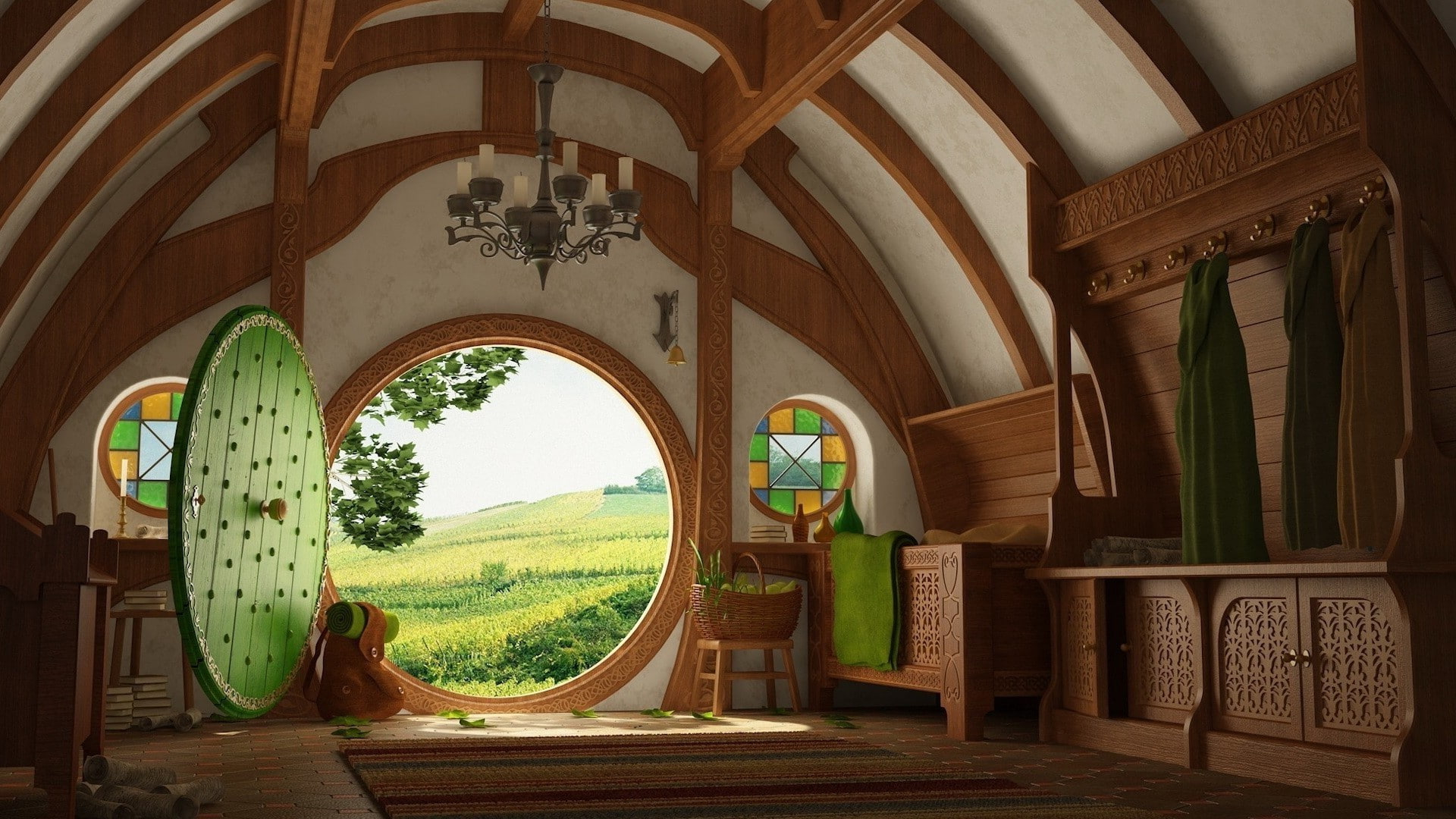
J.R.R. Tolkien wasn't just writing about wizards and rings; he was low-key obsessed with architecture and the destruction of the English countryside. When he described Bag End, the iconic hobbit house from Lord of the Rings, he wasn't picturing a dark, damp cave. He was picturing comfort. He was picturing a home that felt like it grew out of the earth rather than being slapped on top of it.
Honestly, most people think a Hobbit-hole is just a quirky movie set in New Zealand. It’s not. It is a masterclass in organic architecture that focuses on "smial" construction—the art of tunneling into a hillside to create a living space that is naturally insulated, structurally sound, and aesthetically peaceful.
The Real Anatomy of Bag End
The most famous hobbit house from Lord of the Rings is Bag End, situated at the top of Hill Lane in Hobbiton. If you look at the floor plans—and yes, Tolkien fans and architects like Peter Beaven have spent decades obsessing over this—you’ll see it’s surprisingly sprawling. It isn't a tiny hut. It has a long hall that goes "not quite straight" into the side of the hill.
Think about the front door. It’s a perfect circle. Why? Because Tolkien loved the idea of wholeness. The door is painted green with a shiny yellow brass knob right in the middle. Inside, the floors are tiled and carpeted. There are polished chairs. There are lots and lots of pegs for hats and coats. This is a high-end luxury villa, just... underground.
The windows are perhaps the most clever part. They are deep-set and round, looking out over the Shire. Because the house is built into a slope, only the rooms on the "left-hand side" (as you go in) have windows. These are the best rooms: the dining rooms, parlours, and bedrooms. The pantries, cellars, and kitchens are tucked further back into the dark, cool earth. It’s basically the ultimate "passive house" design before that was even a buzzword.
Why Every Architect Secretly Wants to Build One
Modern sustainable architecture owes a lot to the Shire. Architects like Malcolm Wells, the father of modern earth-sheltered building, often pointed to the efficiency of living underground.
Thermal mass. That’s the big secret.
When you build a hobbit house from Lord of the Rings, you are using the earth as a giant thermal blanket. In the winter, the ground stays warmer than the air. In the summer, it stays cooler. You don't need a massive HVAC system. You just need a hill.
And then there's the psychological aspect. We have this deep-seated "prospect and refuge" instinct. We want to feel safe (the refuge of the cave) while being able to see coming threats (the prospect of the view from the window). A Hobbit-hole provides both perfectly.
The Construction Reality vs. The Movie Magic
If you visit Matamata in New Zealand today, you’ll see the Hobbiton movie set. It’s beautiful. But the houses there? Most of them are just facades. They are shallow shells built for exterior shots.
The real-world challenge of building a functional hobbit house from Lord of the Rings is water. Water is the enemy of the underground home.
- You need a serious drainage system (French drains are a must).
- You need high-grade waterproofing membranes.
- You have to account for the weight of the "green roof." Wet soil is incredibly heavy.
Simon Dale, a photographer from Wales, famously built a "Hobbit House" for about £3,000. It went viral because it looked exactly like Bag End. He didn't use a degree in architecture; he used a chainsaw, a hammer, and a 1-inch chisel. He used lime plaster for the walls because it's breathable. That’s the key—breathability. If you seal an underground house too tight, you get mold. If you use lime, the house "sweats" naturally.
The Problem With Modern Replicas
A lot of people try to build a hobbit house from Lord of the Rings and fail because they make it too small. Bilbo Baggins was "well-to-do." His house was large.
When you see "Hobbit-style" Airbnbs today, they often feel cramped. They miss the "long hall" that Tolkien described. They miss the multiple pantries. To get the vibe right, you need the scale. You need the deep wooden beams—usually oak—that look like they’re holding up the weight of the world.
Life in a Hole: It’s Not Just for Short People
Living in a hobbit house from Lord of the Rings isn't about being 4 feet tall. It’s about a philosophy of "enoughness."
Tolkien wrote these descriptions during a time when industrialization was eating the English landscape. He hated the "ugly" boxes people were starting to live in. The Hobbit-hole represents a rejection of the industrial. It’s handmade. It’s messy in a cozy way. It’s full of books and maps and food.
If you're actually looking to live this way, you have to look into "earth-bermed" homes. This is the professional term. You can find these everywhere from the Swiss Alps to the deserts of New Mexico (where they call them Earthships, though those are a bit more "Mad Max" than "Middle-earth").
How to Get the Look Without Digging a Hole
Maybe you don't want to live underground. That’s fair. It’s a lot of digging.
You can still bring the hobbit house from Lord of the Rings aesthetic into a standard home. It’s all about the "Round" and the "Raw."
- Arched Doorways: Swap a square door for a curved one. It changes the energy of a room instantly.
- Natural Materials: Stone floors, exposed wooden beams, and brass hardware.
- Built-in Nooks: Hobbits love a good reading nook. Deep window seats are a staple.
- Earth Tones: Greens, ochres, and deep browns. No sterile whites.
The Actionable Path to Your Own Smial
If you are serious about building or staying in a hobbit house from Lord of the Rings, start by researching local building codes regarding "subterranean dwellings." Many counties have strict rules about egress (exit) windows in bedrooms.
Look into the work of Peter Vetsch. He’s a Swiss architect who has built dozens of "Earth Houses" that look like futuristic Bag Ends. They are white, curvy, and stunning. They prove that the hobbit lifestyle isn't just for fantasy fans—it's for anyone who wants a house that lasts 500 years instead of 50.
Next, check out the "Hobbiton Movie Set" in New Zealand for the aesthetic, but look at the "Green Magic Homes" company for the actual tech. They sell modular vaulted systems that you can cover with soil. It’s the fastest way to get that Bilbo Baggins lifestyle without needing a dwarven mining crew.
Stop thinking of it as a movie prop. Start thinking of it as a 100% viable, eco-friendly way to live. The Shire is closer than you think.