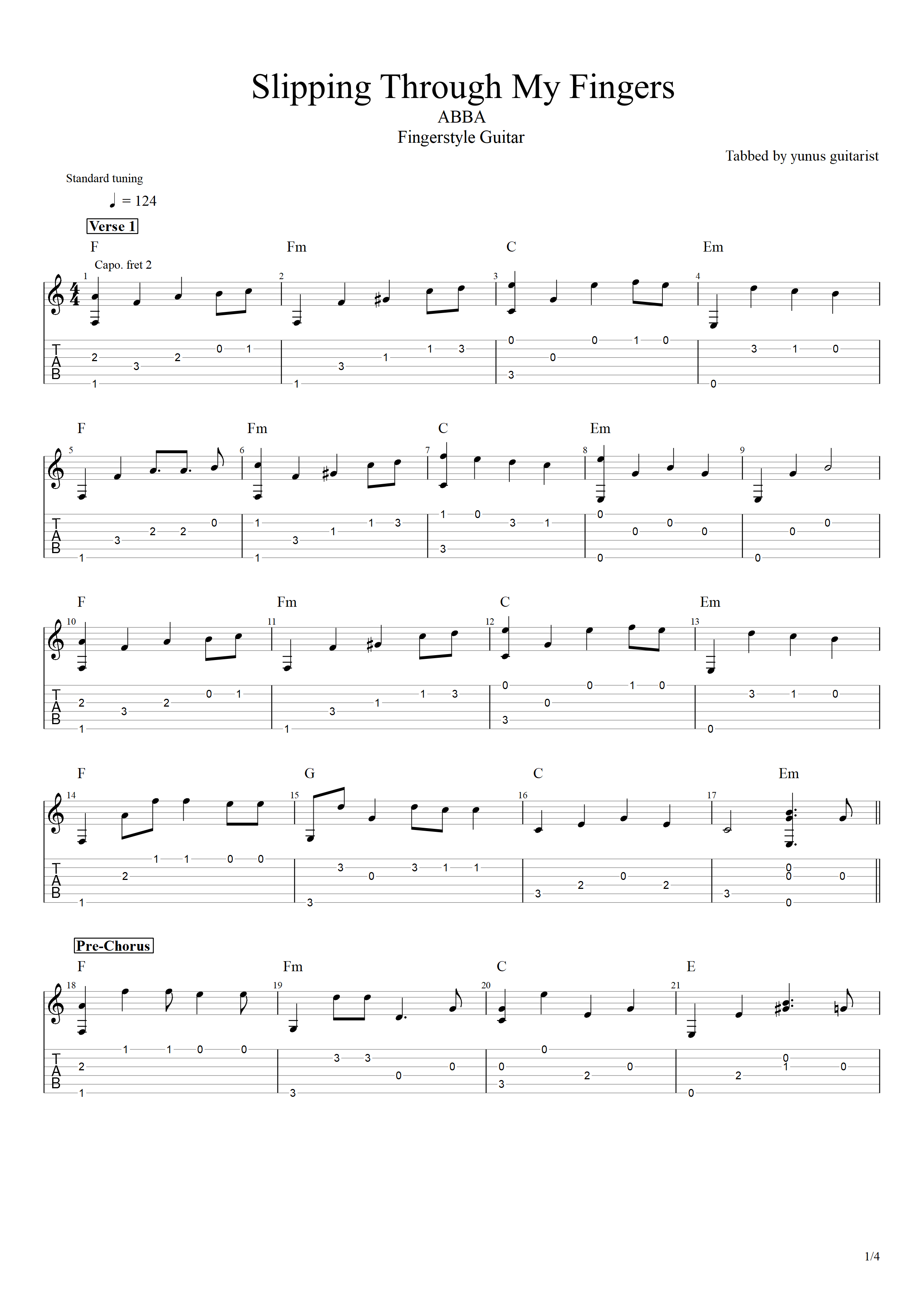
It starts with a backpack. Or maybe a loose tooth. Honestly, for most parents, it’s that specific, gut-wrenching realization that your kid is suddenly walking a little faster than you are. That’s the emotional gravity well of ABBA Slipping Through My Fingers, a track that somehow managed to outlast the spandex and disco lights of the 1970s to become the unofficial anthem of parental heartbreak.
It’s weird.
ABBA was supposed to be about sequins and "Dancing Queen," right? But by 1981, the glitter was peeling off. The band was fraying. Björn Ulvaeus and Agnetha Fältskog were divorced, and their shared history was being channeled into the studio. When you listen to the lyrics of this song, you aren’t just hearing a pop tune; you’re eavesdropping on a very real, very private moment of grief. Björn wrote it after watching their daughter, Linda, head off to her first day of school. He saw her turn around and wave, and in that split second, he realized the childhood he knew was basically over.
The Brutal Honesty of ABBA Slipping Through My Fingers
Most songs about growing up are saccharine. They’re "Butterfly Kisses" or something equally syrupy. This one is different because it’s frantic. There is a genuine sense of panic in the lyrics—the feeling of trying to catch water in your cupped hands.
Agnetha’s vocal performance is what sells it. She isn't oversinging. She sounds tired. She sounds like a mom who just spent the morning looking for a lost shoe only to realize the foot that wears it is three sizes bigger than it was last summer. When she sings about the "guilt" of not being present enough, it hits a nerve. We’re all distracted. We’re all looking at our phones or worrying about the mortgage while the "precious adventures" are happening right in front of us.
Why the 1981 Recording Hits Different
The The Visitors album was the end of the road. You can hear it in the production. It’s colder, more synth-heavy, and stripped of the "wall of sound" cheerfulness that defined their earlier hits. This track is the emotional anchor of the B-side. It wasn't even a massive global single at the time—it was mostly a promotional release in certain territories like Japan—but it grew legs over the decades.
Digital music and YouTube gave it a second life. People started making montage videos of their kids growing up, and suddenly, this 40-year-old Swedish pop song was the soundtrack to every graduation and wedding on the planet.
The Meryl Streep Effect and the Mamma Mia! Renaissance
If you ask a Gen Z fan about the song, they don't think of 1981. They think of Meryl Streep brushing Amanda Seyfried’s hair in a villa in Greece. The Mamma Mia! musical and subsequent film basically saved this song from being a "deep cut" for hardcore fans.
In the movie, the context shifts slightly. It’s not just about a first day of school; it’s about the "last" day of childhood before a wedding. The scene is intimate. It’s one of the few moments in the film where the campy, over-the-top energy stops dead. It’s just a mother and daughter.
Actually, Benny Andersson once mentioned that he was surprised by how well the song translated to the stage. It’s a testament to the songwriting. A good song is a machine that works regardless of who is operating the controls.
The Structure of the Heartbreak
There is no big, soaring chorus. Not really. It’s a circular melody. It feels like a clock ticking.
- The verses are observational: The schoolbag, the breakfast, the fleeting glance.
- The bridge is where the existential dread kicks in: "What happened to the wonderful adventures?"
- The ending? It just fades. There’s no resolution. The kid keeps walking.
That’s the reality of parenting. There is no "win" state. If you do your job perfectly, your reward is that they leave you. It’s the ultimate paradox, and ABBA nailed it better than almost any other songwriter in the history of pop.
What Most People Get Wrong About the Meaning
Some critics originally dismissed the song as "middle-of-the-road" or too sentimental. They missed the darkness. This isn't a happy song about memories. It’s a song about loss.
Björn has been very open about the fact that he felt he missed things. Being in the biggest band in the world meant being away. Touring. Recording. Being a celebrity. The song is an apology to his daughter, but also to himself. It’s a confession of "I wasn't looking closely enough."
Even the title—Slipping Through My Fingers—suggests a lack of control. You can’t grab it. You can’t slow it down. You’re just a spectator to the passage of time.
Modern Interpretations and Cover Versions
While the original is king, many have tried to replicate that magic. You’ve got the Broadway versions, the various tribute acts, and even some acoustic covers that strip away the 80s gloss.
But nobody matches Agnetha. There’s a specific Swedish melancholy—"vemod"—that she brings to the track. It’s a mix of sadness and a weird kind of acceptance. You’re sad it’s over, but you’re glad it happened.
Why We Keep Coming Back to It
In 2026, our lives are faster than ever. We document everything on Instagram, but do we actually feel it?
The song acts as a giant "Pause" button. It forces you to look at the person sitting across from you. Whether it’s a toddler or a teenager, the message is the same: They are changing while you watch them.
It’s a universal experience. It doesn't matter if you’re in Stockholm, New York, or a tiny village in the Philippines. The feeling of "where did the time go?" is the one thing we all share. ABBA just happened to give it a melody that’s impossible to forget.
Technical Brilliance in Simplicity
Musically, the song is interesting because it’s surprisingly complex for a "ballad." The way the bassline moves against the melody creates a sense of forward motion. It’s not a stagnant song. It’s a journey.
Benny Andersson’s piano work is, as usual, understated but essential. He uses these little descending lines that mimic the "slipping" mentioned in the title. It’s subtle. Most people won’t notice it on the first listen, but your brain picks up on the musical cues of falling and loss.
Actionable Takeaways for the Soul
If this song has been hitting you particularly hard lately, there are a few things you can actually do besides just crying into your coffee.
Put the camera down. We spend so much time trying to "capture" the moment for later that we forget to inhabit it now. The next time your kid does something small—like telling a joke or asking a weird question—just look at them. Don't reach for the phone.
Write the letter. Björn wrote a song. You can write a note. Keep a "memory jar" or a simple notebook where you jot down the mundane stuff. Not the birthdays, but the way they mispronounce a certain word or the specific way they look when they’re thinking.
Listen to the full album. If you only know the hits, go back to The Visitors. It’s a masterclass in "adult" pop. It deals with everything from the Cold War to the breakdown of relationships. It provides the context that makes the song even more heartbreaking.
Acknowledge the guilt, then let it go. The song talks about "the guilt in not confessing" that we aren't always there. Every parent feels this. The fact that you’re worried about it probably means you’re doing a better job than you think.
Ultimately, the song isn't a warning; it’s a shared sigh. It’s ABBA saying, "Yeah, we feel it too." And in a world that feels increasingly disconnected, there’s something deeply comforting about that 1981 Swedish pop track. It’s a reminder that the most important things in life are the ones we can’t hold onto, no matter how hard we try.
Stop trying to hold on so tight. Just enjoy the view while they’re still in the room.