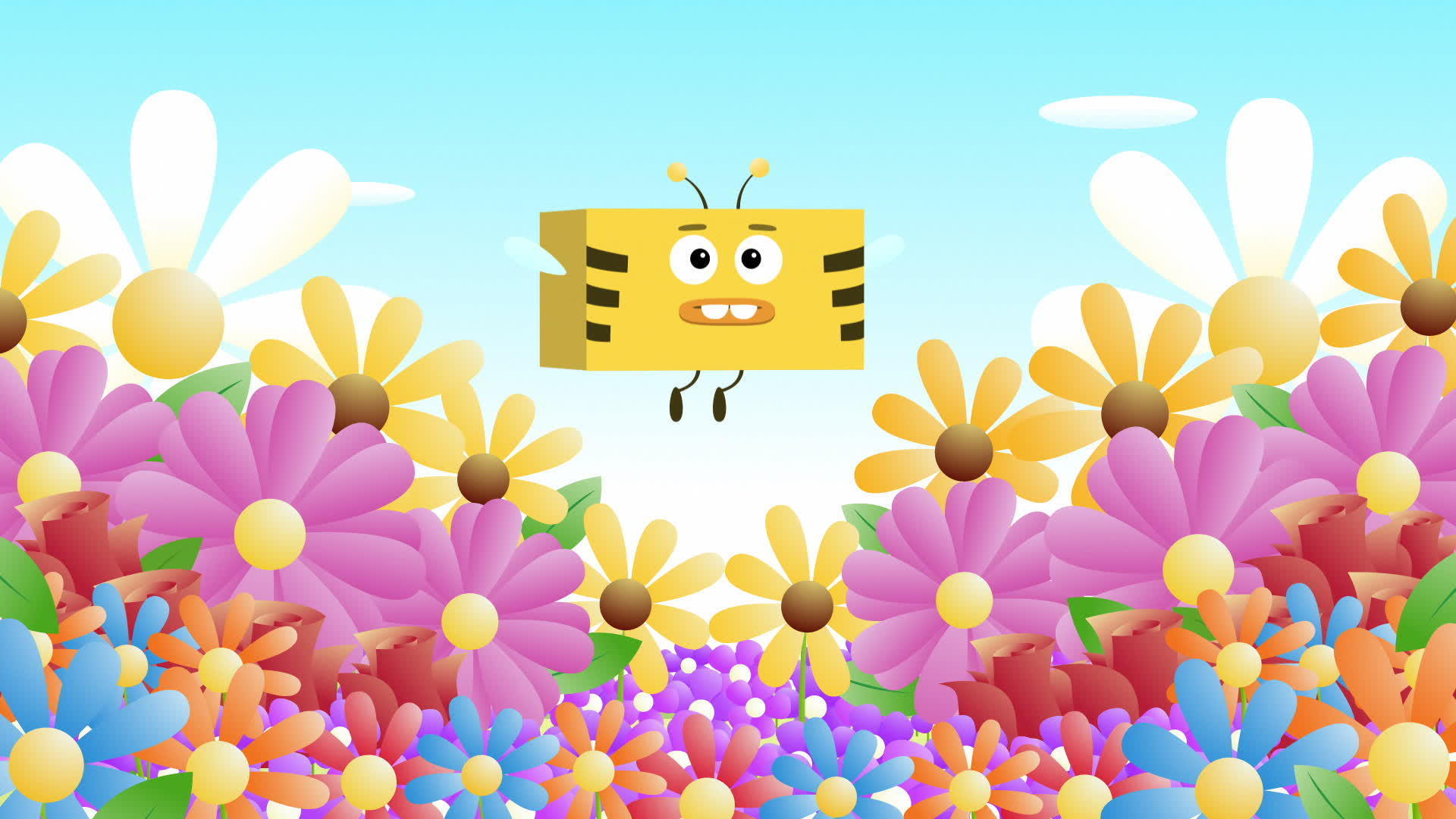
If you’ve ever spent more than twenty minutes in front of a TV with a toddler, you know the specific kind of mental fog that sets in. It’s a mix of bright primary colors and high-pitched voices that usually makes you want to hide in the kitchen. But then, something weird happens. A giant, rectangular block with a German accent starts singing a synth-pop song about hair. Or a monkey starts crooning a country ballad about a "two-banana day."
Suddenly, you’re not just tolerating the show. You’re actually listening. Honestly, Big Block Sing Song Disney Junior is probably the only reason half of us kept our sanity during those early parenting years.
It’s not just a "kids' show." It’s an indie-pop project masquerading as preschool programming. Created by the Toronto-based duo Warren Brown and Adam Goddard—who operate as Goddard/Brown—the series consists of two-minute music videos that aired as interstitials on Disney Junior in the U.S. beginning in early 2013. But calling them fillers is a disservice. These blocks have more personality in two minutes than some sitcom characters have in five seasons.
The Secret Sauce of Big Block Sing Song Disney Junior
What makes this show stick? Most preschool content is either overly educational or aggressively loud. Big Block Sing Song takes a different route. It’s subtle. It’s dry. It’s musically sophisticated.
The animation is deceptively simple. Every character is a block. That’s the rule. Whether it’s an octopus, a caveman, or a literal pile of hair, they are all bound by that rectangular geometry. This constraint actually forced Warren Brown, the animator, to get incredibly creative with facial expressions and movement.
But the real magic is the music. Adam Goddard isn't just writing "toddler songs." He's writing actual songs.
- "Hair" is a quirky, Kraftwerk-esque electronic track.
- "Princess" is a heavy metal anthem that subverts every trope in the book.
- "Octopus" (specifically Octopus Pete) feels like a miniature comic opera.
- "Big Foot" is pure, unadulterated funk.
When "Princess" comes on, you aren't hearing a dainty song about tea parties. You’re hearing a block with a gravelly voice scream about her castle and her "army of knights who have the shiniest armor." It’s empowering, hilarious, and genuinely catchy.
Why the "Two-Banana Day" Still Resonates
We have to talk about the Monkey episode. It’s the very first one they produced, and it set the tone for everything. The premise is simple: a monkey is having a rough day in the jungle until he realizes he has two bananas.
Warren Brown actually mentioned in an interview with Kids Can Groove that the idea came from a real lunch break. He brought two bananas to the studio and offered one to Adam. That’s it. That’s the origin story.
This groundedness is why the show works. It doesn't talk down to kids. It acknowledges that sometimes you feel "Mad" (the episode featuring a red block that needs to cool down) or "Sad" (a somber but beautiful group harmony). It validates those big feelings without being preachy.
The Evolution of the Blocks
While many people first discovered the show on Disney Junior, its roots are in Canada on CBC Kids. It eventually spread to Nick Jr. in the UK and ABC Kids in Australia. By 2026, the series has reached legendary status in the "interstitial" world, with four series and nearly 90 episodes in the catalog.
They didn't just stop at TV. The duo released albums that won a JUNO Award for Children’s Album of the Year in 2020. That’s a big deal. It means the industry recognizes that this music stands on its own. You can put on a Big Block Sing Song playlist on Spotify and it won't ruin your "wrapped" stats because the music is actually good.
Breaking Down the Genre Hopper
The variety is staggering. Look at "Teeth." It’s a Broadway-style show tune about dental hygiene. "Noses" is a thumping hip-hop track. This exposure to different musical genres is arguably more educational for a kid’s developing brain than a song about the alphabet. It teaches them rhythm, tone, and the fact that music can be anything.
What Most People Get Wrong About Interstitials
There’s a misconception that short-form content like Big Block Sing Song Disney Junior is "junk food" TV. You know, the stuff they play just to give the crew a break.
Actually, it’s the opposite. These two-minute bursts require more precision than a 22-minute episode. You have 120 seconds to establish a character, deliver a hook, tell a story, and get out. Goddard/Brown treated each episode like a miniature film. They produced them more like an album than a TV show, taking their time to refine the beats and the jokes.
If you watch closely, there are "Easter eggs" and bits of humor meant purely for the adults. The Caveman episode features a volcano that he describes as a "hot mess." That’s not for the three-year-olds; that’s for the parent sitting on the couch who just cleaned up spilled juice for the fifth time that morning.
Navigating the Seasons
If you're looking to dive back in or introduce a new kid to the madness, here is a rough roadmap of what to expect from the different "volumes" or seasons:
- The Classics: This includes the heavy hitters like Monkey, Sleep, Hair, and Happy. These are the foundation of the Big Block universe.
- The Concept Blocks: Later episodes started tackling more abstract ideas. Try is about persistence. Better Together is about cooperation.
- The ABCs and 123s: Under the name "ABC Singsong," the creators also did a series of songs about letters and numbers for TVO Kids. These carry the same signature wit but with a bit more of a traditional educational slant.
Why It Still Matters in 2026
In an era of endless scrolling and 15-second TikToks, Big Block Sing Song feels like the "prestige" version of short-form content. It has a soul. You can tell two guys in a studio in Toronto were laughing their heads off while making the "Frog" block sing about eating a "toasty bowl of flies."
It’s a reminder that kids' media doesn't have to be loud to be engaging. It can be smart. It can be weird. It can be a rectangular block with a mustache singing about how much he loves his "Moustachios."
How to Get the Most Out of the Big Blocks
Don't just leave it on in the background. If you really want to appreciate what Goddard and Brown did, do these three things:
- Listen for the genre: Challenge your kid (or yourself) to identify the style of music. Is it reggae? Is it techno? Is it a power ballad?
- Watch the eyes: The animation is minimalist, so all the emotion is in the eyes. The "Brave" episode is a masterclass in using tiny movements to show a character overcoming fear.
- Check out the "Greatest Hits" album: If you’re tired of the TV, the music stands perfectly well on its own for car rides. "Octopus Pete" is a certified bop in any context.
The beauty of Big Block Sing Song Disney Junior is that it doesn't overstay its welcome. It’s a two-minute vacation into a world where everything is a square and everything is a song. And honestly, we could all use a two-banana day every once in a while.
To truly experience the craft, head over to the official YouTube channel or find the collections on streaming platforms. Pay close attention to the lyrics in "Robot"—it’s a surprisingly complex take on technology and human (or block) connection that somehow still makes a toddler dance.