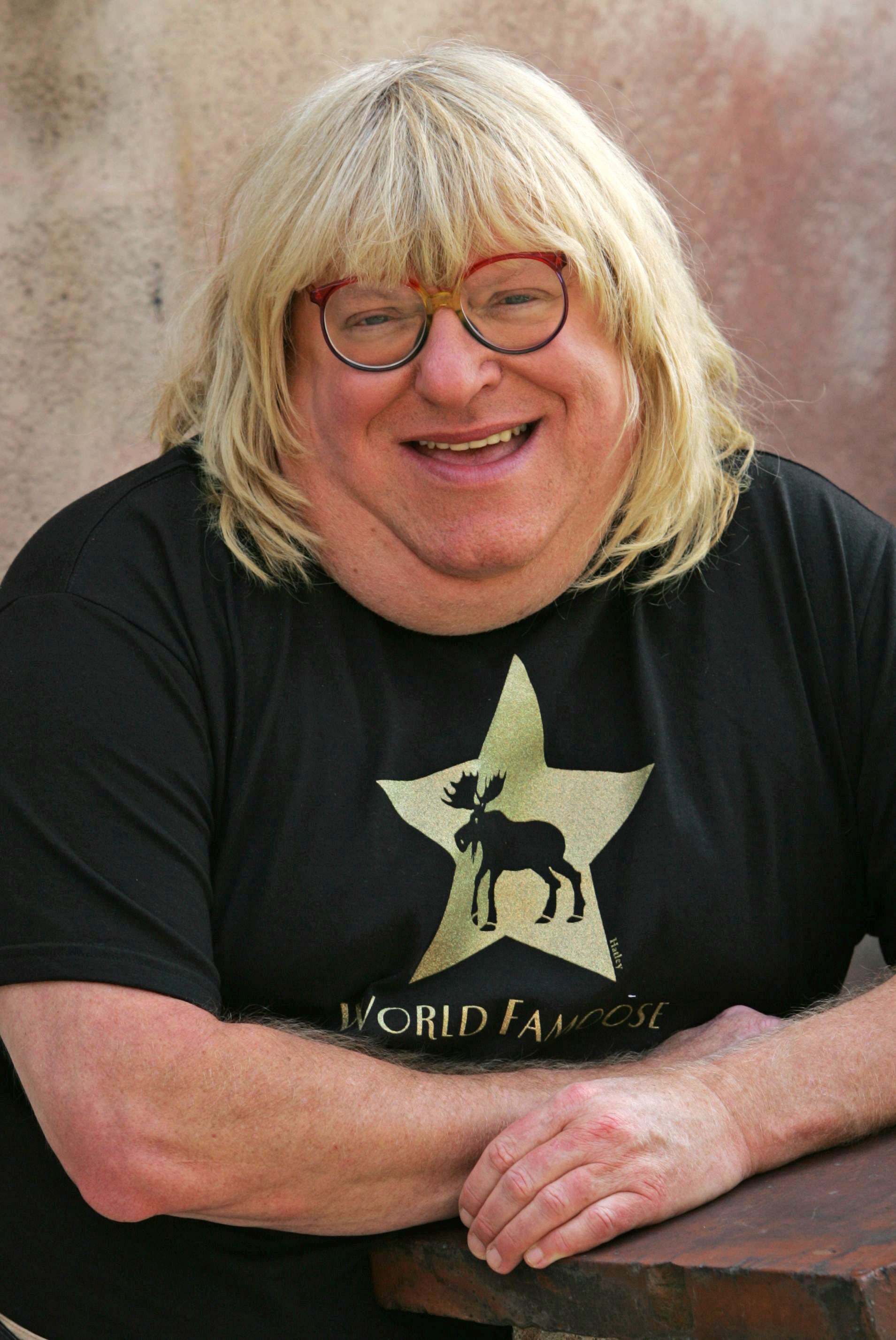
If you turned on a television between 1998 and 2004, you saw him. He was the guy in the center square with the neon-colored glasses, the unruly mane of platinum hair, and a rotating collection of T-shirts that usually featured some kind of pun or pop culture snark. Bruce Vilanch on Hollywood Squares wasn’t just a regular guest; he was the show’s heartbeat. Honestly, he was the reason the revival worked at all. While the celebrities changed every week, Bruce was the constant, a comedic anchor who proved that being the smartest person in the room is fine as long as you're also the funniest.
Most people recognize his face but don't actually know his title. He wasn't just a "square." He was the head writer.
The Man Behind the Curtain and in the Box
Bruce Vilanch didn't just stumble onto that set. By the time the 1998 revival launched with Whoopi Goldberg as the center square and executive producer, Bruce was already a legend in the industry. He was the "go-to" guy for every major awards show. If a host killed it at the Oscars or the Emmys, Bruce probably wrote the jokes.
When Hollywood Squares came back, it needed a specific energy. The original 1960s and 70s version thrived on the dry wit of Paul Lynde. To make it work in the late nineties, they needed someone who could bridge the gap between old-school vaudeville timing and modern, edgy irony. Bruce was that bridge. He sat just below Whoopi Goldberg—literally, in the grid—and served as the primary creative engine for the entire production.
He wrote for everyone. That’s the secret. When you saw a star give a "spontaneous" zinger, Bruce often had a hand in crafting the potential paths that joke could take. But when it was his turn to answer a question from Tom Bergeron, the gloves came off.
Why the Bruce Vilanch Hollywood Squares Era Was Different
TV had changed. The 1998 version of the show was slicker. It felt like a party. Because Bruce was the head writer, he knew the rhythm of the game better than anyone else on the board. He understood that the "game" part—the Xs and Os—was basically secondary to the banter.
He didn't just give answers. He gave performances.
Think about the dynamic. Tom Bergeron, perhaps the best "straight man" in game show history, would lob a question. Bruce would pause, adjust those giant glasses, and deliver something that felt totally off-the-cuff. It wasn't just about being gay or being "the guy with the shirts." It was about a deep, encyclopedic knowledge of Hollywood history. He could reference an obscure 1940s starlet and a current tabloid scandal in the same breath.
It’s easy to forget how much work goes into making something look that easy. Writing for Hollywood Squares is a unique beast. You aren't just writing jokes; you're writing "bluffs." The celebrity has to pretend to know the answer, or pretend to be stumped, or just be funny enough that the contestant doesn't care if they're lying. Bruce managed a team of writers who had to prep the guests, but he was the one who set the tone. He was the quality control.
The Mystery of the T-Shirts
We have to talk about the shirts. It sounds like a minor detail, but it was a massive part of his brand. Every single episode, a new one. Some were political. Some were dirty. Most were just weird.
"I have thousands," he used to say in interviews. It became a meta-game for the viewers. You’d tune in just to see what was stretched across his chest that day. It signaled that the show didn't take itself seriously. In an era where game shows were starting to get intense and dramatic (think Who Wants to Be a Millionaire), Hollywood Squares under Bruce’s guidance remained a loud, colorful cocktail party.
The Celebrity Connector
Bruce Vilanch's influence on the show went beyond his own jokes. Because he was so well-liked in Hollywood, the show got guests it probably shouldn't have been able to land. He had spent decades writing for Bette Midler, Billy Crystal, and Elizabeth Taylor. When Bruce Vilanch asks you to do a week in a box, you say yes.
This created a weirdly high-brow/low-brow mix. You’d have a legendary actor sitting next to a swimsuit model, and Bruce would find the common comedic thread to link them. He made the "Center Square" era feel like an elite club that everyone was invited to watch.
The Mechanics of the "Zinger"
How did it actually work? People always ask if the show was scripted.
The answer is: sort of.
The celebrities were given the questions beforehand, and they would brainstorm "bluffs" with the writers. But the delivery? That’s all talent. Bruce was the master of the "save." If a guest bombed, Bruce would chime in from his square and rescue the segment. He was the safety net.
He also knew how to play with the contestants. He wasn't mean—he was never a "mean" comic—but he was sharp. He’d mock the absurdity of the questions. If a question was particularly convoluted or stupid, he was the first to call it out. That honesty is what made him relatable, even though he was this larger-than-life character.
What We Can Learn From the Vilanch Method
Looking back at those clips today, the comedy holds up surprisingly well. Why? Because it wasn't based on "current events" that would expire in a week. It was based on character and wit. Bruce Vilanch on Hollywood Squares taught us a few things about entertainment that still apply:
- Authenticity is a magnet. Bruce never tried to look like a "TV person." He looked like Bruce. People respond to that.
- Knowledge is a superpower. His ability to pull facts out of thin air made him indispensable.
- The "Writer-Performer" is the ultimate hybrid. Understanding how a joke is built makes you a better person to deliver it.
The End of an Era
When the show went off the air in 2004, it felt like the end of the classic "variety" era of game shows. The landscape shifted toward reality TV and high-stakes competitions. We lost that sense of relaxed, mid-afternoon joy.
Bruce moved on to other things—Broadway (he was a fantastic Edna Turnblad in Hairspray), more award shows, and his own documentary Get Bruce! which is a must-watch for anyone who likes the "inside baseball" of comedy. But for a generation of viewers, he will always be the guy in the square. The guy who made us feel like we were in on the joke.
He proved that you don't need to be a leading man to be the star. You just need the right glasses and a better punchline than anyone else.
Actionable Takeaways for Comedy and Content
If you're a creator or just someone who wants to understand why certain personalities "pop" on screen, Bruce Vilanch's tenure offers a blueprint.
- Develop a Visual Signature: You don't need neon glasses, but you do need a "look" that says something about your personality before you even open your mouth.
- Study the "Straight Man" Dynamic: Bruce worked because he had Tom Bergeron to play off of. In any creative endeavor, know who your foil is.
- Master the Bluff: Whether you're in a meeting or on a stage, the ability to pivot from a "don't know" to a "here is something interesting" is a vital skill.
- Reference the Classics: Don't just follow the 24-hour news cycle. Build a library of references that span decades. It gives your work more weight and makes your humor more surprising.
The legacy of Bruce Vilanch on Hollywood Squares isn't just about a game show. It's about the power of the writer's room being brought front-and-center. It's about the nerd finally getting the best seat in the house and showing everyone else how it's done.
Next time you see a celebrity give a perfect, witty response on a talk show or a podcast, remember: there might be a Bruce Vilanch in their ear—or sitting right next to them in a brightly lit purple box.