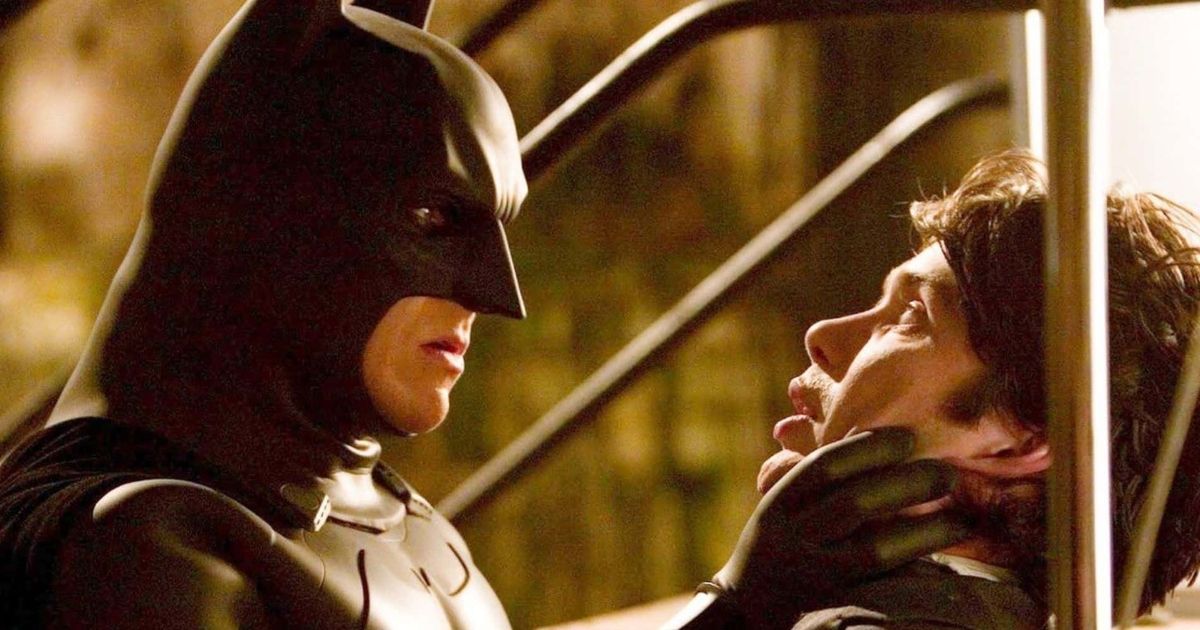
Ever watch a movie and realize the villain is somehow more magnetic than the hero? That’s basically the vibe Cillian Murphy brought to the table in 2005. Honestly, when we talk about Batman Begins, everyone rushes to mention Christian Bale’s gravelly voice or the Tumbler. But it’s the guy with the burlap sack over his head who changed everything for the franchise.
Looking back, the story of how Cillian Murphy landed the role of Dr. Jonathan Crane—better known as the Scarecrow—is kind of legendary in Hollywood circles. It wasn't just a standard casting call. It was a strategic maneuver by Christopher Nolan that basically tricked a major studio into taking a massive risk on an unknown Irish actor.
The Batman Audition That Everyone (Including Cillian) Knew Was Wrong
Before he was the terrifying face of Gotham’s underworld, Murphy was actually a finalist to play Bruce Wayne. Imagine that. The slight, blue-eyed actor from 28 Days Later donning the cape and cowl. He actually made it into the top three alongside Christian Bale and Eion Bailey.
He even did the full screen test. He put on the heavy rubber suit. He used the "Bat-voice." Specifically, he wore the old suit used by Val Kilmer in Batman Forever.
But here’s the thing: Murphy knew he wasn’t Batman.
In interviews since then, he’s been pretty blunt about it. He’s said he never felt like "Batman material" and that Bale was obviously the right choice. Even Christopher Nolan admitted that while he wanted to see Murphy in the suit, he didn’t necessarily see him as the Dark Knight. He just wanted to get him on 35mm film to show the Warner Bros. executives what he could do.
Nolan was obsessed with Murphy’s presence. There was an "electric atmosphere" on set the moment he started performing. It wasn't about the physicality—it was about those eyes.
How Christopher Nolan Outsmarted the Studio
Back in the early 2000s, comic book movie villains were always played by massive, scenery-chewing stars. We're talking Jack Nicholson, Jim Carrey, Arnold Schwarzenegger. Big names. Big budgets.
Cillian Murphy was not a big name.
Nolan knew that if he just walked into a meeting and suggested a relatively unknown actor for the primary antagonist, the studio would probably say no. So, he used the Batman screen test as a "Trojan Horse." He made sure the high-ranking executives came down to the set to watch Murphy’s audition.
They were floored.
The performance was so intense and "unhinged" that when Nolan finally said, "Okay, Bale is our Batman, but what about Cillian for Scarecrow?" there was zero dissent. It was a total chess move. By letting them see Murphy’s talent in the context of the lead role, he made the villain casting feel like a safe bet.
What Made His Scarecrow Different?
Most villains in the Schumacher era were cartoons. Murphy’s Crane was a bureaucrat. He was a corrupt psychiatrist who used his position to experiment on the vulnerable. That grounded realism is what made Batman Begins feel so different from what came before.
- The Mask: It wasn't high-tech. It was a literal bag. Murphy played it with a cold, detached professionalism that made the mask even scarier.
- The Eyes: Nolan famously kept finding reasons for Crane to take off his glasses. He wanted the audience to see those piercing blue eyes, which felt almost alien in their intensity.
- The Reprisal: He’s the only villain to appear in all three films of the Dark Knight trilogy. That says everything about how much Nolan valued that performance.
The Long-Term Impact on Murphy’s Career
If Murphy had actually been cast as Batman, we might never have gotten the career we see today. That failed audition was the start of a 20-year partnership.
Think about it. No Scarecrow means maybe no Inception. No Dunkirk. And definitely no Oppenheimer.
Nolan has a habit of "collecting" actors he trusts, and Murphy became his most reliable tool. He transitioned from the "creepy villain guy" to a versatile lead because he proved in those early screen tests that he could command a room without saying a word. He’s got that "oppressive presence" that Nolan looks for—the ability to own the space the second he walks in.
Batman Begins Cillian Murphy: The Legacy of Fear
Even now, two decades later, people still share clips of Murphy’s audition. Why? Because it’s fascinating to see a world-class actor play a role they know they won't get. There’s a freedom in that. He wasn't trying to be "the hero." He was just being Cillian Murphy, and that happened to be exactly what Gotham needed.
The way he handled the character of Dr. Crane changed how we view comic book villains. They didn't need to be 7-foot tall monsters or have supernatural powers. Sometimes, the scariest thing is just a guy in a suit with a very specific, very dark plan.
Honestly, the "failed" audition for Batman Begins is probably the best thing that ever happened to Cillian Murphy. It kept him from being pigeonholed as a superhero and allowed him to become one of the most respected actors of his generation.
If you want to really appreciate the nuance of his performance, go back and watch the scenes where Crane is just talking to Falcone or Rachel Dawes. Forget the fear toxin. Just look at the way he carries himself. That’s where the real horror lives.
Next Steps for Fans:
- Watch the actual 35mm screen test footage available on the Dark Knight Trilogy Blu-ray extras to see the "electric atmosphere" Nolan mentioned.
- Compare his performance in Batman Begins to his cameo in The Dark Knight Rises to see how he evolved the character into a more "theatrical" version of madness.
- Look for the subtle ways Nolan uses close-ups on Murphy’s eyes throughout the film, a specific directing choice inspired by that first audition.