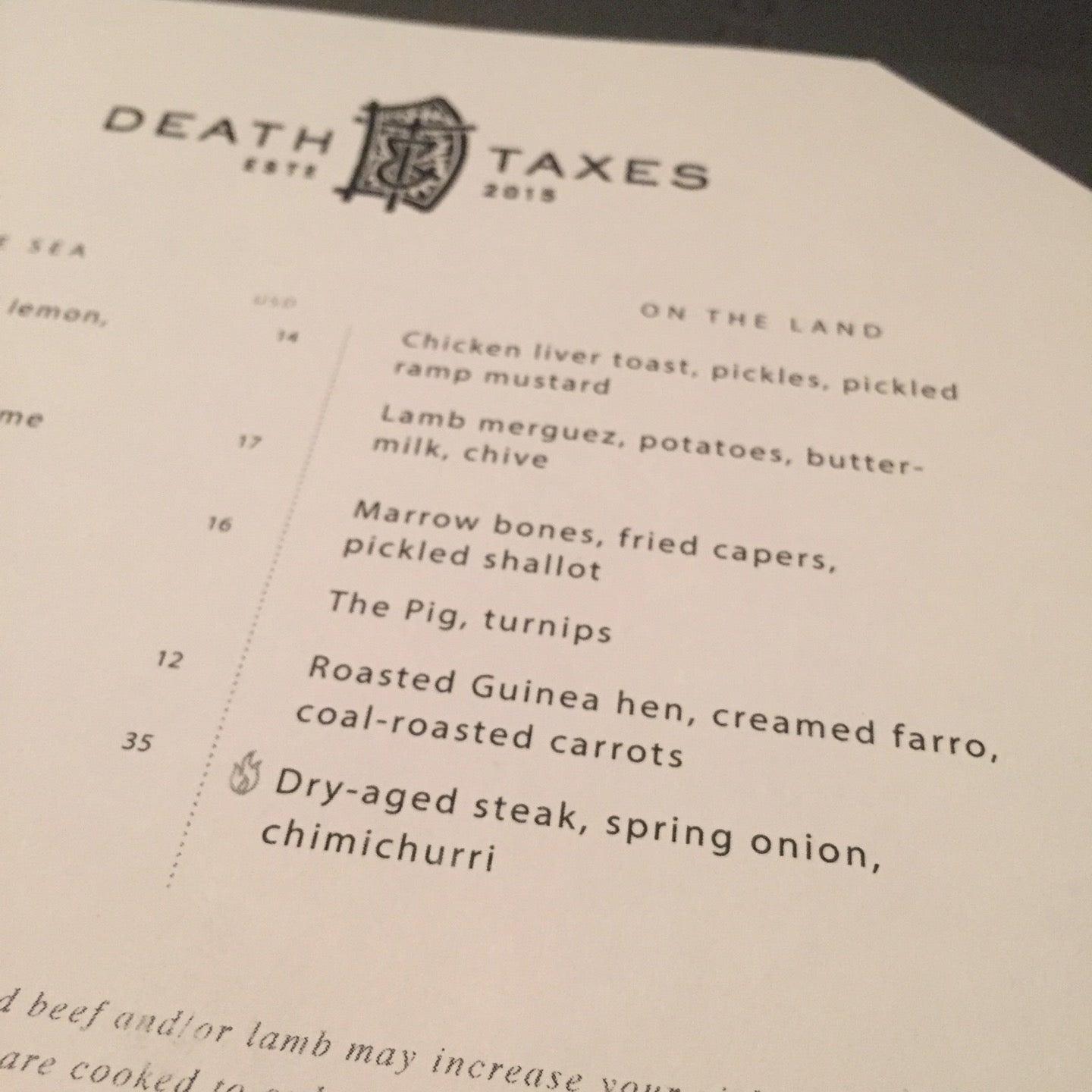
You’re walking down Salisbury Street in downtown Raleigh and the smell hits you before you even see the sign. It’s wood smoke. Deep, heavy, and unmistakable. That’s the calling card of Death and Taxes restaurant, a place that basically flipped the script on what high-end dining in North Carolina looks like when it opened in 2015.
It’s in a bank. Well, a former bank. And a former funeral home.
That’s where the name comes from, obviously. It’s a nod to the building’s history and that cheery Ben Franklin quote about the only two certainties in life. Honestly, the irony isn't lost on anyone sitting there under those massive, glittering chandeliers while eating charred octopus. Ashley Christensen, the powerhouse behind the place, didn't just want a cool name; she wanted to honor the literal bones of the 1907 building.
The Fire in the Kitchen
The heart of Death and Taxes restaurant is a massive wood-burning grill and oven. This isn't just for show. Almost everything touches the flames. It’s a technique that’s deceptively simple but incredibly hard to master because wood fire is fickle. It doesn't have a dial you can just turn down when things get too hot.
Chef Ashley Christensen—who, let’s be real, is basically the queen of Raleigh’s culinary revival—won the James Beard Award for Outstanding Chef in 2019, and you can see why in the way the menu here functions. It’s focused. It’s precise. But it’s also kind of primal.
Take the oysters. Most places serve them raw on ice with a bit of mignonette. Here? They often roast them with chili butter or charred lemon. The heat transforms the texture from slippery to something almost meaty.
Why the Wood Fire Matters
Most modern kitchens rely on gas. It’s predictable. But wood? Wood adds a layer of flavor that's impossible to replicate in a lab. Christensen’s team uses a mix of hardwoods to get that specific aromatic profile. It’s about the "lick" of the flame. That char isn't burnt; it’s a seasoning in its own right.
I’ve seen people complain that the smoke smell sticks to their clothes. To those people, I say: that’s the point. You’re part of the process.
The Architecture of a Funeral Home Turned Eatery
The space is stunning. Huge windows. High ceilings. It’s got that "Bridgeport meets Beaux-Arts" vibe that makes you feel important just standing in the foyer. The preservation work done by the New Kind and Maurer Architecture teams was extensive. They kept the coffered ceilings. They kept the soul of the place.
There’s a specific tension in the design. You have the cold, hard lines of the marble and the historical weight of a bank, but then you have the warmth of the open kitchen. It’s a beautiful juxtaposition. If you look closely at the decor, there are subtle nods to the building’s past, but it never feels like a cheesy theme restaurant. It feels like a gallery where the art is the food.
The Community Table Concept
One thing that surprises people is the seating. While there are private tables, the long communal table is a big part of the Death and Taxes restaurant experience. It forces a certain level of social interaction that we usually try to avoid in 2026.
It’s about "breaking bread." It’s a bit old-school, but it works because the atmosphere is loud enough that you don't feel like you're eavesdropping, yet intimate enough that you might actually pass the salt to a stranger.
What to Actually Order (and What to Skip)
Don't go here if you're looking for a cheap burger. You go to Poole’s Diner (Christensen’s other legendary spot) for the macaroni and cheese. You come to Death and Taxes for the seasonal stuff.
- The Roasted Bone Marrow: It’s fatty, rich, and feels like something a medieval king would eat. They serve it with bread that’s been grilled over the same fire, so the crunch is perfect.
- The Whole Fish: This is usually the star of the show. It’s charred on the outside, flaky and moist on the inside. It’s messy. You have to work for it. But it’s worth it.
- Vegetables: Honestly, the vegetables often outshine the meat. When you put a head of broccoli or a bunch of carrots over a 600-degree wood fire, the sugars caramelize in a way that makes them taste like candy.
The wine list is also curated with a specific focus on selections that can stand up to the smoke. You need high acidity or bold tannins to cut through the richness of wood-fired cooking. The sommelier team here knows their stuff; they won't just point you to the most expensive bottle. They’ll point you to the one that makes the grilled steak taste better.
The Reality of the "Christensen Effect"
Raleigh wasn't always a "foodie" destination. For a long time, it was just a government town with some decent barbecue spots. Christensen changed that. By opening Death and Taxes restaurant in the center of the city, she signaled that Raleigh was ready for sophisticated, technique-driven dining.
But it’s not without its critics. Some people find the prices steep. Others find the "death" branding a bit macabre. But you can't argue with the impact. This restaurant helped revitalize a block of downtown that desperately needed it. It created a hub.
Sustainability and Sourcing
They aren't just buying stuff from a massive distributor. They work with local North Carolina farmers. Sunburst Trout Farms, for example, has been a staple. This isn't just some marketing fluff; you can taste the difference in the freshness. The menu changes constantly because it has to. If the ramps aren't in season, you aren't getting ramps. Period.
Navigating the Reservation Game
Getting a table at Death and Taxes restaurant isn't as hard as it used to be back in 2016, but on a Friday night? Good luck. You’re going to want to use OpenTable well in advance.
If you’re a solo traveler or just a couple, try to snag a seat at the bar. It’s the best seat in the house. You get to watch the bartenders do their thing—which is its own kind of theater—and you can usually get the full dinner menu there without the three-week wait for a booth.
The cocktails are heavy on the classics but with a twist. Think of an Old Fashioned, but maybe the simple syrup was smoked or the bitters are house-made. It ties back to the whole "wood-fire" theme. It’s cohesive.
Practical Insights for Your Visit
If you’re planning to go, keep these few things in mind to actually enjoy the experience rather than just checking it off a list:
- Dress Code: It’s Raleigh, so "smart casual" is the vibe. You'll see people in suits and people in nice jeans. Just don't roll up in gym shorts.
- Parking: Downtown Raleigh parking is a nightmare. Use the Wilmington Street deck or just Uber. Don't spend forty minutes circling the block while your reservation time ticks away.
- The "Private" Room: If you have a big group, ask about the cellar. It’s intimate, surrounded by wine bottles, and feels like a secret club.
- The Price Point: Expect to spend $80-$120 per person if you’re doing it right (cocktail, appetizer, entree). It’s an investment in a night out.
Death and Taxes restaurant remains a cornerstone of the North Carolina food scene because it doesn't try to be everything to everyone. It does one thing—wood-fired Southern elegance—better than almost anyone else in the Southeast. It’s a reminder that even in a world of lab-grown meat and digital everything, there’s something deeply satisfying about sitting near a fire and eating food that was cooked over an actual flame.
When you go, pay attention to the bread. It seems simple. But that charred, smoky crust is the distillation of the entire restaurant's philosophy in a single bite. It’s honest. It’s rough around the edges. It’s exactly what dining should be.
To make the most of your evening, arrive 15 minutes early to grab a drink at the bar before your table is ready. Focus on the seasonal specials rather than the staples; the kitchen’s creativity is best displayed when they are working with limited-run local ingredients. Finally, don't be afraid to ask the server about the specific wood being used that night—it changes the flavor profile of the meat more than you’d think.