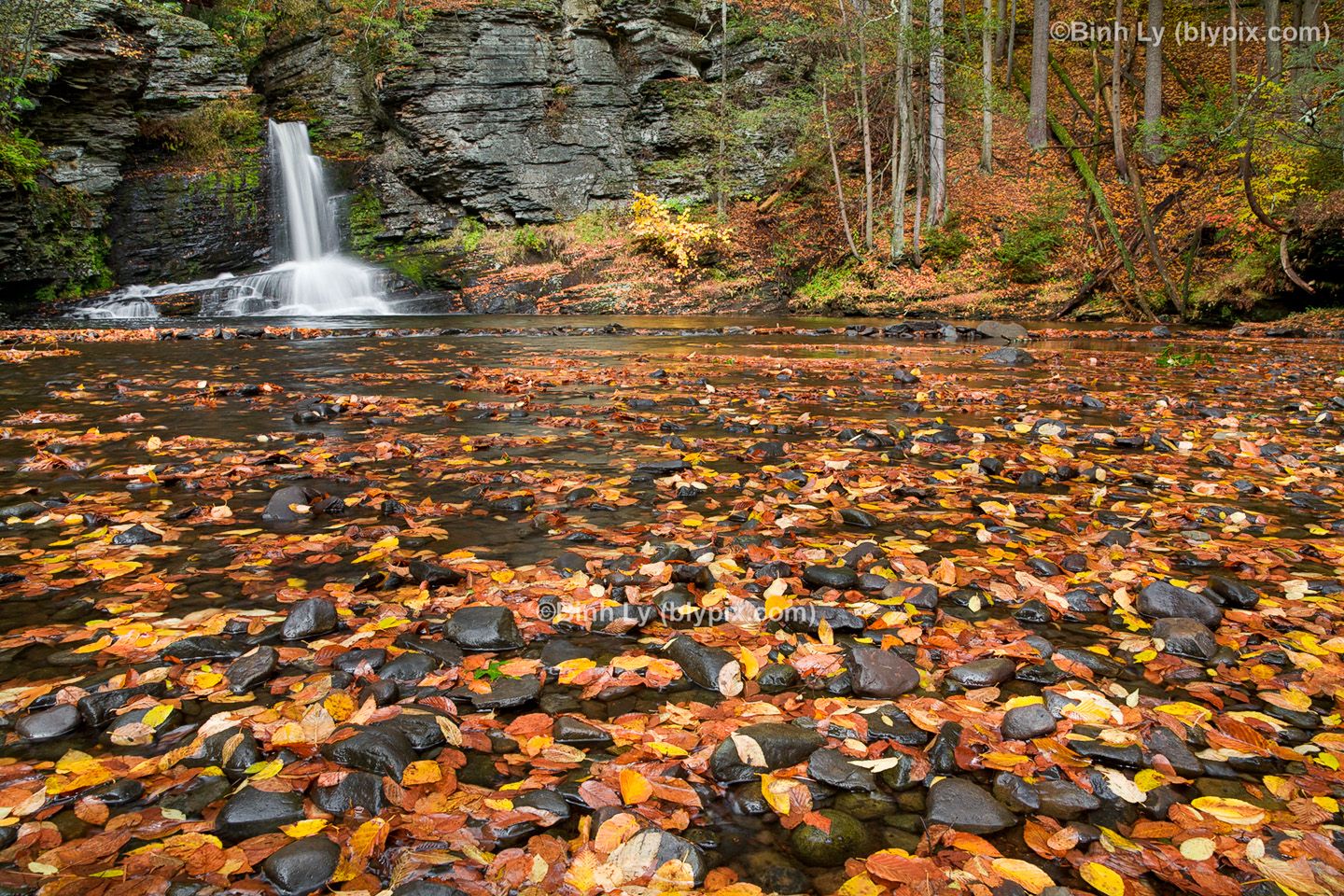
You’re standing at the bottom of Raymondskill Falls and the mist is hitting your face so hard you can barely keep your eyes open. It’s loud. Not just "nature sounds" loud, but a deep, rhythmic thrumming that vibrates in your chest. Most people check the weather app, see a 40% chance of showers, and cancel their trip to the Poconos. They’re making a massive mistake.
Honestly, the Delaware Water Gap waterfalls are a completely different beast when the ground is soggy.
The Delaware Water Gap National Recreation Area spans about 70,000 acres across the border of Pennsylvania and New Jersey. It’s a massive playground. But the waterfalls are the real pull. We’re talking about some of the tallest cascades in the Mid-Atlantic. If you’ve ever scrolled through Instagram and seen those silky, long-exposure shots of water tumbling over grey slate, there's a high chance you were looking at this specific corner of the world.
The Big Three: Dingmans, Raymondskill, and Silverthread
Let’s get the heavy hitters out of the way first. You can’t talk about this place without mentioning Raymondskill Falls. It is technically the tallest waterfall in Pennsylvania. People get weirdly competitive about this fact, comparing it to Niagara. Look, it’s not Niagara. It’s about 4 feet shorter if you’re counting the total drop, but the vibe is totally different. It’s tiered. Three distinct sections drop the water down a combined 178 feet.
The National Park Service has built two solid viewing platforms here. The upper one gives you that "on top of the world" feeling, while the lower one lets you see the sheer scale of the limestone cliffs. If you go right after a heavy spring thaw, the middle tier almost disappears into a chaotic wall of white water. It’s intense.
Then there’s Dingmans Falls. This is the "easy" one, but don't let the boardwalk fool you into thinking it's boring. The boardwalk is actually a genius move by the NPS because it protects the rare ferns and mosses that grow in the spray zone. You walk through this deep, hemlock-shaded ravine—which stays surprisingly cool even in July—and you hit Silverthread Falls first. It’s a thin, delicate ribbon that drops 80 feet through a narrow crack in the rock. It looks like something out of a Japanese woodblock print.
Keep walking. The boardwalk ends at the base of Dingmans. It’s 130 feet of thunder. Most people stop at the bottom, take a selfie, and leave. Don't do that. Take the stairs. Yes, there are a lot of them. Your quads will burn. But the view from the top, looking down into the throat of the falls, is how you actually appreciate the geology of the Delaware Water Gap waterfalls.
The "Secret" Spots That Aren't Really Secrets Anymore
But what about the places where you don't have to dodge a stray selfie stick?
Buttermilk Falls on the New Jersey side is a weird one. It’s one of the highest in Jersey. To get there, you usually have to drive down Mountain Road, which is... let's call it "adventurous." It's unpaved. It has potholes that could swallow a Miata. But once you arrive, the waterfall is right there. No hiking required, unless you want to jump on the Appalachian Trail, which passes right by the top.
Then you have Tumbling Waters. This one is tucked away behind the Pocono Environmental Education Center (PEEC). It’s a three-mile loop. Most tourists are too lazy for a three-mile loop. Their loss. The trail takes you through diverse forest types before dropping you at a two-tiered waterfall that feels much more "wilderness" than the boardwalked spots. You’ll likely have it to yourself on a Tuesday morning.
The Geology of Why This Happens
The reason we have these waterfalls isn't just "mountains." It's actually about the dramatic difference in rock hardness. You have this tough, erosion-resistant sandstone sitting on top of softer shale. For thousands of years, the water has been eating away at the shale, undercutting the sandstone until it breaks off in clean, vertical chunks. This is why many Delaware Water Gap waterfalls have that "staircase" look.
It’s a process called headward erosion. The falls are actually moving backward, very slowly, over centuries. You’re watching the landscape migrate in slow motion.
When to Go (And When to Avoid)
Timing is everything. If you show up in late August during a dry spell, Raymondskill might look like a leaky faucet. It’s depressing.
- Spring (March–May): This is peak season for volume. The snow is melting off the Pocono Plateau and the rains are frequent. The water is chocolate-brown sometimes from the silt, but the power is unmatched.
- Winter: This is the pro move. When the temperatures stay below freezing for a week, these falls turn into massive ice sculptures. Ice climbers sometimes frequent the less-regulated areas, though the NPS has strict rules about where you can actually swing an ice axe.
- Autumn: Beautiful, obviously, but the leaf-peepers are out in force. Traffic on Route 209 can become a nightmare.
If you want the best photos, go when it’s overcast. Direct sunlight creates harsh shadows and "blows out" the white of the water in your pictures. A cloudy day acts like a giant softbox, making the greens of the moss and the oranges of the fallen leaves pop against the dark wet stone.
Common Misconceptions About the Gap
People think the "Water Gap" is the waterfall. It's not. The Gap itself is the distinct "U" shaped notch in the mountains where the Delaware River carves through the Ridge-and-Valley Province. The waterfalls are all on the tributaries—the smaller creeks like Raymondskill Creek or Dingmans Creek—that are desperately trying to reach the main river down in the valley.
Another myth? That you need heavy-duty hiking boots for everything. For Dingmans, you could honestly wear flip-flops (though I wouldn't recommend it for the stairs). For something like Hackers Falls or the trails near George W. Childs Park, you definitely want something with grip. The slate in this region is notoriously slippery when wet. It’s like walking on greased glass.
The Tragedy of Childs Park
Speaking of George W. Childs Park, it’s been a sore spot for locals lately. This area used to be the crown jewel of the Delaware Water Gap waterfalls, featuring Factory Falls, Fulmer Falls, and Deer Leap Falls all in one short walk. However, a massive storm in 2018 (Winter Storm Riley) absolutely wrecked the infrastructure. Trees went down like toothpicks, and the boardwalks were crushed.
The park has been closed for years for reconstruction. The good news? It’s finally seeing real progress with massive federal funding. When it fully reopens, it will likely be the most popular spot in the entire recreation area again. It’s worth checking the NPS website for current "status updates" because they’ve been teasing a reopening for a while now.
Actionable Tips for Your Trip
Don't just plug "waterfall" into your GPS and hope for the best.
- Download Offline Maps. Cell service is non-existent once you drop into the valley. Google Maps will fail you right when you’re trying to find the turn-off for the McDade Trail.
- Start at the Dingmans Falls Visitor Center. Even if you don't need a map, the rangers there are a goldmine of info. They’ll tell you if a trail is washed out or if the bears are particularly active in a certain section.
- The New Jersey Side is Quieter. Most people stick to the Pennsylvania side (Route 209). If you cross the bridge at Dingmans Ferry (which is one of the last privately owned toll bridges in the country and costs about $2), the New Jersey side offers a much more rugged, less crowded experience.
- Check the Flow. Look at the USGS water gauges for the Delaware River at Montague or Riegelsville. If the river is high, the falls are guaranteed to be pumping.
- Bring a Change of Socks. Sounds basic. But between the river mist and the muddy trails, you're going to want dry feet for the drive home.
Final Logistics
Parking is free at most of the waterfall trailheads, but they fill up by 10:00 AM on weekends. If you show up at noon on a Saturday in July, you’ll be circling the lot like a vulture. Aim for a Tuesday morning or a rainy Thursday. You'll see the Delaware Water Gap waterfalls the way they were meant to be seen—wild, loud, and a little bit intimidating.
The real magic isn't just the height or the stats. It's the fact that in a few hours' drive from NYC or Philly, you can be in a hemlock forest that feels like the Pacific Northwest.
Check the National Park Service's "Current Conditions" page before you head out. They post alerts about road closures or toxic algae blooms that can occasionally affect the river. Once you’ve confirmed the roads are open, head straight for Raymondskill. Hike the loop, then head south to Dingmans. If you still have daylight, finish the day at the Buttermilk Falls trailhead in Jersey. That’s the most efficient way to see the best of the Gap in a single sun-cycle.