If you’re driving up the 5 or the 210 and see that giant, geometric white cube jutting out near the Hansen Dam, you might think it’s just another children's museum. It isn't. Not really. Most locals just call it the Cube, but the Discovery Cube Los Angeles Sylmar CA 91342 is basically a massive, high-tech playground designed to trick kids into learning physics and environmental science while they think they’re just making a mess. Honestly, it’s one of those rare spots in the Valley where the "edutainment" label actually sticks without being cringey.
It's big.
Spread across a sprawling site next to the Hansen Dam Recreation Area, this specific branch of the Discovery Cube—there’s another famous one in Orange County—opened its doors around 2014 to give San Fernando Valley families something more substantial than a standard neighborhood park. It took over the site of the old Children's Museum of Los Angeles, which had a bit of a rocky history. Now, it’s a powerhouse.
The Helicopter That Actually Teaches You Something
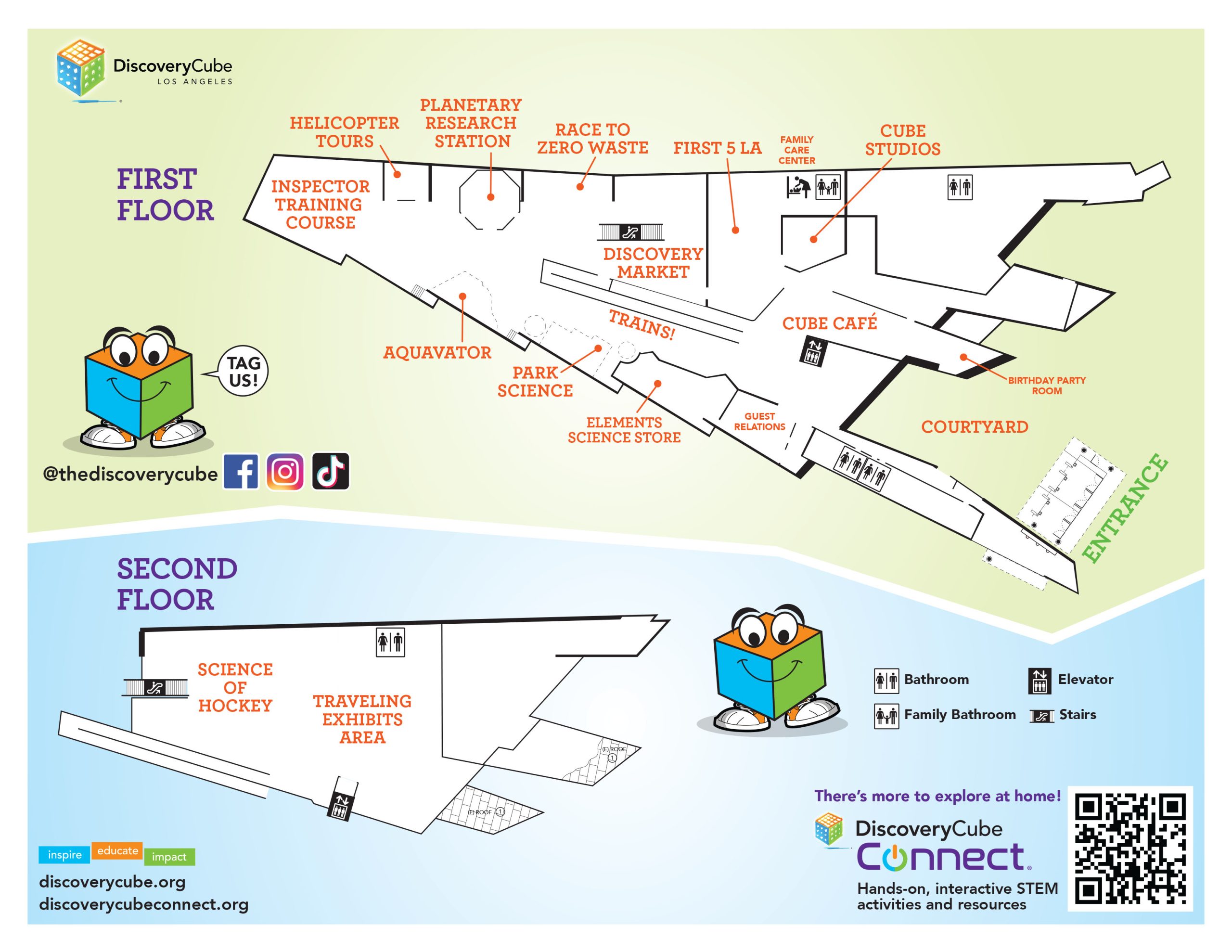
The first thing you notice when you walk into the Discovery Cube Los Angeles Sylmar CA 91342 is the sheer scale of the exhibits. There is a helicopter. Well, a simulated one. It’s the Discovery Market and the Sustainability Treehouse that usually grab people, but the helicopter tour over California’s natural resources is what sticks in your brain. You sit in these seats, the floor shakes, and you’re suddenly "flying" over the state to see how water moves through our aqueducts.
It's kinda wild how they handle the drought conversation.
Instead of just lecturing kids about turning off the faucet, they have the "Aquator" exhibit. It’s interactive. It’s loud. It shows the sheer complexity of the California Delta. You’ve got kids literally pumping water and moving levers to understand why Los Angeles—a desert, basically—has green lawns. It’s nuanced. It doesn't shy away from the fact that our water situation is, frankly, a bit of a miracle and a mess at the same time.
Why the Sylmar Location Hits Different
Location matters. If this museum were in Downtown LA, you’d be paying fifty bucks for parking and fighting three million people for a glimpse of a microscope. In Sylmar, specifically at 11800 Foothill Blvd, it feels integrated into the landscape. You have the Hansen Dam right there. You have the breeze coming off the mountains.
The architecture itself is a statement. That cube isn't just for show; it’s a symbol of the "science is everywhere" ethos. Inside, the layout is open, which is a godsend for parents who have kids that tend to bolt toward the nearest shiny object. You can actually see from one end of a gallery to the other.
Let's talk about the grocery store.
The Discovery Market is probably the most popular "game" in the building. Kids get a shopping cart with a digital screen and a list of items to "buy." But here’s the kicker: they have to scan items based on their environmental impact. Is this packaging recyclable? Is this fruit in season? It turns a mundane chore into a high-stakes scavenger hunt. I’ve seen grown adults get competitive over whether a plastic jug of milk is a better "eco-choice" than a carton. It’s addictive.
Pushing the Boundaries of "Museum" Exhibits
We need to discuss the "Physics Lab." This isn't your high school physics class with a bored teacher and a dusty chalkboard.
- The Planetary Research Station: This is a giant, suspended globe that uses NASA data to project weather patterns, flight paths, and even the movement of tectonic plates. It’s mesmerizing. You can watch a hurricane form in real-time or see how the Earth looks at night from space.
- The Science of Hockey: This is a huge collaboration with the LA Kings. It’s weirdly specific but works so well. You can try to block shots as a goalie or see how fast your slap shot is. It explains the friction of ice and the aerodynamics of a puck. It’s noisy, it’s chaotic, and it’s brilliant.
One thing the Discovery Cube Los Angeles Sylmar CA 91342 gets right is the rotating exhibit space. They don’t just sit on the same displays for a decade. They bring in high-level touring exhibits—things like Hot Wheels: Race to Win or Teenage Mutant Ninja Turtles: Secrets of the Sewer. These aren't just fluff; they bake actual engineering principles into the "fun" stuff. If a kid is building a Lego car, they’re actually learning about center of gravity and torque, even if they don't realize it.
The Environmental Focus is Real
Sylmar is a unique part of LA. It’s got that equestrian, semi-rural vibe while still being part of the city. The Cube leans into this with its focus on the "green" side of things. The Sustainability Treehouse is a multi-story structure that teaches about the ecosystem of the Foothills.
You’ll see displays on:
- Wildfire prevention: Crucial for this part of the Valley.
- Native plants: Why your backyard should have more sage and less grass.
- Waste management: The "Race to Zero Waste" game is a workout. You’re literally sorting trash on a conveyor belt to see how much you can divert from a landfill.
It feels urgent. It feels like the museum is actually trying to solve local problems by educating the people who will live here in twenty years. It’s not just abstract science; it’s Sylmar science.
Practical Realities: Parking, Food, and Sanity
Look, no museum trip is perfect. If you go on a Saturday at 11:00 AM, it’s going to be loud. Very loud. The acoustics in a giant cube-shaped building aren't exactly "library-quiet."
Parking is free. Let that sink in for a second. In Los Angeles, finding a major cultural institution with a massive, free parking lot is like finding a unicorn. It’s right off the lot, easy in, easy out.
As for food, there’s a Bean Sprouts café inside. It’s healthy. They do the "Instagrammable" kid food thing—think sandwiches shaped like owls or crocodiles. It’s fine, but if you’re a local or a savvy traveler, you might want to hit up some of the incredible Mexican food spots in Sylmar afterward. You’re in the Valley; the taco game is elite.
One thing people overlook is the outdoor space. Since it’s right by the dam, you can make a full day of it. Museum in the morning, a walk or a picnic by the water in the afternoon. It beats sitting in traffic on the 405.
Is it Just for Kids?
Sorta.
I mean, if you’re a group of 25-year-olds with no children, you might feel a little out of place in the bubble-blowing section. But for teachers, nerds, or anyone interested in how to communicate complex ideas simply, it’s a masterclass. The way they use tactile feedback—vibrating floors, wind machines, touch screens—to explain things like wind power or seismic waves is genuinely impressive.
They also do "Cube After Dark" events occasionally. These are 21+ nights where you can explore the exhibits with a drink in your hand and no toddlers running underfoot. That’s when the Science of Hockey gets really competitive.
What to Know Before You Go
If you're planning a visit to the Discovery Cube Los Angeles Sylmar CA 91342, there are a few things that aren't always obvious on the website.
First, check the weather. While the museum is indoors, some of the best views of the Foothills and the outdoor lab areas are better when it’s not 105 degrees in the Valley. Second, look into a membership if you think you’ll go more than twice. It usually pays for itself in two visits, especially if you have a couple of kids. Plus, Discovery Cube is part of the ASTC Travel Passport Program. This means if you have a membership here, you can get into hundreds of other science centers around the world for free or a deep discount. It’s a huge travel hack.
The staff there are mostly "Inspirers." These are younger folks, often science students, who walk around and actually engage with the kids. They don't just stand there like security guards. They’ll help a kid figure out why their paper airplane keeps nosediving or explain how a solar panel works. It makes the experience feel less like a facility and more like a community center.
The Verdict on the Sylmar Experience
The Discovery Cube Los Angeles Sylmar CA 91342 isn't trying to be the Getty. It’s not trying to be the Natural History Museum. It has a specific mission: make science tactile, local, and loud. It succeeds because it doesn't talk down to people. It assumes kids are smart enough to understand the water cycle and that parents are tired enough to appreciate free parking and a safe place for their kids to run around.
It's a landmark of the San Fernando Valley for a reason. Whether you're there to see the seasonal "Noon Year's Eve" celebration or just to spend a rainy Tuesday exploring the physics of a hurricane, it delivers.
Next Steps for Your Visit:
- Check the Calendar: Before you drive out, look at their official site for "Special Engagement" exhibits. These change every few months and are often included in the price of general admission.
- Buy Tickets Online: You can usually skip the entry line, which is a life-saver on holiday weekends.
- Pack Socks: Some of the play areas require them, and buying them at the gift shop is an avoidable expense.
- Plan for Post-Museum Eats: Explore the local Sylmar food scene. There are some incredible family-owned spots within a three-mile radius that offer a much better vibe than a food court.
- Bring a Portable Charger: You'll be taking more videos of the "Earthquake Simulator" than you think, and the building's layout can sometimes eat your phone's battery while searching for a signal.