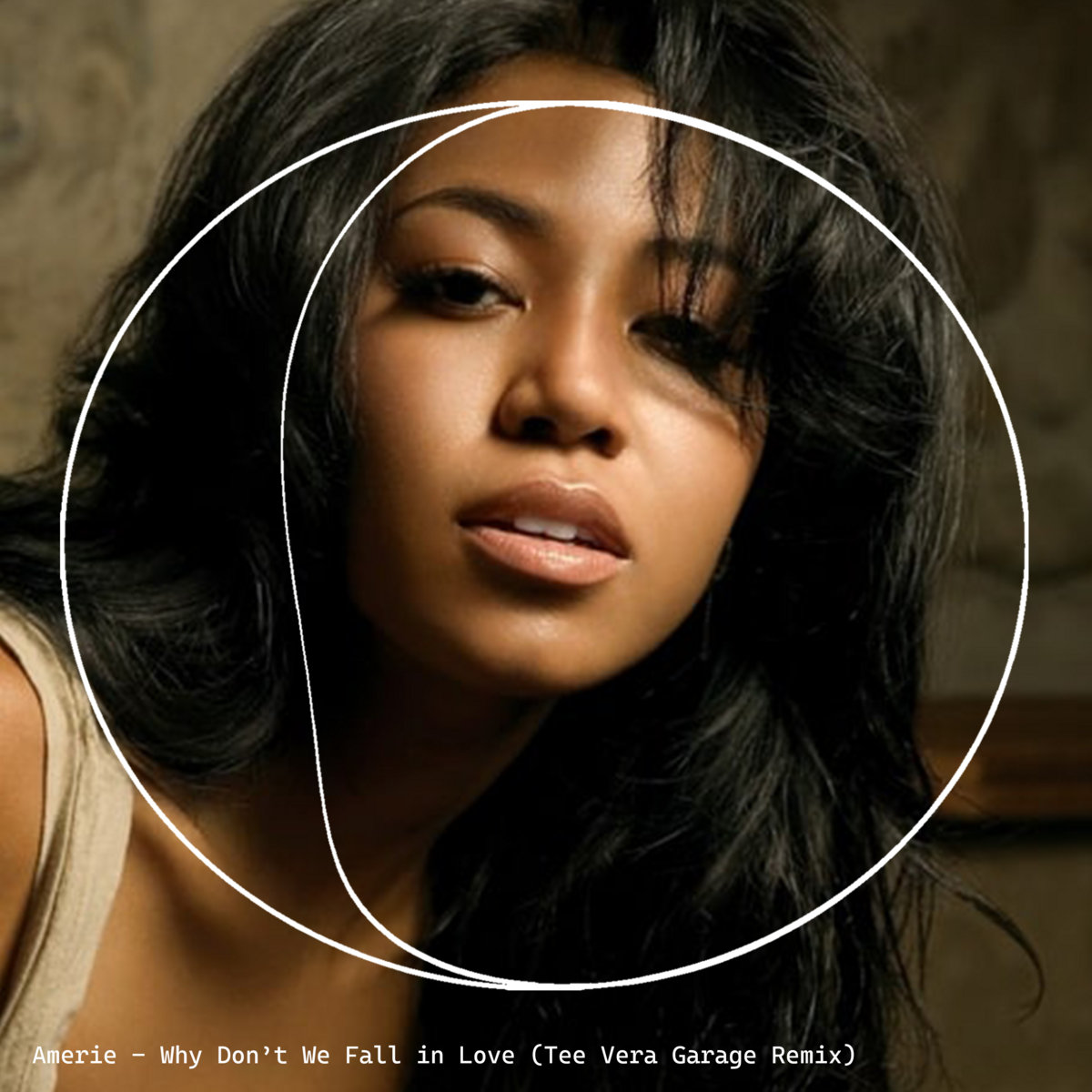
Summer of 2002 felt different. If you were anywhere near a radio or a car with the windows rolled down, you heard that distinct, bright, stuttering beat. It wasn't just another R&B track. It was a shift. Why Don't We Fall In Love Amerie wasn't just a debut single; it was a blueprint for a specific kind of breezy, soulful nostalgia that most artists are still trying to replicate today.
Rich Harrison. That’s the name you have to know. Before he gave Beyoncé "Crazy In Love," he was in the lab with Amerie Rogers, crafting a sound that felt like a backyard BBQ in D.C. It was organic. It was loud. It used a sample from The Main Ingredient’s "You-How Can I Tell My Heart" but flipped it into something that felt like a heartbeat.
Honestly, the song shouldn't have worked as well as it did. The vocals aren't over-the-top. Amerie doesn't try to out-sing the track with Whitney-style melismas. Instead, she floats. Her voice has this light, almost conversational quality that makes the "Why Don't We Fall In Love" hook feel like a genuine question you’d ask someone while sitting on a porch at 2:00 AM.
The Rich Harrison Factor and the Go-Go Influence
You can't talk about this song without talking about Washington D.C. Go-go music is the lifeblood of that city, and Rich Harrison brought that aggressive, percussion-heavy energy to Amerie’s debut album, All I Have. While the rest of the industry was leaning into polished, synth-heavy Neptunes beats or the dark, moody vibes of Murder Inc., Amerie went the other way.
It was sunny.
The drums on "Why Don't We Fall In Love" are crisp. They have this "live" feel that was missing from a lot of programmed R&B at the turn of the millennium. It’s the kind of track that makes you want to move, but it’s not a club banger. It’s a "vibe" track before we started overusing the word "vibe" for everything.
People forget that Amerie was a college student at Georgetown when this was happening. There was a groundedness to her. She wasn't a child star groomed by a label since age six. She was a girl who loved literature and had a vision for a soulful, slightly hip-hop-inflected sound. That authenticity bled into the music video—the orange-tinted visuals, the basketball courts, the genuine smiles. It felt like real life, just slightly more aesthetic.
Why the Song Still Dominates Your Summer Playlists
Why does a song from over twenty years ago still hit the "Top 10" of every "Best Summer Songs" list on Spotify?
It’s the tempo. At roughly 100 BPM, it sits in that sweet spot where it’s fast enough to be upbeat but slow enough to be soulful. Modern R&B often falls into two camps: it’s either a 60 BPM "trapsoul" ballad that makes you want to stare at rain on a window, or it’s a high-energy dance track. "Why Don't We Fall In Love" occupies a middle ground that has largely disappeared from the charts.
Also, let’s talk about the lack of a rap feature.
In 2002, if you were a new R&B singer, the label almost forced a rapper onto your lead single to ensure radio play. Look at Ashanti with Ja Rule or Jennifer Lopez with... well, everyone. Amerie stood alone on her debut. There’s no guest verse to break the spell. It’s just her, the beat, and those lush background harmonies. It proved that her voice and Harrison’s production were enough to carry the weight.
The Misconception of the "One-Hit Wonder" Tag
A lot of casual listeners mistakenly lump Amerie into the one-hit-wonder category because "1 Thing" was such a massive, world-conquering juggernaut a few years later. But that’s a massive disservice to her debut.
"Why Don't We Fall In Love" peaked at number 23 on the Billboard Hot 100 and reached the top 10 on the R&B charts. It wasn't a fluke; it was a foundational hit. It established her as the "Girl Next Door" with a sophisticated ear. If "1 Thing" was the chaotic, funk-fueled explosion, "Why Don't We Fall In Love" was the warm invitation.
The song also marked a turning point for Columbia Records. They saw that there was a market for "sophisticated soul" that wasn't quite Neo-Soul (like Maxwell or Erykah Badu) but wasn't "Pop-R&B" (like early Rihanna or Christina Aguilera). It was its own lane.
Breaking Down the Production: The Sample That Built a Career
Rich Harrison’s use of The Main Ingredient’s 1971 track is a masterclass in sampling.
He didn’t just loop a melody. He took the "soul" of the original—that warm, analog feeling—and layered it under a drum pattern that felt like it was being played on a plastic bucket in a subway station. That contrast is what makes the song timeless.
The technical bits:
The song uses a 4/4 time signature, but the swing on the drums gives it a rhythmic complexity. When Amerie sings the bridge—"It's so simple to me / If you want it to be"—the music strips back just enough to let the sentiment land. It’s deceptive simplicity.
We see the influence of this specific production style in later hits. You can hear echoes of Amerie's debut in Beyoncé’s Dangerously in Love album. You can hear it in the way Ari Lennox or Summer Walker occasionally use "vintage" textures today. Amerie and Rich Harrison basically beta-tested the "Retro-Contemporary" sound that would dominate the mid-2000s.
The Fashion and the Cultural Moment
You can't separate the song from the video. Directed by Benny Boom, the visuals for "Why Don't We Fall In Love" are a time capsule of 2002 urban fashion.
- The oversized hoop earrings.
- The soft, wavy hair.
- The "no-makeup" makeup look.
- The vibrant, saturated colors of the city streets.
It wasn't about being "extra." It was about being "cool." Amerie looked like the girl you’d see at the mall, but with a glow that felt untouchable. It sparked a look that many young women in the DMV (D.C., Maryland, Virginia) area and beyond rushed to emulate.
Why Don't We Fall In Love Amerie: The Lyrics and the Vibe
The lyrics aren't deep. Let's be real. It’s a song about the early stages of a crush. It’s about that "maybe" phase.
"I've been watching you for a long time / Trying to figure out what's on your mind."
It’s relatable. It’s not about heartbreak or betrayal or high-stakes drama. It’s a low-stakes, high-reward song. In a post-9/11 world, 2002 was a year where people really gravitated toward music that felt safe and warm. This track was the sonic equivalent of a sunbeam.
Interestingly, there’s a remix featuring Ludacris that some people prefer, but the original solo version is the one that carries the legacy. The solo version allows the listener to project themselves into the song more easily. It’s a universal feeling.
The Legacy of All I Have
Amerie’s debut album, All I Have, went Gold, which was a huge deal for a debut R&B artist at the time who wasn't attached to a major "crew" like Roc-A-Fella or So So Def.
The industry respected her. Critics at Rolling Stone and Vibe praised the album for its cohesion. It didn't feel like a collection of random singles; it felt like a specific artistic statement. And "Why Don't We Fall In Love" was the thesis statement for that entire era.
If you go back and listen to the album now, it hasn't aged the way a lot of 2002 music has. It doesn't have those "cheap" digital sounds that plagued the early 2000s. Because it relied so heavily on soulful samples and live-sounding percussion, it remains incredibly fresh.
What You Should Do Now
If you haven't listened to the track in a while, do yourself a favor.
- Listen to the original 2002 album version first, not the remix. Pay attention to the way the drums sit in the mix.
- Watch the music video on YouTube. Look at the color grading—it’s a masterclass in creating a summer atmosphere.
- Check out the B-sides. Songs like "Talkin' to Me" (the second single) carry that same Rich Harrison magic but with a slightly more mellow tempo.
- Explore the sample. Listen to "You-How Can I Tell My Heart" by The Main Ingredient. It’ll give you a whole new appreciation for how Rich Harrison "heard" the potential in that old record.
The reality is that music like this doesn't happen by accident. It’s a combination of a singer who knows her lane, a producer with a radical new sound, and a cultural moment that was ready for something bright and soulful. Amerie gave us a classic that doesn't just remind us of 2002; it makes us wish every summer felt like that.
Next time you're putting together a playlist for a drive or a hang-out, put this track right at the beginning. It sets a tone that few other songs can match. It’s an instant mood-lifter. It’s a reminder that sometimes, the best music isn't trying to be profound—it’s just trying to capture a feeling. And Amerie captured it perfectly.