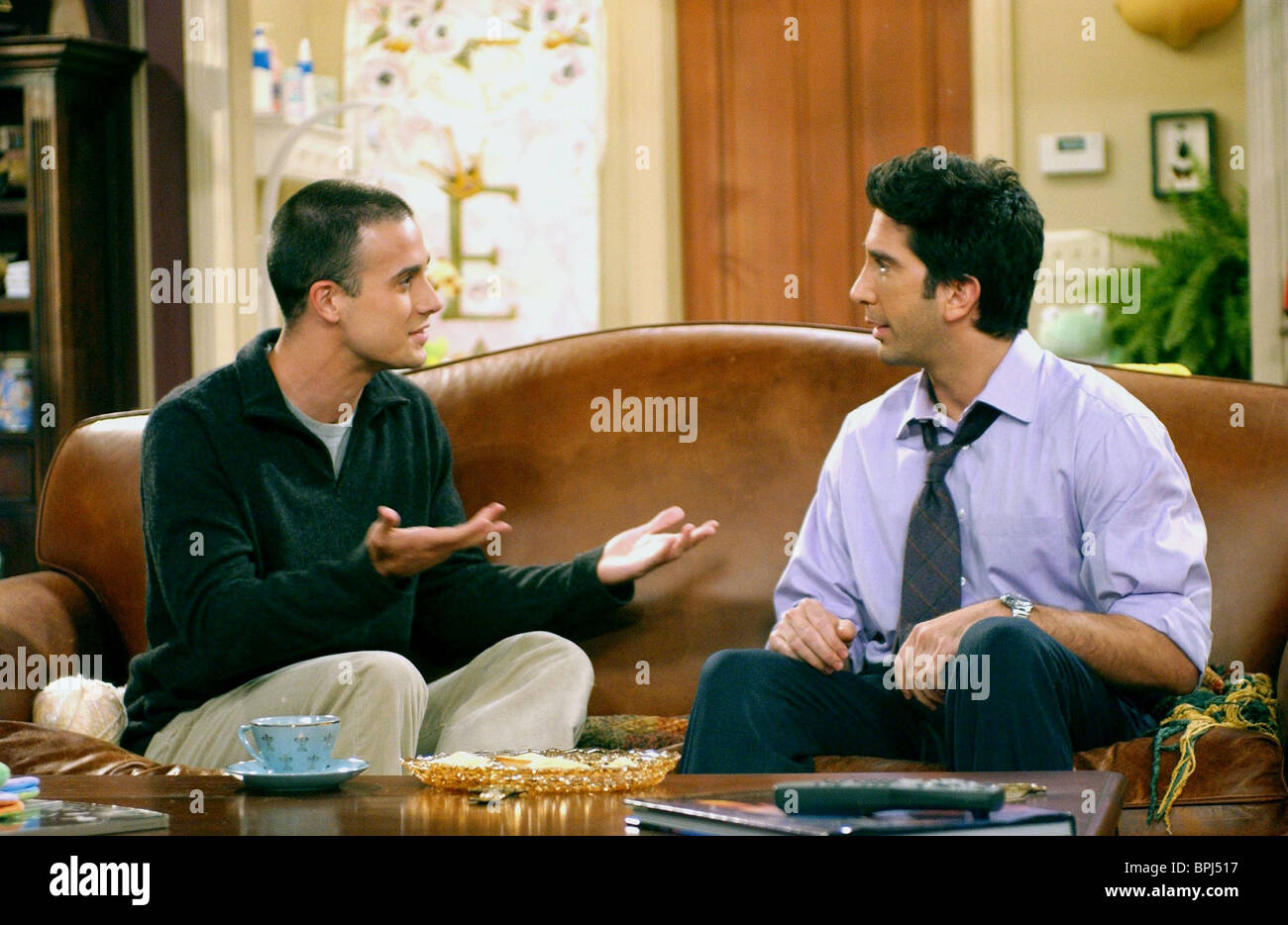
Freddie Prinze Jr. was the king of the world in 2002. He had just finished Scooby-Doo, he was the "it" guy of teen cinema, and he was about to walk onto the set of the biggest show on television. When we talk about Freddie Prinze Jr. Friends appearances, most people immediately think of the sensitive, recorder-playing male nanny, Sandy. It was the show’s 200th episode. Huge milestone. But what most fans don't realize is how close that iconic guest spot came to never happening at all.
Originally, the role of Sandy wasn't even meant for Freddie. It was written for Tom Hanks. Yeah, Forrest Gump himself. But Hanks was stuck on a film set and couldn't make the dates work. At the absolute last minute—we’re talking "get to the studio right now" territory—Freddie got the call. He didn't have days to prep. He didn't have weeks to find the character. He basically just showed up, grabbed a flute, and made TV history.
The Sandy Phenomenon: Breaking the 2000s Macho Mold
Sitcoms in the early 2000s were, honestly, a little rigid. You had your "guys' guys" and your "girls' girls," and the lines didn't blur often. Then Sandy walks into Rachel and Ross’s apartment. He’s sensitive. He cries more than the baby. He’s a male nanny—a "manny"—which was a concept the show’s writers used to poke fun at Ross’s deep-seated insecurities and fragile masculinity.
Ross Geller, played by David Schwimmer, is notoriously neurotic. Seeing Freddie Prinze Jr., a certified Hollywood heartthrob, play a guy who bakes madeleines and plays "Greensleeves" on a recorder was comedy gold because of the juxtaposition. It wasn't just a cameo; it was a character study in how uncomfortable people used to get when men showed "too much" emotion. Freddie played it with such genuine sweetness that you couldn't help but side with him over Ross.
The comedy worked because Freddie didn't play Sandy as a joke. He played him as a highly competent, emotionally intelligent professional who just happened to be way more "in touch" than the father of the child he was watching. When Ross eventually fires him, it’s one of those rare moments where the audience actually feels bad for a guest character. Sandy was just too good for that world.
Behind the Scenes of the 200th Episode
Imagine the pressure. You’re stepping onto a set where the six lead actors have been a tight-knit family for nine years. It's the 200th episode celebration. The energy is electric, but also probably a bit intimidating. Freddie has mentioned in several interviews that he was incredibly nervous. He had to learn the recorder for the part, which isn't exactly the easiest instrument to make sound "pro" on short notice.
He actually credited David Schwimmer for being a massive help. Despite their characters being at odds, Schwimmer was a technician of comedy. He helped Freddie find the rhythm. Sitcom acting is like music—there’s a beat, a pause, and a punchline. If you miss the beat, the joke dies. Freddie nailed it.
- The episode was titled "The One with the Male Nanny."
- It aired on November 7, 2002.
- It remains one of the highest-rated guest spots in the show's history.
Why Freddie Prinze Jr. and Friends Defined an Era
There’s a reason we still see clips of Sandy on TikTok and Instagram Reels twenty-plus years later. It’s the nostalgia of the "Silver Age" of sitcoms. During that period, Friends was the ultimate destination for movie stars. Everyone from Brad Pitt to Julia Roberts did a stint. But Freddie’s guest spot felt different because it wasn't just a "famous person playing themselves" moment. He actually built a character.
Most guest stars on the show were there to date one of the leads and then vanish after a messy breakup. Sandy didn't date anyone. He was a disruptor. He challenged the status quo of the Geller household. When we look back at Freddie Prinze Jr. Friends history, we see a bridge between the 90s teen idol Freddie and the more mature, versatile actor he was becoming. He wasn't afraid to look "un-cool" or sensitive, which was a big deal for a guy whose face was on every teenage girl's wall at the time.
Life After the Central Perk Set
Freddie didn't just stay in the sitcom lane. If you follow him now, you know he’s a massive force in the gaming and voice-acting world. He’s Kanan Jarrus in Star Wars Rebels. He’s Iron Bull in Dragon Age. He even had a stint as a producer and writer for World Wrestling Entertainment (WWE). The guy has layers.
But Sandy still follows him. In 2026, with the constant cycle of reboots and reunion specials, fans are still obsessed with that one-off performance. It’s a testament to the writing of the show, but mostly to Freddie’s willingness to lean into the absurdity of the role. He knew exactly what the audience needed: a break from the usual Ross-and-Rachel drama and a bit of wholesome, flute-playing sincerity.
Interestingly, Freddie has shared that the "manny" role actually mirrored his own life later on. He became a very hands-on father, famously stepping back from Hollywood for long periods to be with his kids while Sarah Michelle Gellar worked. He basically lived the Sandy life, minus the recorder and the crying (maybe).
Common Myths About Freddie’s Time on Friends
One of the biggest misconceptions is that he was a recurring character. People remember Sandy so vividly that they swear he was in four or five episodes. Nope. Just one. He came in, blew some minds (and a recorder), and left. That’s the mark of a truly great guest performance—longevity in the cultural memory despite minimal screen time.
Another myth? That he didn't actually play the recorder. While there might have been some post-production "sweetening" of the audio, Freddie actually learned the fingerings and played it on set. He wanted it to look authentic. He’s always been a bit of a nerd for the craft, whether it’s cooking, jiu-jitsu, or 2000s sitcom guest spots.
Key Takeaways for Fans and Collectors
If you're looking to dive deeper into this specific era of television history, there are a few things you should keep in mind about how guest stars like Freddie Prinze Jr. changed the landscape:
- Watch the 200th Episode Specials: Many DVD box sets (if you still have those) and streaming "extras" contain behind-the-scenes footage of the cake cutting and the table reads for this specific episode. Watching Freddie interact with the cast off-camera shows just how much they welcomed him into the fold.
- Look for the "Sandy" Influence in Modern Sitcoms: Characters like Phil Dunphy from Modern Family owe a bit of their "sensitive dad" DNA to the archetype Sandy helped popularize. The "Sensitive Male" wasn't a joke anymore; he was the hero.
- Check Out Freddie’s Recent Interviews: He’s very open about his time on the show. He doesn't give canned PR answers. He’ll tell you if he was scared, if a joke didn't land, or how much he loved the catering. It’s refreshing.
To really appreciate the Freddie Prinze Jr. Friends connection, go back and watch "The One with the Male Nanny" with a focus on the physical comedy. Watch the way David Schwimmer reacts to Freddie’s lines. The chemistry between a veteran sitcom lead and a movie star playing against type is a masterclass in ensemble acting. It’s not just a footnote in a career; it’s a highlight of a TV era that we’re likely never going to see again in the same way.
Next time you see a guy in a park playing a flute or crying over a particularly beautiful sunset, just remember: Sandy did it first, and he did it on the biggest stage in the world.
To get the most out of your Friends rewatch, start with Season 9, Episode 6. Pay close attention to the scene where Sandy is fired; it’s widely considered one of the best-written exits for a guest character in the entire series. Afterward, compare that performance to Freddie's voice work in Star Wars Rebels to see the incredible range he developed from his sitcom days.