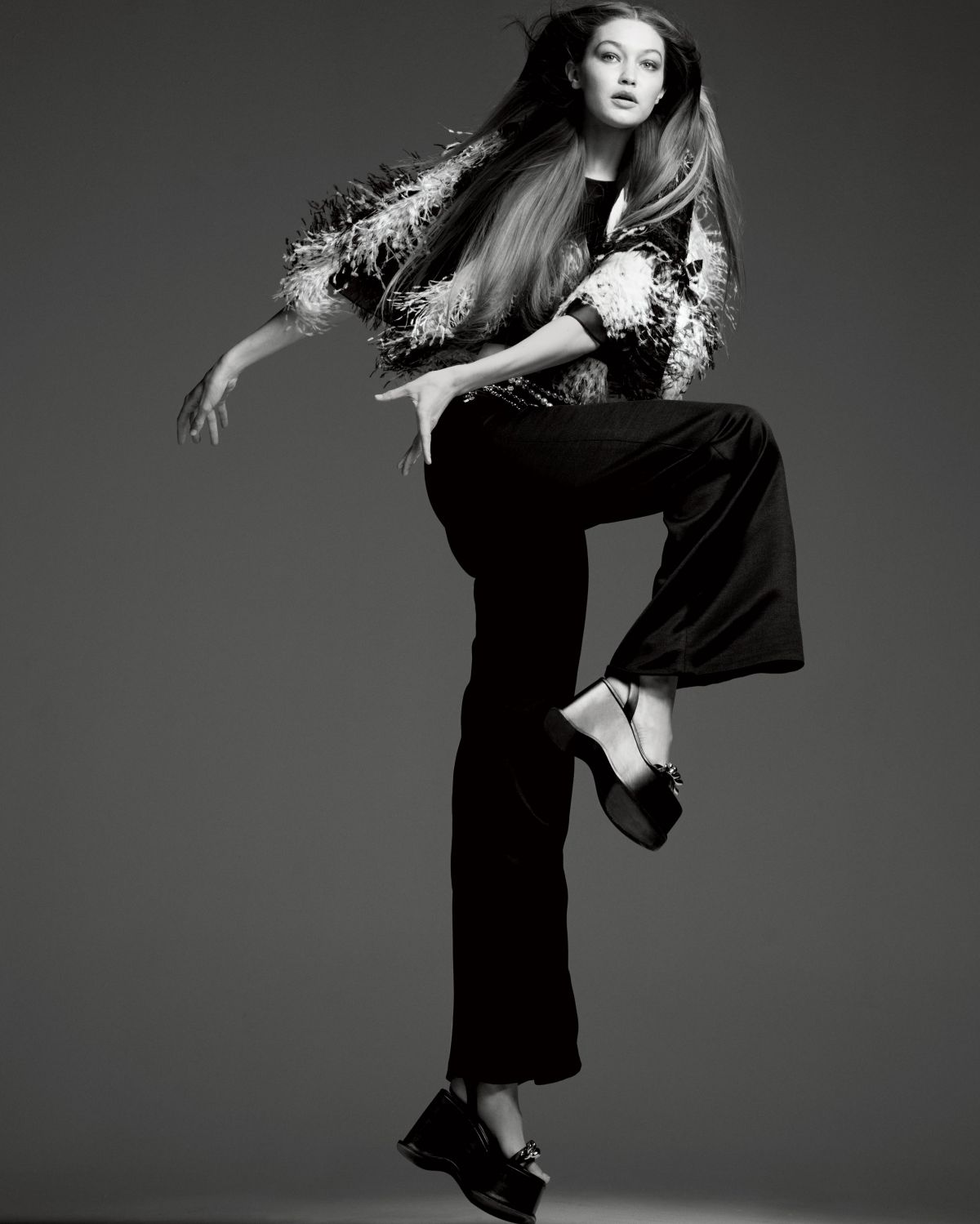
It is hard to remember a time before Gigi Hadid. Seriously. If you open a Gigi Hadid Vogue magazine issue from five years ago or one from last month, you’re looking at the blueprint of the modern supermodel. Some people think she just walked into the industry because of her name. That's a massive oversimplification. You don’t get over 35 international Vogue covers by just being "Yolanda’s daughter." It takes a specific kind of kinetic energy in front of the lens that editors like Anna Wintour and Edward Enninful clearly obsess over.
Gigi isn't just a face; she’s a business entity. She bridges the gap between the old-school "supers" of the 90s and the digital-first "Instagirls" of the 2010s.
The First Big Break and the Pivot to High Fashion
People forget her first Vogue cover wasn't even American Vogue. It was Vogue Netherlands back in 2014. She looked like the quintessential California girl—blonde, sun-kissed, and incredibly commercial. At the time, the "high fashion" world was still a bit snobby about her. They thought she was too "pretty" or too "commercial" for the avant-garde stuff.
But then 2016 happened.
That was the year she finally landed the August cover of American Vogue. It was a literal Olympic-themed shoot with Ashton Eaton. She was jumping, running, and proving she had the athleticism that high-fashion photographers like Mario Testino were craving. It changed the narrative. Suddenly, she wasn't just the girl from Real Housewives of Beverly Hills. She was a legitimate chameleon.
Why the Gigi Hadid Vogue Magazine Relationship Works
Why does Condé Nast keep calling her back?
Honestly, it’s about the "Gigi Effect." When she’s on the cover, the magazine sells. It’s that simple. But beneath the capitalism of it all, there is a genuine technical skill. Look at her Vogue Italia covers. Those are notoriously difficult. Vogue Italia doesn’t want "pretty." They want weird. They want art. Gigi has consistently delivered these high-concept, almost unrecognizable versions of herself that prove she understands the history of photography.
She knows her light. She knows her angles. More importantly, she knows how to make a $10,000 coat look like something you—yes, you—could actually wear to a grocery store, even if that's a total lie.
Breaking Down the Viral 2021 Post-Pregnancy Cover
Her March 2021 cover for American Vogue was a massive cultural moment. She had just given birth to her daughter, Khai, ten weeks prior. In the fashion world, that is a blink of an eye. The industry has a toxic history of demanding models "snap back" instantly.
What made this specific Gigi Hadid Vogue magazine moment different was the honesty. In the interview, she was candid about the labor. She talked about the "animalistic" nature of a home birth. She didn't pretend it was easy or glamorous. She showed up for a high-fashion shoot with a body that had just done something miraculous, and she didn't apologize for not being "sample size" at that exact second. It felt human. It felt like the first time a supermodel was talking to us like a real person instead of a manufactured deity.
The Versatility Factor
Think about the range.
- Vogue Arabia: The controversial debut issue where she wore a veil.
- Vogue British: The various covers where she shared the spotlight with her sister, Bella.
- Vogue France: Often shot by Mert and Marcus, showing a darker, more erotic side of her brand.
Most models have one "look." They are either the "commercial girl" or the "runway walker." Gigi managed to occupy every single lane at once. She can do the "girl next door" for Vogue US and then turn around and do "Gothic Renaissance" for Vogue Japan. It’s a level of range that we haven't seen since maybe Linda Evangelista.
Misconceptions About the "Nepo Baby" Label
We have to talk about it. The "nepotism baby" discourse is everywhere. Yes, Gigi Hadid had a massive head start. Her mother was a model, and her father is a wealthy real estate developer. Access is everything in fashion.
However, access only gets you the first meeting. It doesn't get you thirty international covers. If the public didn't respond to her, and if photographers found her difficult to work with, the Vogue machine would have chewed her up and spat her out years ago. Ask anyone who has worked on a Vogue set with her—the reputation is always the same: she’s the hardest worker in the room. She remembers the names of the assistants. She stays until the shot is perfect. In an industry built on ego, her "niceness" became a competitive advantage.
Practical Insights for Fashion Enthusiasts
If you are a collector or someone trying to break into the industry, studying the Gigi Hadid Vogue magazine archives is actually a great education in branding.
- Study the Evolution of Posing: Look at her early 2015 covers versus her work in 2023. Notice the tension in her hands and the way she uses her neck. It’s a masterclass in "finding the light."
- The Power of the Rebrand: Gigi transitioned from a "social media model" to a "creative director" (with her brand Guest in Residence). Her later Vogue features reflect this shift. They focus more on her eye for design and less on her personal life.
- Collect the Special Editions: If you’re looking for value, the debut issue of Vogue Arabia or her first American Vogue solo cover are the ones that hold the most historical weight in the secondary market.
What Really Happens Behind the Scenes
Behind those glossy pages is a lot of logistics. A Vogue cover shoot isn't just a girl in a dress. It’s a 50-person crew, a location scout, three catering trucks, and about fourteen hours of standing in uncomfortable shoes.
Gigi has often spoken about the mental toll of being "on" all the time. There was a period around 2017-2018 where she was on almost every major international edition of Vogue in a single year. That’s an exhausting level of travel and physical output. We see the final, airbrushed image. We don't see the 4:00 AM hair and makeup calls or the fact that she was probably battling Hashimoto’s disease—which she has been very open about—while trying to look like a superhuman.
The Future of the Hadid Legacy
Is she done? Not even close. While she might not be doing 15 covers a year anymore, her appearances are more curated now. They feel like "events." When a new Gigi Hadid Vogue magazine issue drops today, it’s less about introducing her to the world and more about checking in on a legend in the making.
She has successfully moved into the "icon" phase of her career. She’s no longer the "new girl" everyone is skeptical of. She is the veteran. She is the one the younger models look up to when they arrive on set, terrified and unsure of what to do with their hands.
Actionable Takeaways for Followers of the Industry
If you want to understand why Gigi remains relevant, stop looking at her Instagram and start looking at the credits of her Vogue shoots.
- Follow the Photographers: See how Gigi adapts her style when she works with Steven Meisel versus how she acts for Annie Leibovitz.
- Analyze the Styling: Look at how Tabitha Simmons or Grace Coddington style her. You'll notice that Gigi is often used to showcase "attainable luxury"—pieces that are expensive but styled in a way that feels youthful and energetic.
- Track the Interviews: Read the profiles. Gigi’s interviews have shifted from talking about her diet and workouts to discussing the ethics of the fashion industry and her role as a mother. This is how you maintain longevity; you grow with your audience.
The reality is that Gigi Hadid and Vogue are intrinsically linked. One provided the platform, and the other provided the personality that saved the "supermodel" concept for a new generation. Whether you’re a fan or a critic, you have to respect the hustle. She didn’t just show up; she took over.
To stay truly informed on the latest industry shifts, track the specific photographers who consistently book Gigi for these covers. Names like Lachlan Bailey and Cass Bird often capture her most "authentic" side, moving away from the high-glamour artifice and toward the personality-driven imagery that defines the current era of fashion media.