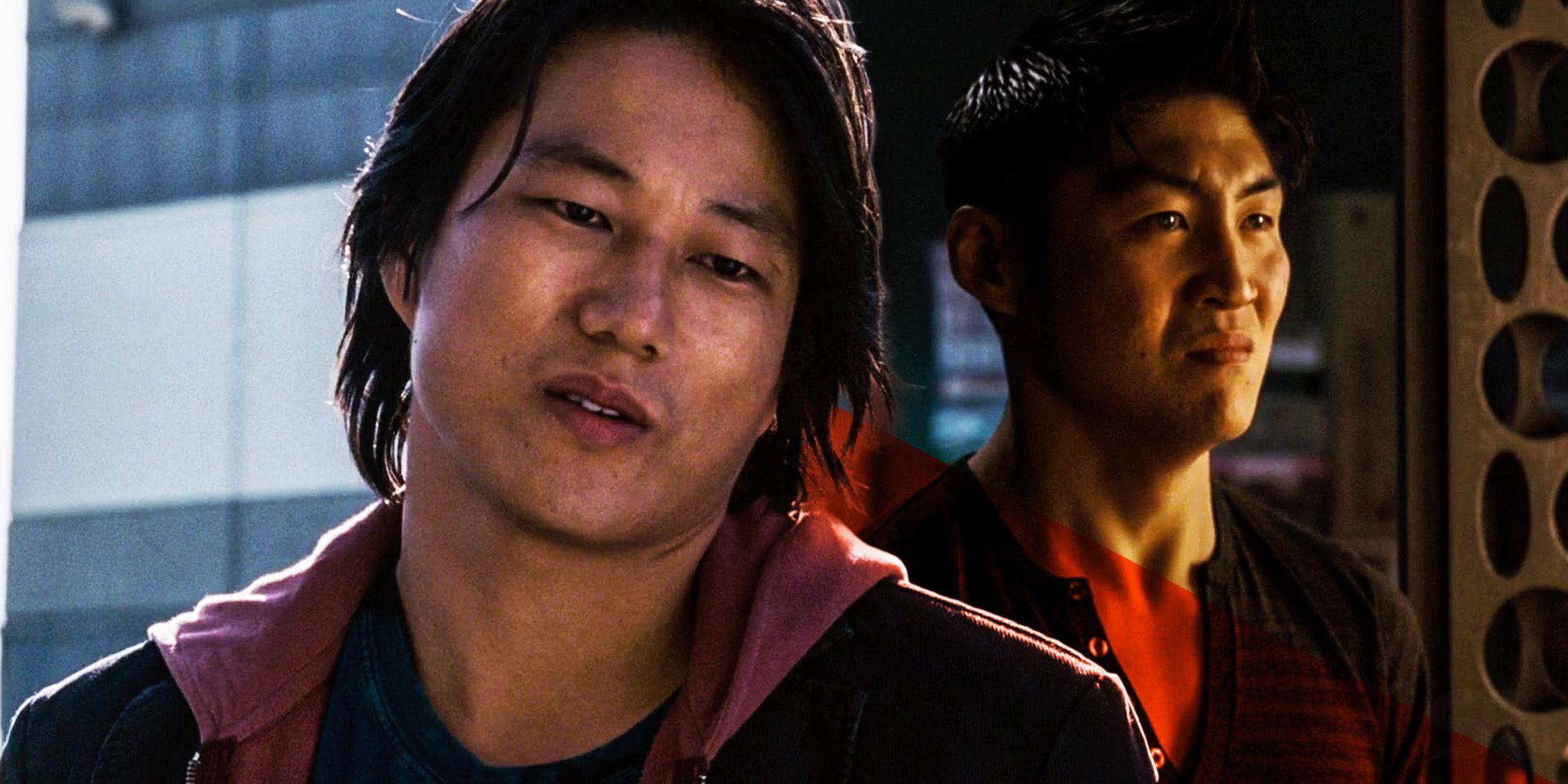
He died. Then he didn't. Then he was a ghost in the timeline, a wandering ronin in a Veilside RX-7 who basically stole the entire movie from the actual lead actor.
When people talk about Han in Fast and Furious Tokyo Drift, they aren't usually talking about the plot of the 2006 film. They’re talking about a vibe. Sung Kang didn’t just play a character; he created a blueprint for the "cool older brother" archetype that the franchise has spent the last two decades trying to replicate. Honestly, without Han, Tokyo Drift is just a weird, disconnected spin-off about a guy who looks thirty trying to pass as a high schooler in Japan. Instead, it became the soul of the series.
The Han Seoul-Oh Evolution: It Started Long Before Tokyo
Most fans think Han Lue (or Han Seoul-Oh, if you’re into the cheeky aliases) started in 2006. He didn't. If you want to be a real nerd about it, you have to look at Justin Lin’s 2002 indie film Better Luck Tomorrow. Sung Kang plays a character named Han there too. It’s the same guy. He’s younger, angrier, and a chain smoker.
When Justin Lin got the job for the third Fast movie, he brought Han with him. He swapped the cigarettes for snacks—specifically those Korean chips he’s always munching on—because the studio didn't want a "hero" smoking on screen. That snack habit became his trademark. It gave him something to do with his hands. It made him look bored, untouchable, and perpetually unimpressed by the high-stakes world around him.
He was the bridge. He connected the street racing roots of the original films to the globe-trotting heist madness that came later. But in 2006, we all thought he was gone for good. That orange and black Mazda RX-7 exploding in the streets of Shibuya was supposed to be the end of the road.
Why the Timeline Is a Total Mess (In a Good Way)
The Fast saga didn't care about linear time. Because the audience loved Han in Fast and Furious Tokyo Drift so much, the producers realized they’d made a massive mistake by killing him off so early.
The solution?
They turned the next three movies—Fast & Furious, Fast Five, and Fast & Furious 6—into prequels.
It’s kind of wild when you think about it. For nearly ten years, every time we saw Han on screen, we knew he was a walking dead man. We saw him fall in love with Gisele (Gal Gadot), join Dom’s crew in Brazil, and help take down tanks in London, all while knowing he’d eventually end up back in Tokyo to meet his fate. This "drift-back" storytelling added a layer of tragedy to a franchise that is otherwise about jumping cars between skyscrapers.
The Car That Defined an Era
You can't mention Han in Fast and Furious Tokyo Drift without talking about the 1997 Mazda RX-7 with the Veilside Fortune body kit. It’s arguably the most iconic car in the entire series, right up there with Dom’s Charger or Brian’s Supra.
The Veilside kit was so wide and aggressive that most casual viewers didn't even realize it was an RX-7. It looked like a supercar from the future. It was the perfect visual representation of Han himself: stylish, slightly mysterious, and built for a specific kind of art—the drift.
Unlike the flashy, neon-soaked cars of the previous movies, Han's ride felt sophisticated. It wasn't just about going fast in a straight line. It was about the "dk" (Drift King) lifestyle. Han wasn't interested in being the fastest; he was interested in being the smoothest.
The Philosophy of the Snack
Have you ever noticed Han is always eating?
It’s a character choice that goes beyond just replacing a smoking habit. In the world of Tokyo Drift, where everyone is shouting or trying to prove how tough they are, Han is the only one who seems relaxed. He’s the guy who has already seen it all.
He tells Sean Boswell, "I have money. It's trust and character I need around me."
That line defines him. He’s a scout. He’s a mentor. He’s the guy who sees the potential in a kid who can’t even take a corner without hitting a wall. He doesn't need the money from the races; he’s already rich from his "off-screen" activities with Dom. He’s in Tokyo because he’s looking for something real.
Justice For Han: The 2021 Resurrection
For years, the fans were loud. Very loud. When Jason Statham’s character, Deckard Shaw, was revealed as the one who "killed" Han at the end of Fast & Furious 6 (recontextualizing the Tokyo Drift crash), people were upset. But when Shaw was later invited to the family barbecue in The Fate of the Furious, the internet lost its mind.
The #JusticeForHan movement wasn't just a hashtag; it was a demand for narrative respect.
And it worked.
In F9, Justin Lin returned to the director's chair and brought Han back from the grave. The explanation? Mr. Nobody helped him fake his death. It was a bit of a stretch—even for a movie where they go to space in a Pontiac Fiero—but nobody cared. We just wanted Han back.
His return in F9 and his subsequent appearance in Fast X showed a different side of the character. He’s older. He’s a bit more somber. He’s trying to find his place in a world that has moved on from the neon streets of Tokyo. But the core is still there. The hair is still perfect. The snacks are still in hand.
The Realistic Impact on Car Culture
Han in Fast and Furious Tokyo Drift did more for the JDM (Japanese Domestic Market) scene in the West than almost any other piece of media.
Before that movie, drifting was a niche sport that most Americans only knew from grainy YouTube clips or Initial D. After Han, everyone wanted an S15 Silvia or a 350Z. He made the "sideways" style of driving look like ballet.
Real-world drifters like Keiichi Tsuchiya (the real Drift King, who actually has a cameo in the movie as a fisherman) have praised the film for bringing attention to the sport, even if the physics were... let's say "enhanced" for Hollywood. Han was the face of that movement.
What Actually Makes Him Different?
If you look at the rest of the crew, they all have "roles." Dom is the leader. Brian was the heart. Tej is the tech guy. Roman is the comedy.
Han? Han is the philosopher.
He’s the one who explains the "why" behind the culture. He understands that it’s not about the car; it’s about the person driving it. In Tokyo Drift, he tells Sean that a drift is like a dance. You don't force it. You flow with it.
That nuance is why he’s survived the franchise's transition from street racing to superheroics. Even when the stakes are "saving the world from a techno-virus," Han feels like a guy you could actually grab a beer (or a bag of chips) with.
How to Channel Your Inner Han (Actionable Steps)
You don't need a million-dollar Veilside RX-7 to capture the Han Lue energy. It's more about the mindset.
- Observe more than you speak. Han is a master of reading the room. He waits for others to reveal their hand before he makes a move.
- Find your "snack." Give yourself a grounding habit. Whether it's a fidget toy, a specific snack, or just a way of standing, find something that keeps you calm when things get chaotic.
- Invest in people. Han saw potential in Sean when nobody else did. Be the person who looks for character over credentials.
- Master the "drift" in life. Don't always fight the current. Sometimes the best way to get around a problem is to slide through it with style rather than hitting it head-on.
- Quality over quantity. Whether it's your car or your friends, keep the circle small and the standards high.
Han's legacy in the Fast saga isn't just about his "death" or his return. It’s about the fact that in a world of loud engines and bigger explosions, he remained the coolest guy in the room by simply being the quietest.