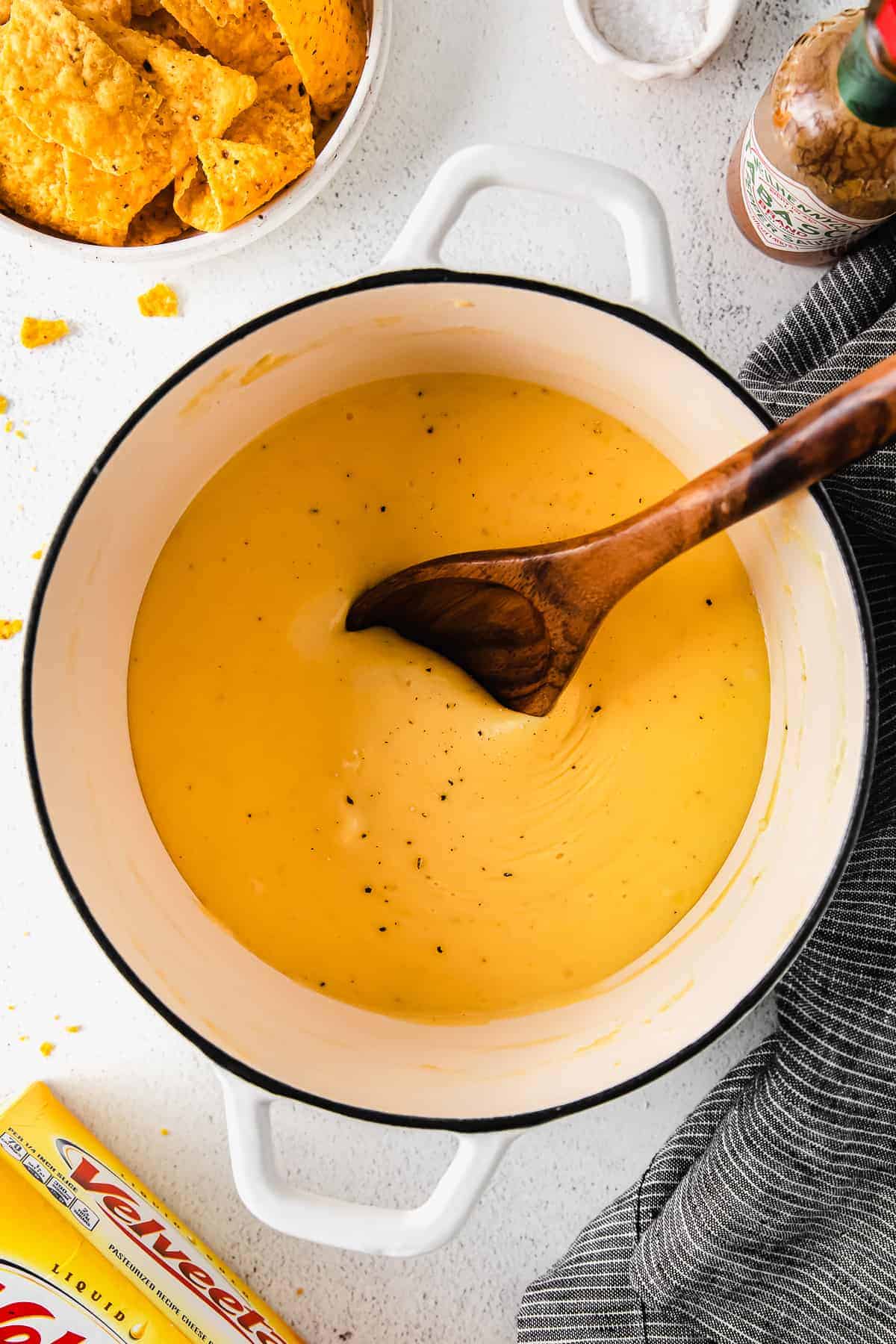
Let’s be real for a second. You can spend forty dollars on aged Gruyère, sharp white cheddar, and some obscure fontina from a boutique creamery, but sometimes, you just want that gold. That specific, glowing, liquid-gold saltiness that only comes from a foil-wrapped block. Making mac and cheese with velveeta cheese isn't just a nostalgic trip to your grandma's kitchen; it's a structural masterpiece of food science that most "from-scratch" snobs simply don't understand.
It melts perfectly. Every single time.
If you've ever tried to make a gourmet mornay sauce and ended up with a grainy, oily mess because the proteins in your expensive cheddar broke down too fast, you know the heartbreak. Velveeta doesn't do that. It’s engineered—thanks to sodium alginate and milk protein concentrate—to stay silky even if you’re a little distracted by the game on TV. It’s the safety net of the pasta world.
The Chemistry of Why This Stuff Actually Works
Most people call it "fake cheese," but that's a bit of a misnomer. It’s a "processed cheese product," which sounds clinical, but it actually means it has emulsifiers. Back in the early 1900s, Emil Frey—the guy who invented it—was looking for a way to save broken wheels of cheese. He realized that by heating them and adding whey, he could create a shelf-stable, meltable wonder.
When you’re making mac and cheese with velveeta cheese, you’re utilizing a pH balancer that prevents the fats from separating. This is the same reason why top chefs like J. Kenji López-Alt often recommend adding a slice of American cheese or a splash of sodium citrate to fancy sauces. You’re essentially doing the same thing, just with a much more convenient (and tastier) delivery system.
It’s about the "stretch" and the "coat." A standard roux-based sauce can get heavy or floury. Velveeta just wraps around a noodle like a warm hug. It doesn't break. It doesn't get gritty. It just stays smooth.
Getting the Noodle Ratio Right
Don't use dinky little elbows.
If you use those thin, tiny macaroni noodles, the weight of the Velveeta sauce will just crush them into a mushy pile of yellow sadness. You need something with structural integrity. Look for Cavatappi or Large Shells. The ridges on a Cavatappi noodle (those corkscrew ones) act like little speed bumps for the cheese, catching the sauce in every spiral.
Boil them in heavily salted water. It should taste like the sea. Since the cheese is already salty, some people skip this, but that’s a mistake. You want the pasta itself to have flavor, not just be a bland vehicle for the sauce. Pull the pasta out about two minutes before the box says "al dente." It’s going to keep cooking in the cheese sauce, and nobody wants a soggy noodle. Honestly, mushy pasta is the fastest way to ruin this dish.
The Secret Liquid Addition
If you just melt the block into the pasta, it’s going to be too thick. It’ll turn into a brick the moment it hits the table.
You need a lubricant. Heavy cream is the obvious choice for decadence, but whole milk is actually better for "snap." If you want to get really wild, use a splash of the pasta cooking water. The starches in that cloudy water help the cheese bond to the macaroni. I usually go for a 3:1 ratio of cheese to milk.
- Use 16 ounces of Velveeta.
- Use about half a cup of whole milk.
- Throw in a tablespoon of butter (because why not?).
Is Baked Velveeta Mac and Cheese a Sin?
This is where the internet gets into fights. Some people say that if you put Velveeta in the oven, it loses its soul. They aren't entirely wrong. Processed cheese can develop a weird skin if it’s exposed to dry oven heat for too long.
But, if you crave that crunch, you can make it work.
The trick is the "double-down." Make your stovetop version slightly runnier than you think it should be. Pour it into a buttered baking dish. Then—and this is the part people miss—cover the top with a layer of shredded sharp cheddar and panko breadcrumbs tossed in melted butter. The cheddar provides the "oil" and the crust, while the Velveeta underneath stays gooey.
Don't bake it for an hour. You aren't cooking a turkey. Twenty minutes at 375°F is all you need to brown the top without turning the interior into a rubber ball.
Flavor Upgrades That Don't Feel Like Cheating
If you serve it straight, it’s fine. It’s classic. But if you’re trying to impress someone who thinks they’re too good for the gold block, you have to layer the flavors.
- Smoked Paprika: Just a teaspoon. It gives it a depth that makes people ask, "Wait, what's in this?"
- Dry Mustard Powder: This is the "secret" ingredient in almost every award-winning mac and cheese. It cuts through the richness and makes the cheese taste "cheesier."
- Pickle Juice: Hear me out. A tablespoon of dill pickle juice provides an acidic bite that balances the heavy fats. It’s a trick used by professional kitchens for nacho sauces, and it works wonders here.
- Hot Sauce: Not enough to make it spicy, just enough to add vinegar and a tiny bit of background heat. Cholula or Frank's RedHot are the standard choices for a reason.
Common Mistakes People Make (And How to Fix Them)
The biggest crime is overheating.
If you blast Velveeta on high heat, it can actually scorch. Because of the sugar content in the whey, it will burn on the bottom of your pot and leave a bitter taste through the whole batch. Always melt it over low or medium-low heat. Better yet, cut the block into small cubes first. If you throw the whole brick in there, the outside will be liquid by the time the inside even starts to soften.
Another mistake? Not seasoning with black pepper.
Velveeta is many things, but it isn't "complex." Freshly cracked black pepper provides the necessary contrast. Don't use the pre-ground dust that tastes like wood shavings. Get a grinder and go to town. The bite of the pepper against the creamy sauce is essential.
Comparing the Cost and Convenience
Let's look at the math. A block of Velveeta is usually around $5 to $7 depending on where you shop. To get the same amount of volume and creaminess from high-end cheddar, you’d need at least two 8-ounce blocks (about $10-$12) plus the cost of flour, butter, and milk for a roux.
Making mac and cheese with velveeta cheese is objectively cheaper and about 70% faster.
In a world where we’re all strapped for time, being able to put a high-protein, high-calorie (hey, we aren't calling this a salad) meal on the table in fifteen minutes is a win. It’s the ultimate "pantry meal." As long as you have a box of pasta and that foil block, you’re never truly hungry.
Nutritional Reality Check
Look, nobody is eating this for their health.
It’s high in sodium. It’s high in saturated fat. It’s a comfort food. However, compared to the boxed "blue box" versions, making it yourself with the block allows you to control the pasta type and the additions. You can throw in some steamed broccoli or peas to lie to yourself about the nutritional value. You can use chickpea pasta if you really want to boost the fiber, though the texture might be a little different.
The real benefit is the lack of preservatives compared to some of the pre-made frozen trays. You know what's going in the pot. It’s just pasta, milk, and the cheese product. Simple.
Why the "Fancy" Versions Often Fail
Go to a high-end bistro and order the $22 mac and cheese. Half the time, it’s dry. The noodles have absorbed all the moisture, and the cheese has turned into a series of clumps. This happens because "real" cheese relies on a protein structure that tightens up when it loses heat.
Velveeta doesn't have that problem.
Because of the way it’s processed, it stays liquid at a much lower temperature. That means your last bite is just as creamy as your first. That’s the real reason it’s a staple at potlucks and family reunions. It holds up. It can sit in a slow cooker on the "warm" setting for three hours and still look appetizing. Try doing that with a sharp Vermont cheddar and you’ll end up with a puddle of oil and a ball of wax.
Actionable Steps for Your Next Batch
If you’re ready to reclaim the gold, here is how you should handle your next kitchen session.
First, cube the cheese. Don't be lazy. Smaller cubes mean a faster melt and less chance of scorching. Aim for half-inch squares.
Second, reserve your pasta water. Before you drain that macaroni, dunk a measuring cup in there. That starchy, salty liquid is your "liquid gold" insurance policy if the sauce gets too thick.
Third, add the cheese to the warm milk, not the other way around. Heat your milk and butter in the pot first until it's steaming, then whisk in the cubes. It creates a much more stable emulsion than trying to pour milk over a pile of melting cheese.
Finally, let it sit. Once everything is combined, turn off the heat and put a lid on the pot for three minutes. This allows the sauce to thicken slightly and really penetrate the ridges of the pasta.
Making mac and cheese with velveeta cheese is an art form disguised as a convenience. It’s about respecting the chemistry of the melt and knowing when to keep it simple. Grab the block, ignore the snobs, and enjoy the creamiest bowl of pasta you've had in years.