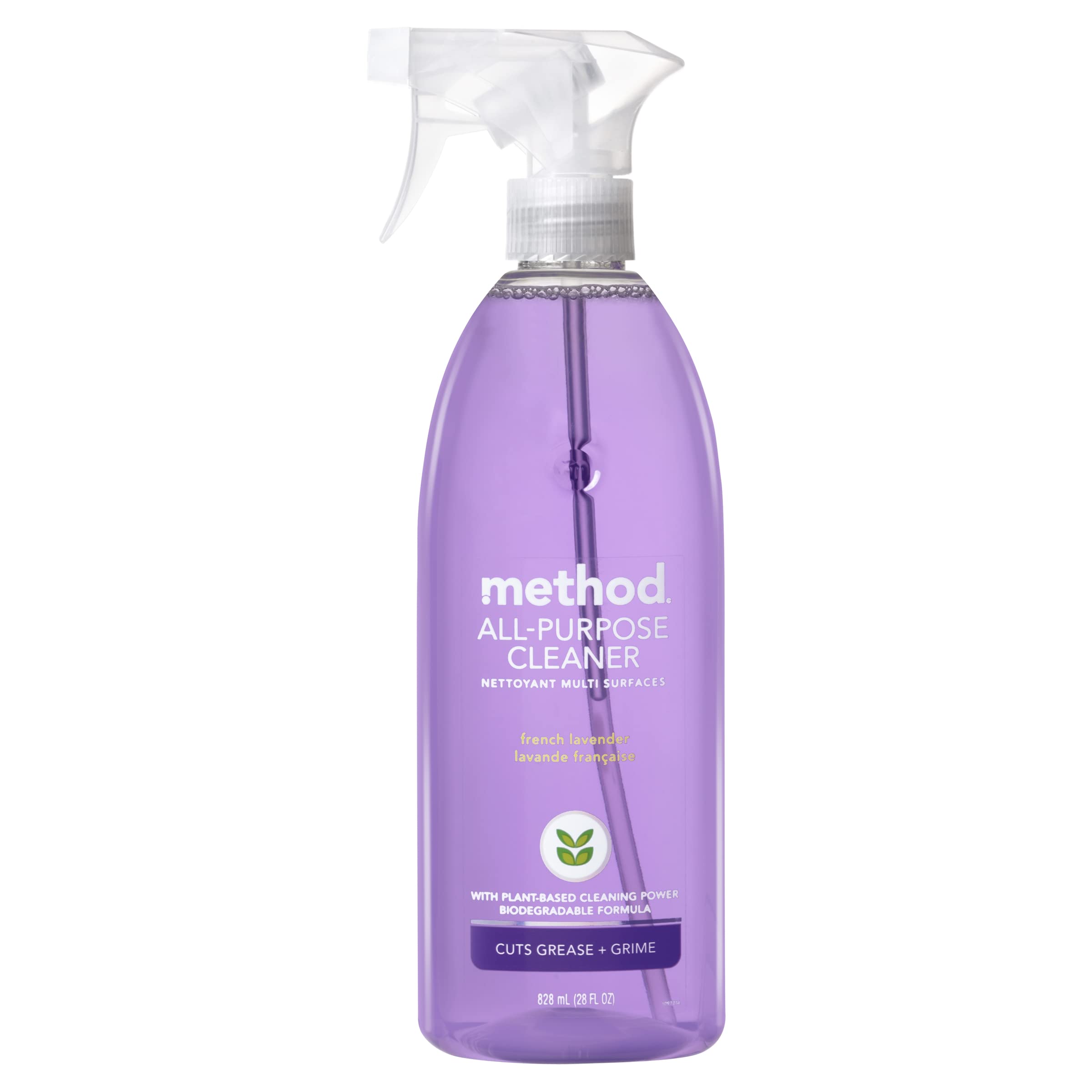
You’re standing in the cleaning aisle. It’s a sensory overload of neon yellows and clinical blues. Most of those bottles are basically 90% water, yet we keep buying them, lugging heavy plastic home, and tossing the sprayers when they’re empty. Honestly, it’s a weird cycle. That’s where the method all purpose cleaner refill comes in, and if you haven’t made the switch yet, you’re probably overpaying for "fresh scent" water.
Method basically pioneered the idea that cleaning products shouldn't look like industrial waste. Their teardrop bottles are iconic. But once you have the bottle, buying a new one every time is just silly. The refill pouch is where the actual logic lives. It’s a 68-ounce bag of juice that fills your spray bottle nearly three times over.
The Math Behind the Method All Purpose Cleaner Refill
Let’s get real about the money. A standard 28-ounce spray bottle of Method All-Purpose usually runs you somewhere between $4 and $5 depending on if Target is having a sale or if you're stuck at a pricey local grocer. The 68-ounce refill pouch usually sits around $12 to $15.
Do the math.
If you buy three individual bottles, you’re spending roughly $15 for 84 ounces of cleaner. If you buy the pouch, you're getting 68 ounces for a lower unit price, but more importantly, you aren't paying for the plastic trigger mechanism every single time. Those triggers are the most expensive part of the packaging. You've already got one that works. Why buy another? It’s a classic case of paying for the convenience of a new nozzle you don't actually need.
Why Your Surface Matters
Not all surfaces are created equal. People tend to think "all-purpose" means "indestructible," but that’s a dangerous game to play with your home. Method uses a corn-based surfactant (decyl glucoside) and gluconic acid. It’s great on sealed stone, tile, and wood. However, if you have unsealed marble or limestone, be careful. The citric acid or fragrance components can sometimes be a bit much for very porous, high-maintenance stones.
I’ve seen people use this on everything from greasy stovetops to dusty baseboards. It cuts grease surprisingly well for something that smells like Pink Grapefruit or French Lavender. But if you’re trying to clean a window? You might get streaks. It’s not a dedicated glass cleaner. It’s a workhorse for the "everything else" in your life.
The Environmental Impact Isn't Just Marketing Fluff
Plastic is a mess. We know this. But let's look at the actual reduction. Using a method all purpose cleaner refill pouch instead of buying three new bottles reduces plastic waste by about 80%. That’s a massive delta.
Method’s pouches are made of a flexible plastic that, while not always curbside recyclable in every single zip code (check your local rules or use a program like TerraCycle), uses significantly less energy to manufacture and transport than rigid PET bottles. Think about the weight. Shipping a box of empty-ish pouches is way more efficient than shipping crates of heavy, liquid-filled bottles with bulky trigger heads.
It’s about the carbon footprint of the transit as much as the landfill.
The Scents: What People Actually Think
Look, some people hate "clean" smells that remind them of a hospital. Method went the other way.
- Pink Grapefruit: This is the big one. It’s bright. It’s zesty. It actually smells like a real fruit and not a candy version of one.
- French Lavender: It’s more herbal than floral. Good for bedrooms or calming down a hectic kitchen.
- Lime + Sea Salt: This one feels a bit more "beachy" and less "kitchen-y."
- Ginger Yuzu: A bit of a cult favorite. It’s sharp and sophisticated.
If you’re sensitive to smells, keep in mind that Method uses "fragrance (parfum)" in their ingredients. While they are a B Corp and focus on safety, "fragrance" is a broad term. If you have severe allergies, you might want to look at their "Free + Clear" versions, though those are harder to find in the bulk refill format.
Stop Making These Refill Mistakes
You’d think pouring liquid from a bag into a bottle is foolproof. It isn’t.
First, don't fill it to the absolute brim. You need to leave room for the straw of the spray head to displace the liquid. If you fill it to the top, you’re going to have a sticky mess running down the side of the bottle the moment you screw the cap back on.
Second, check your trigger. Method bottles are sturdy, but the springs in the sprayers eventually wear out after five or six refills. If your spray starts feeling "mushy" or stops recoiling, it’s finally time to buy one new bottle and start the cycle over.
Third, don't dilute it. The method all purpose cleaner refill is pre-mixed. It’s not a concentrate. Some people see the big bag and think they need to add water to it in the bottle. If you do that, you’re weakening the surfactants and the preservative system. You’ll end up with a cleaner that doesn't clean and might actually grow bacteria over time because the preservative levels are too low to handle the tap water you just introduced.
The Science of How It Cleans
Method relies on "Powergreen" technology. It’s a fancy marketing term for naturally derived surfactants. Basically, the molecules have a "head" that loves water and a "tail" that loves grease. When you spray it on a greasy countertop, the tails grab onto the oil and the heads pull it into the water so you can wipe it away.
It’s simple chemistry. It works because it breaks the surface tension of the grime. Because it’s biodegradable, it breaks down quickly after it goes down the drain, which is a nice win for the local water table.
Real-World Limitations
Let’s be honest: this isn't bleach.
If you have deep mold in your shower grout or you’re trying to disinfect a surface after prepping raw chicken, Method’s standard all-purpose cleaner isn't an EPA-registered disinfectant. It’s a cleaner. There is a difference. Cleaning removes dirt; disinfecting kills germs. If you need to sanitize, you need their "Antibacterial" line (which usually comes in a different colored bottle, often yellow or white). Don't mix up the refills. Using the standard all-purpose refill in an antibacterial bottle is a recipe for a false sense of security.
Also, be wary of "clouding" on certain plastics. I’ve noticed that if you leave the cleaner sitting on cheap, clear acrylic for too long, it can occasionally cause a bit of haziness. Spray, wipe, and move on. Don't let it soak like you’re trying to dissolve a mountain.
Where to Find the Best Deals
Refills are increasingly common at big-box retailers like Target, Walmart, and even some Whole Foods locations. But honestly, the best way to get them cheap is to set up a "Subscribe & Save" on Amazon or a similar recurring order through Grove Collaborative.
Buying the 68-ounce pouch once every three months usually keeps a standard household running without any "oh no, I’m out of spray" moments. Plus, you aren't paying for the gas to drive to the store just for a bottle of soap.
Refill Culture is Growing
We’re seeing a massive shift in how people view household goods. It’s no longer about the newest, shiny bottle. It’s about the system. The method all purpose cleaner refill was one of the first to make "refilling" feel like a premium experience rather than a chore.
Other brands like Blueland or CleanCult have pushed this even further with tablets or milk cartons, but Method remains the accessible entry point. You don't have to join a club or buy a special glass bottle if you don't want to. You can just use what you have.
Actionable Steps for Your Cleaning Routine
If you’re ready to stop wasting money on plastic sprayers, start here:
- Inspect your current bottle. Make sure the trigger is still snappy. If it’s sticky or leaking, buy one final new bottle to serve as your "forever" vessel.
- Buy the 68oz Pouch. Look for the "Refill" label specifically. Ensure it matches your bottle's scent—mixing "Grapfuit" with "Lavender" results in a weird, muddy smell you’ll probably regret.
- Label the pouch. If you have multiple cleaners, it’s easy to lose track of which bag is which in a dark under-sink cabinet.
- Use a funnel. Unless you have the steady hands of a surgeon, the "spout" on these pouches can be a bit floppy. A simple kitchen funnel makes the process mess-free.
- Don't over-spray. Because you have so much liquid in the refill bag, it’s tempting to soak everything. A little goes a long way. Two sprays can usually handle an entire kitchen island.
Switching to a refill system is a small move, but it’s one of those rare moments where the cheaper option is actually the better one for the planet and your home's aesthetic. You get the same effective formula without the "new bottle" tax. It’s a win for your budget and a tiny, tangible win for the environment.