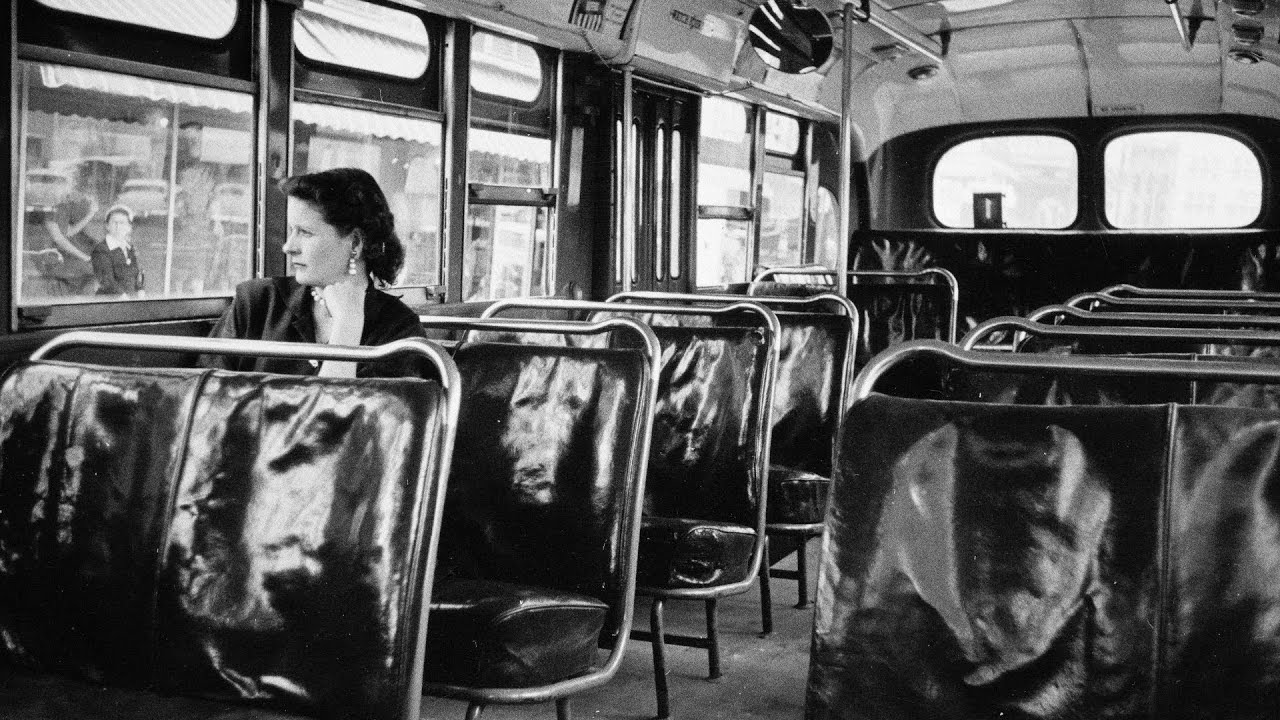
When you look at Montgomery bus boycott pics, you probably see Rosa Parks. Usually, she’s sitting on a bus, staring out a window, looking serene but defiant. It is an iconic image. It's also a bit of a setup. Most people don’t realize that the most famous photo of her on a bus wasn't taken on the day she was arrested in December 1955. It was actually staged by journalists on December 21, 1956—the day the buses were finally integrated.
History is messy.
Black-and-white photography has a way of making the past feel like a distant, static movie. But these images were high-stakes documentation of a city tearing itself apart and putting itself back together. If you dig into the archives of the Montgomery Advertiser or look at the shots captured by folks like Don Craven, you see more than just "protest." You see a massive, complex logistical machine.
What the most famous Montgomery bus boycott pics actually show
There is this specific photo of Rosa Parks being fingerprinted. Her face is calm. Her hair is perfect. You look at that and think, Man, she was just a tired seamstress who’d had enough. Except, that’s not really the whole story, is it? Rosa Parks was a seasoned investigator for the NAACP. She knew exactly what she was doing. The photos we have of her booking and her court appearances were meant to show the world a very specific image of "respectability politics."
The movement needed to look unshakeable.
Then there are the photos of the "rolling churches." That’s what they called the station wagons. When the boycott started, the Montgomery Improvement Association (MIA) had to figure out how to get 40,000 people to work every single day without using the city buses. They didn't just walk. They organized a fleet. Some Montgomery bus boycott pics show these shiny station wagons parked in rows. They were often bought in the names of local churches to avoid legal harassment, though the city tried to shut them down anyway by claiming they were "unlicensed taxi services."
Honestly, the logistics were insane.
Imagine trying to coordinate thousands of rides a day in 1956 without a smartphone, using only landlines and word-of-mouth. The photos of dispatch centers are some of the most underrated images from the era. You see men and women hunched over desks, frantically marking maps. It looks less like a civil rights protest and more like a military command center. Because, in a way, it was.
The faces in the crowd that didn't make the front page
We talk about Dr. King. We talk about Rosa Parks. But if you look at the wide-angle Montgomery bus boycott pics from the mass meetings at Holt Street Baptist Church, the scale is what hits you. Thousands of people packed into pews and spilling out into the streets.
You see the shoes.
There are so many photos of shoes. People wore through their soles. There’s a famous anecdote—though photos of the specific moment are rare—about an elderly woman known as Mother Pollard. When offered a ride, she famously said, "My feet is tired, but my soul is rested." The photos of people walking along the dusty Alabama roads, sometimes for miles in the heat or rain, tell the story of the "foot soldiers" whose names we’ll never actually know.
Why the quality of these images varies so much
You’ll notice some photos are crisp and professional, while others are grainy and blurred. This wasn't just about the camera tech of the 50s. It was about safety.
White photographers from national outlets like LIFE magazine had "press passes" that offered a tiny sliver of protection, though they were still targeted by angry mobs. Local Black photographers often had to work quickly and discreetly. If you were caught taking pictures of a carpool meeting, you were basically handing the police a list of people to harass or fire from their jobs.
- The Mugshots: These weren't just for records; they were badges of honor. Over 80 people were indicted under an old anti-boycott law.
- The Empty Buses: Some of the most haunting Montgomery bus boycott pics are just shots of empty yellow buses rolling down Dexter Avenue. The economic impact was immediate. The city lost thousands of dollars every single day.
- The Bombings: We don't talk enough about the violence captured in the aftermath. Photos of Dr. King’s front porch after it was bombed in January 1956 show the literal wreckage he and his family lived through.
The legal battle captured in black and white
Most people think the boycott ended because the city just "gave up." It didn't. It ended because of Browder v. Gayle.
If you look at photos from the courtroom, you see the plaintiffs: Claudette Colvin, Aurelia Browder, Susie McDonald, and Mary Louise Smith. It’s kinda wild that we focus so much on the Parks photo when these four women were the ones who actually anchored the federal lawsuit. Colvin was only 15 when she was arrested for the same thing Parks did, months earlier.
Why aren't there more famous photos of Colvin from 1955?
Part of it was the movement's strategy. Colvin was a teenager, she was pregnant, and the leadership felt she wouldn't be the "ideal" face for a national Supreme Court battle. It’s a harsh reality of the time. When you look at the Montgomery bus boycott pics of the legal teams, you see Fred Gray—who was only about 25 years old at the time—standing next to legal giants. The visual contrast between this young Black lawyer and the aging white judges is a whole mood.
The day the buses changed
December 21, 1956. That’s the "victory" day.
The photos from this day are filled with a strange mix of triumph and tension. You see Dr. King boarding a bus, sitting in the front, and chatting with a white passenger (who was actually a reporter or a sympathetic supporter in many shots). But if you look closely at the backgrounds of these Montgomery bus boycott pics, you can see the faces of the white drivers. Some look resigned. Others look absolutely furious.
Integration didn't mean the end of the struggle. It just changed the venue. Snipers actually shot into buses in the months following the boycott. The KKK paraded through Black neighborhoods. The photos of those parades—hooded figures driving through the very streets where the carpools had just triumphed—are a sobering reminder that the "happy ending" was really just the start of a much longer, more dangerous phase of the movement.
How to use these images for research or education
If you are looking for Montgomery bus boycott pics for a project or just to understand the vibe of 1950s Alabama, don't just stick to Google Images. You’ve gotta go to the source.
The Alabama Department of Archives and History has a massive digital collection. So does the Library of Congress. When you look at these, try to find the "unposed" ones. Look for the people in the background. Look at the signs in the shop windows. You’ll see a Montgomery that was deeply divided, not just by law, but by every single facet of daily life.
- Check the metadata: Many photos labeled "Montgomery Bus Boycott" are actually from later protests in Birmingham or Selma. Look for the specific bus numbers or street signs like "Dexter Ave" or "Court Square."
- Identify the photographers: Look for names like Ernest Withers or Dan Weiner. They had a specific eye for the human element of the protest, not just the "great men" of history.
- Cross-reference with the MIA newsletters: The Montgomery Improvement Association produced their own documents. Matching a photo to a specific date in the MIA's "Newsletter" gives you the full context of what was happening that specific week—whether it was a legal setback or a fundraising win.
The real power of these images isn't in the nostalgia. It's in the grit. It’s seeing a woman in a Sunday hat walking three miles to work in the rain because she refused to be treated like a second-class citizen. It’s seeing the organized chaos of a carpool system that outran a city government. These pictures aren't just "history"; they are a blueprint of what happens when a community decides it's done waiting.
Next time you see a photo of Rosa Parks on that bus, remember it was taken a year after her arrest. Remember that she had already lost her job, received countless death threats, and traveled the country to raise money for the movement. The photo isn't a "candid" moment; it's a victory lap. And honestly, she earned it.
To get the most out of your historical research, start by browsing the Digital Archives of the Alabama Department of Archives and History. Search specifically for the "Surveillance Film" or "Police Records" categories; these often contain raw, unedited photos taken by the authorities that show a very different, more visceral perspective of the boycott than the polished photos found in history books.