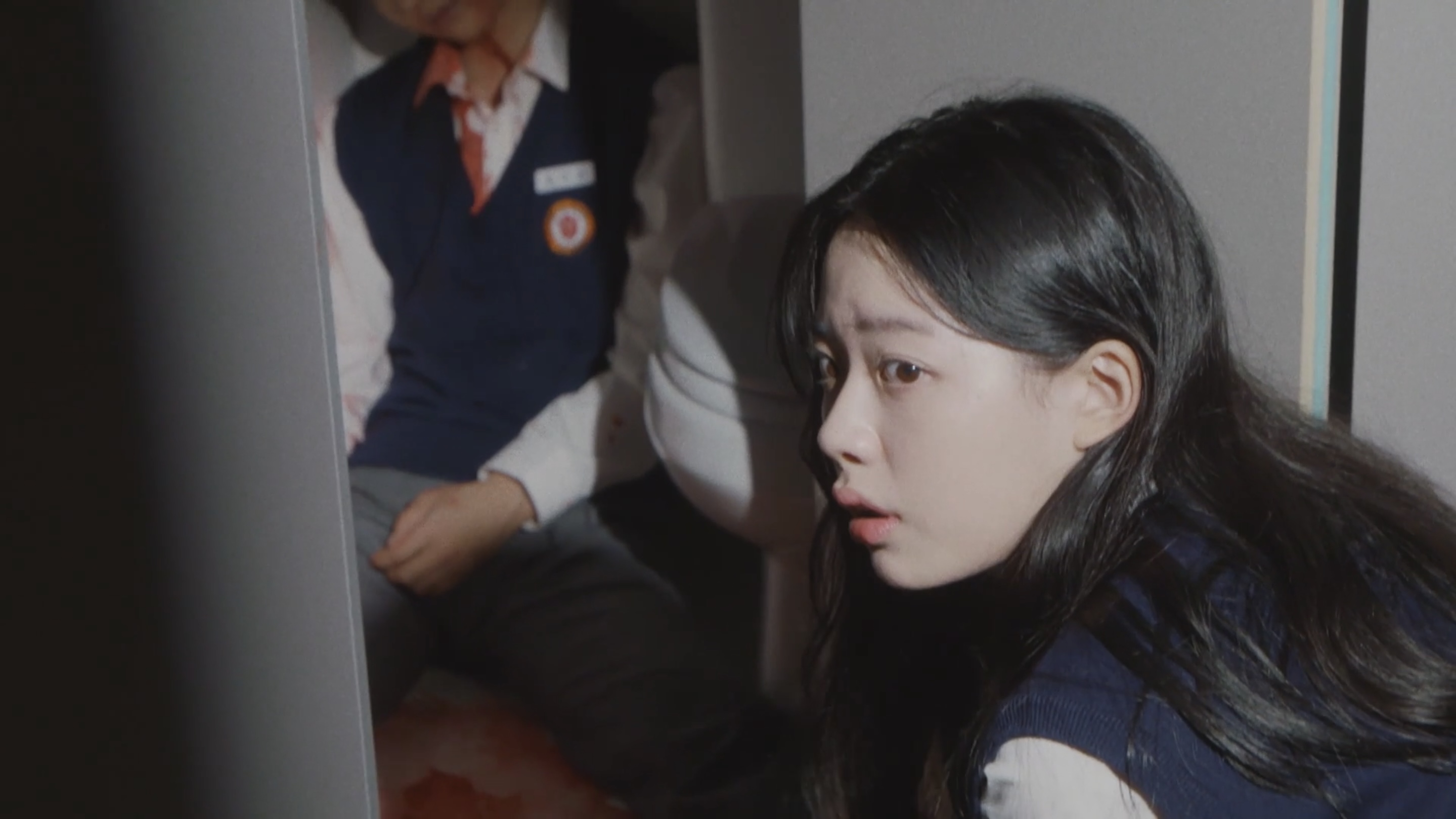
You remember playing Mafia in middle school, right? It was all giggles and pointing fingers until someone got "killed" and had to sit out while the rest of the group finished their snacks. Well, Night Has Come takes that nostalgic childhood pastime and turns it into a visceral, blood-soaked nightmare that makes Squid Game look like a Sunday brunch.
Honestly, I didn’t expect much when I first saw the trailer. High schoolers trapped in a building? We’ve seen it. But this 2023 Viki original hit different because it tapped into something truly primal. It’s not just about who the killer is; it’s about how quickly the social fabric of a "tight-knit" class of teenagers shreds into nothing when their lives are on the line.
What Actually Happens in Night Has Come?
The setup is deceptively simple. A class of students from Yooil High School heads out for a retreat. They arrive at a remote, eerie building. Suddenly, a mysterious app installs itself on everyone's phones. A voice announces that a game of Mafia is starting. Most of the kids think it’s a prank or some high-tech marketing stunt for the retreat. They start voting for the class clown or the person they find annoying.
Then the first person dies.
It isn't a "movie death" where they just fall over. The show uses a terrifying hypnotic mechanic where the "executed" student is forced to end their own life in gruesome, involuntary ways. This is where Night Has Come sets itself apart from standard teen dramas. The stakes are immediate. If you don't vote, you die. If you vote wrong, you kill an innocent friend. If the Mafia isn't caught, everyone else dies.
Director Lim Dae-woong doesn't shy away from the psychological toll. You see the light leave their eyes. The show focuses heavily on Lee Yoon-seo (played by Lee Jae-in), a girl with a keen sense of observation and some weird visions, and Kim Jun-hee (Kim Woo-seok), the class president who tries desperately to maintain order while his moral compass spins out of control.
The Roles and the Rules
The game follows the traditional Mafia structure, but with lethal consequences. You have your Mafia (the killers), the Police (who can check identities), the Doctor (who can protect someone), and the Citizens (the fodder).
Every night at midnight, the "night" phase begins. Everyone falls into a forced sleep except for the Mafia. They wake up, pick a target, and the game proceeds. What makes this version so cruel is the "vote" system during the day. It’s a popularity contest where the loser pays with their life. It exposes the hierarchy of high school—the athletes, the nerds, the bullies, and the invisible kids—all fighting to prove they deserve to breathe more than the person sitting next to them.
The Brutality of the Social Hierarchy
One thing most people get wrong about Night Has Come is assuming it’s just a horror show. It’s actually a brutal critique of South Korean school culture.
Take the character of Go Kyung-jun. He’s the classic bully. In any other show, he’d be the villain you love to hate. Here, his desperation is pathetic. He uses violence to control the votes because he’s terrified. The show demonstrates that in a survival situation, the loudest person isn't the leader—they're just the biggest target.
Then you have the "quiet" kids. In Night Has Come, silence is a weapon. The characters who survive the longest aren't the ones making grand speeches. They're the ones watching from the corners, calculating who to sacrifice next. It’s a bleak look at human nature. You’d think kids who have spent years together would protect one another. Nope. Within 48 hours, they are forming factions and plotting executions over a lack of evidence.
Why the Ending Left Everyone Screaming
I won't spoil the specific "who is it" reveal here, but we need to talk about the nature of the ending. Many viewers felt cheated by the "simulation" or "time loop" hints dropped throughout the series. But if you look at the clues, it’s actually quite brilliant.
The recurring imagery of the old photograph, the ghost girl wandering the halls, and Yoon-seo’s asthma attacks all point to a cycle of trauma. The show isn't just a slasher; it's a commentary on the repetitive nature of grief and revenge. Some critics argued the ending was a bit of a "deus ex machina," but honestly? It fits the nihilistic tone. It suggests that for these kids, the nightmare never really ends. They are stuck in a digital purgatory of their own making.
Technical Mastery: Sound and Set Design
The atmosphere in Night Has Come is oppressive. The retreat center is a maze of concrete and shadows. There is no escape. No cell service—except for the game app.
The sound design deserves a shoutout. The notification sound for the Mafia game is now a "trigger" for fans of the show. That chirpy, innocent "The game will now begin" notification followed by the sound of heavy boots in the hallway creates a sense of dread that few shows manage to sustain for 12 episodes. It’s efficient storytelling.
- Pacing: The episodes are short, usually around 35-45 minutes. This prevents the "middle-muddle" where survival shows usually slow down.
- Acting: The young cast, particularly Choi Ye-bin (who you might recognize from Penthouse), delivers performances that feel uncomfortably real. Their screaming isn't "pretty." It’s snot-nosed, ugly, hyperventilating terror.
Is It Better Than Squid Game or All of Us Are Dead?
People love to compare. It’s natural.
While Squid Game was a metaphor for capitalism and All of Us Are Dead was a zombie-fueled look at institutional failure, Night Has Come feels more intimate. It’s smaller. It’s about the person you shared your lunch with yesterday deciding to kill you today.
It lacks the massive budget of a Netflix flagship, but it uses its limitations well. By keeping the cast small and the location singular, it creates a claustrophobic pressure cooker. You get to know these kids. You start to like some of them. And then the game forces you to watch them die. It’s mean-spirited in the way good horror should be.
What You Should Watch Next
If you’ve finished Night Has Come and you’re feeling that specific void left by a high-stakes survival drama, there are a few places to go.
Duty After School is the most obvious companion piece. It features high schoolers drafted into a war against aliens. It has that same "class dynamic under pressure" vibe. If you want something more psychological, White Christmas (the 2011 drama, not the movie) is the gold standard for "students trapped in a school" thrillers.
Actionable Insights for Your Watchlist
If you haven't started yet, here is how to actually enjoy this show without losing your mind.
First, pay attention to the background. The show runners hide the Mafia's identity in plain sight through subtle movements and glances in the first two episodes. If you re-watch the first voting ceremony, the body language tells you everything you need to know.
Second, don't get too attached. Seriously. The show has a "no one is safe" policy that rivals Game of Thrones.
Third, watch it on a platform with good subtitles. The nuance of how the students address each other—using formal vs. informal speech—changes as the game degrades their social bonds. It’s a subtle bit of character work that adds a lot of flavor to the betrayal.
The real takeaway from Night Has Come? Maybe we aren't as civilized as we think. Under the right pressure, the "Citizen" is just a Mafia member who hasn't been given a knife yet.
Final Next Steps for Fans
To get the most out of the experience, check out the behind-the-scenes footage on the Viki or U+Mobiletv YouTube channels. Seeing the actors laughing and hanging out is the only way to cleanse your palate after the brutal finale. Also, if you’re a fan of the genre, look into the "Death Game" trope in Japanese media like Battle Royale or Alice in Borderland to see where these tropes originated. They provide a lot of context for why certain archetypes (like the "Heroic President" or the "Fragile Victim") are used the way they are here.