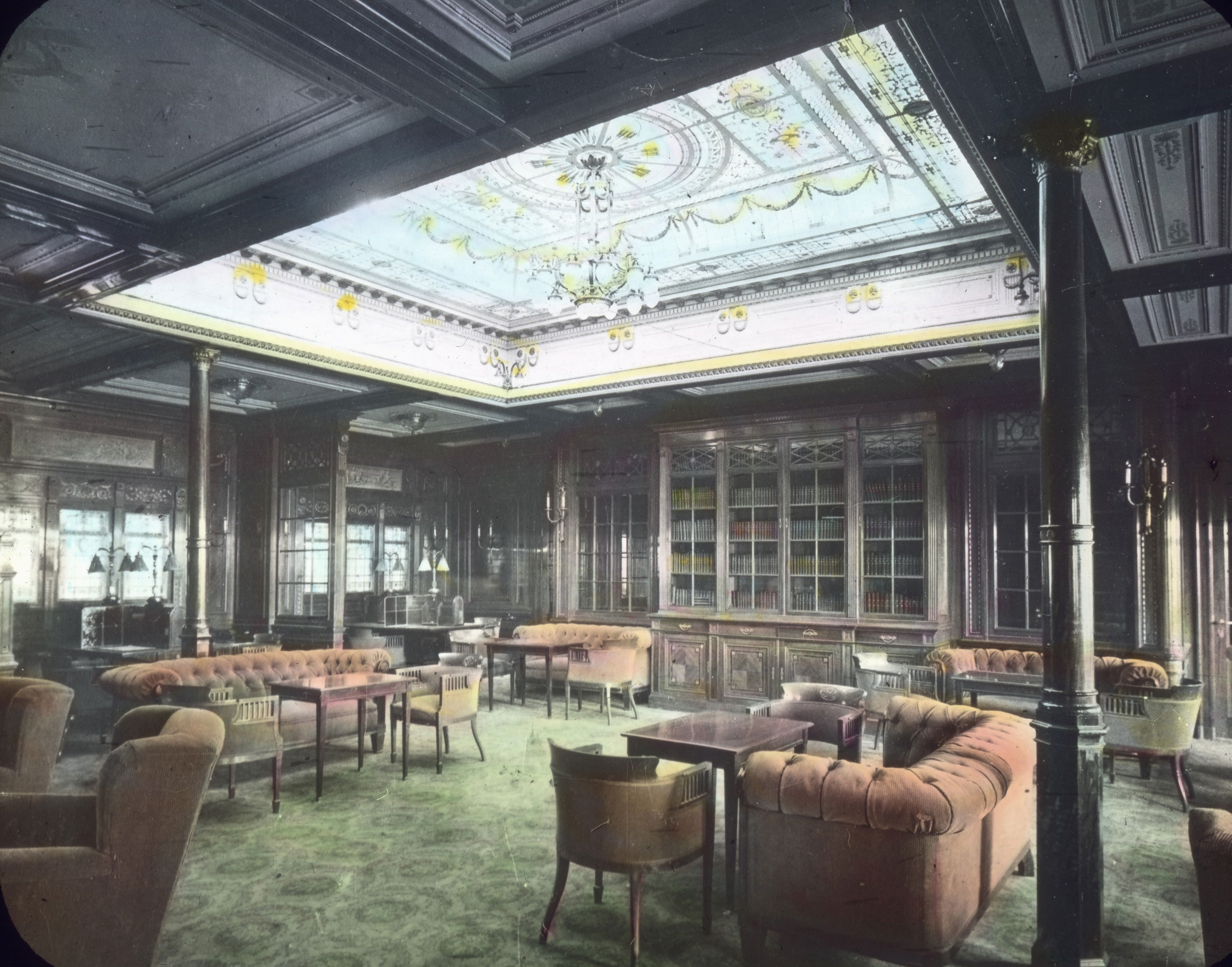
We’ve all seen the grainy, haunting footage. The way a remotely operated vehicle (ROV) light hits a brass chandelier still clinging to a ceiling miles underwater—it’s chilling. Looking at pictures of inside the titanic isn't just about maritime history; it’s about touching a ghost. You see a pair of shoes lying together on the silt, and your brain immediately fills in the person who wore them. It's heavy stuff. Honestly, the fascination hasn't faded because the ship represents the ultimate "what if" scenario. We look at these images to find some kind of closure for a tragedy that happened in 1912, yet feels strangely present.
The wreck is dissolving. That’s the reality experts like Parks Stephenson often remind us of. Microbes are literally eating the iron. We are in a race against time to document what’s left before the whole thing collapses into a heap of rust.
What Pictures of Inside the Titanic Reveal About Class
The contrast between the decks is staggering. When you look at photographs of the First Class areas, even now, you see the remnants of absolute opulence. The Grand Staircase is the big one, obviously. While the woodwork is long gone—eaten by wood-boring organisms—the steel framework and the layout remain a testament to the Edwardian era's obsession with status.
Down in Third Class, the pictures tell a much bleaker, more industrial story. It wasn’t "shabby," per se, for the time. In fact, Titanic’s steerage was actually better than what many immigrants had at home. But the tight corridors and the sheer distance from the boat deck are painfully obvious in underwater surveys. You can see the heavy watertight doors that became a literal wall between life and death for so many.
The Survival of the Mundane
It’s not the gold or the jewels that get you. It’s the dishes. There are photos of the debris field where hundreds of White Star Line plates are lined up on the ocean floor. They look like they were laid out for a dinner that never happened. Because the organic crates they were packed in rotted away, the plates simply settled into the sand in neat rows. It’s eerie.
We also see stained glass. It’s incredible, really. The pressure at 12,500 feet is enough to crush a person like a soda can, yet some of those delicate leaded glass windows in the First Class dining saloon are still intact. The physics of it—water pressure equalizing on both sides of the glass—is the only reason we can still see the patterns today.
The Decay of the Captain's Cabin
For years, one of the most famous pictures of inside the titanic was of Captain Smith’s bathtub. It was a touchstone for explorers. For some reason, seeing a recognizable porcelain tub in the middle of a graveyard made the tragedy feel human. But recent expeditions by Magellan Ltd and others have shown that the roof of the Captain’s quarters has collapsed. The tub is gone, buried under debris or fallen through the floorboards.
This is the "Black Hole" of Titanic exploration. The ship is pancaking. As the upper decks rot, they fall onto the lower decks. This makes interior exploration incredibly dangerous for ROVs. One wrong turn and a tether gets snagged on a jagged piece of rusted steel, and you've lost a multi-million dollar piece of equipment.
- The Promenade Deck: Once a place for the wealthy to stroll, it now looks like a skeletal ribcage.
- The Turkish Baths: This is perhaps the best-preserved room inside the ship. Because it was located deep within the hull and shielded from the worst of the currents, the blue-and-green tiles still look vibrant. It’s one of the few places where you can actually see the original color of the ship's interior.
- The Cargo Hold: Somewhere down there is a Renault Type CB Coupe. We’ve seen the front wheel assembly in photos, but the car itself is likely a heap of unrecognizable metal by now.
Why We Can't Just "Fix" the Images
A lot of people ask why we can't just get "clearer" photos. The water at that depth is filled with "marine snow"—bits of organic matter that reflect light and create a massive amount of backscatter. Every photo you see is a triumph of engineering. Modern photogrammetry is changing the game, though. By taking thousands of high-resolution shots and stitching them together, we can now see the ship in a way the human eye never could. We’re basically building a digital twin of the wreck.
The Ethical Debate Over Interior Photos
Is it "grave robbing" or "archaeology"? This is the question that divides the Titanic community. When companies like RMS Titanic, Inc. talk about recovering the Marconi radio—the very one that sent the SOS calls—people get heated.
On one hand, the ship is a tomb. Over 1,500 people died there. Many feel that poking cameras into the private cabins is a violation of their memory. On the other hand, the sea is reclaiming the ship. If we don’t take these pictures now, and if we don’t recover certain artifacts, they will be lost to science forever. It’s a messy, emotional debate with no easy answer. Honestly, both sides have a point.
James Cameron, who has spent more time on the Titanic than Captain Smith did, has been a huge proponent of interior exploration. His 2001 expedition used "bots" to go where no human could, giving us our first real look at the D-Deck reception room and the intricate woodwork that somehow survived in pockets of the ship.
Misconceptions About the Hull
People think the ship looks like a ship. It doesn't. Not anymore. The bow is recognizable, sure, but the stern is a tangled mess of twisted steel. When the ship broke apart, the stern spiraled as it fell, slamming into the seafloor and compacting itself. Photos of the inside of the stern are almost impossible to interpret because the geometry is so warped. It’s just a labyrinth of jagged metal.
What to Do With This Information
If you're fascinated by the visual history of this ship, don't just look at the "greatest hits" photos. Dig into the archives of the Woods Hole Oceanographic Institution or the NOAA. They have thousands of hours of raw footage that hasn't been "Hollywood-ized."
- Study the Deck Plans: To really understand a photo of the interior, you need to know where you are. Keep a copy of the 1912 deck plans open while you look at wreck photos. It changes your perspective completely.
- Follow Modern Expeditions: Look for updates from companies like Magellan or researchers like Bill Sauder. They are the ones doing the hard work of identifying obscure pieces of debris.
- Visit a Legitimate Exhibit: If you want to see the items from those photos in person, go to a museum that focuses on conservation rather than just "treasure." The Titanic Museum in Belfast or the Luxor in Las Vegas (which houses "The Big Piece") offer a more somber, factual look at the remains.
The wreck won't be there forever. In fifty or a hundred years, the Titanic will be nothing more than a rust stain on the bottom of the Atlantic. These pictures are all we'll have left. They serve as a permanent record of a night when the world changed, reminding us that even our greatest achievements are ultimately at the mercy of the elements.
Take the time to look at the small details in the photos—the light fixtures, the tile patterns, the discarded luggage. That’s where the real story lives. It’s not in the grand tragedy, but in the tiny, everyday things that people left behind when the water started rising. Explore the digital archives of the National Maritime Museum for high-resolution scans of the original blueprints to compare against the wreck photos; it’s a sobering exercise in seeing how the mighty have fallen. Check out the latest 3D reconstruction videos which provide a "fly-through" experience that clarifies the confusing layouts seen in 2D photos.