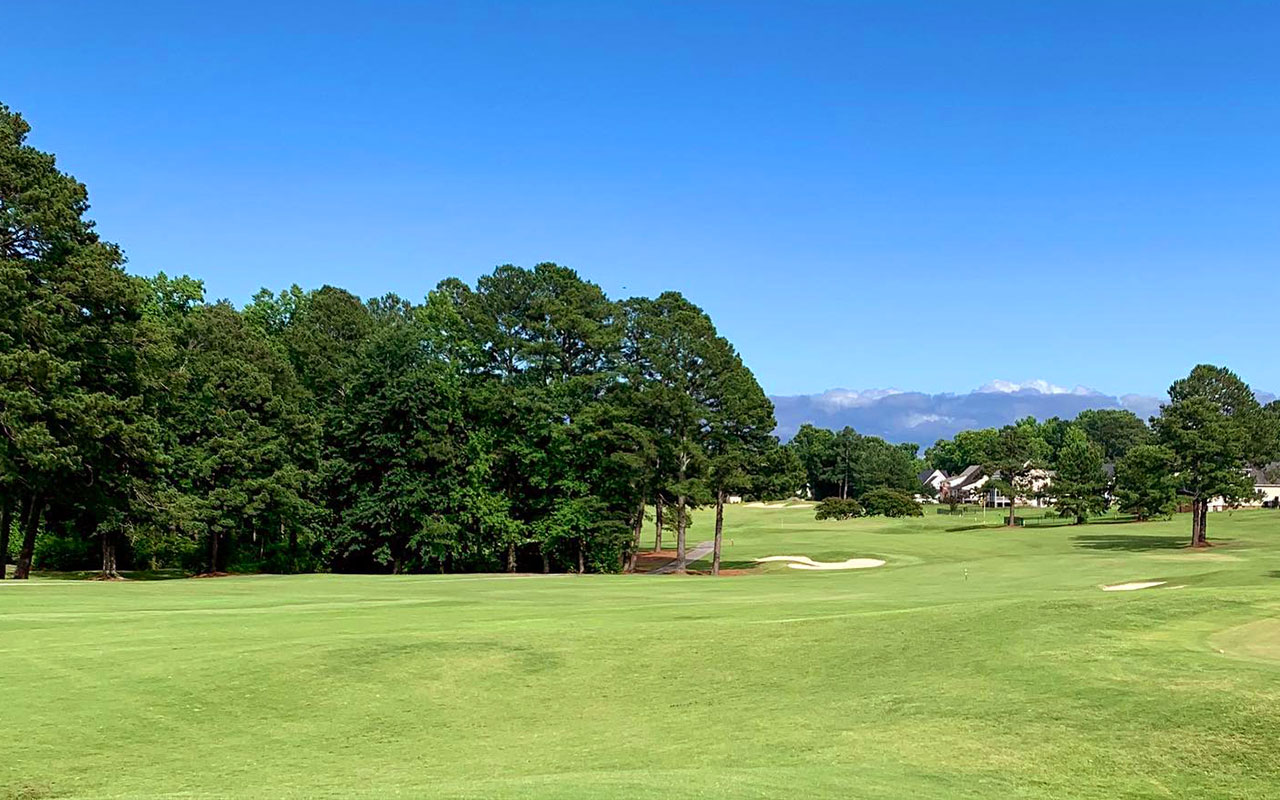
You know that feeling when you pull into a gravel parking lot and just know the golf is going to be good? It’s a specific vibe. No massive marble fountains or valet stands. Just a pro shop that smells like coffee and leather, and a starter who actually remembers your name if you show up two Saturdays in a row. That’s Pine Hollow Golf NC.
Located just a stone’s throw from Raleigh in the town of Clayton, Pine Hollow is one of those courses that locals try to keep a little bit quiet. Honestly, in a region where high-end private clubs and overpriced resort courses are popping up like weeds, finding a true "player's course" that doesn't drain your savings account is getting harder. Pine Hollow fills that gap perfectly. It’s a par-71 layout designed by Bob Moore, and it doesn't try to be something it’s not. It’s just pure, North Carolina sandhills-style golf dropped right into the Johnston County landscape.
The Layout at Pine Hollow Golf NC: What to Expect
Most people expect a flat, boring walk when they head toward Clayton. They’re wrong. The terrain here has a surprising amount of movement. Moore did a fantastic job of using the natural drainage and the gentle slopes of the old farmland to create holes that require you to actually think about where you're landing the ball.
It isn't the longest course you’ll ever play. From the back tees, it stretches to around 6,500 yards. Short by modern standards? Maybe. But the defense isn't in the length. It’s in the greens and the strategic bunkering. The fairways are generally generous, but if you miss them, you aren't just in "light rough." You’re often dealing with thick North Carolina pines or awkward lies that make scrambling a nightmare.
The Front Nine vs. The Back Nine
The front nine feels more open, almost like a links-style course in sections, where the wind can really mess with your club selection. Then you hit the back nine. It tightens up. You’re suddenly surrounded by trees, and the pressure to hit a straight ball increases tenfold.
- Hole 2: A tricky par 4 that requires a precise tee shot.
- Hole 14: Probably one of the most talked-about holes on the property. It's a par 5 that can be reached in two if you're brave, but the water guarding the green is a ball magnet.
The greens are typically bentgrass, which is a bit of a rarity in this part of the state as many courses have switched to Bermuda to handle the brutal humidity of July and August. Because of this, the putting surfaces at Pine Hollow are often smoother and faster than the "carpet" style greens you find elsewhere, though they do require more maintenance in the peak of summer.
Why the "Player's Course" Label Matters
If you talk to the regulars, they’ll tell you Pine Hollow is a "player's course." What does that even mean?
Basically, it means the course rewards good shots and punishes bad ones without being "tricky." There aren't many blind tee shots. You can see the trouble. If you hit a slice into the woods, that’s on you, not the architect. It’s a fair test.
There’s also a lack of pretension here that you won’t find at the big clubs in Cary or North Raleigh. You’ll see guys in hoodies, juniors practicing their short games, and retirees who have played the same 18 holes every Tuesday for thirty years. It creates a culture of fast play and genuine appreciation for the game. People aren't here to be seen; they’re here to play.
Conditions and Seasonality
Let's be real: North Carolina weather is unpredictable. In the spring, Pine Hollow is a literal painting. The azaleas and dogwoods are popping, and the fairways are turning that vibrant electric green.
However, because they use bentgrass greens, the course experiences a "stress period" in late August. If you go during a record-breaking heatwave, don't expect the greens to be US Open speed. They have to keep them a little longer and wetter to ensure the grass doesn't die. It’s a trade-off. You get elite-level putting surfaces in the fall, winter, and spring, but you have to be patient during the dog days of summer.
The drainage is another point of pride. Clayton can get some heavy thunderstorms, but Pine Hollow tends to dry out faster than some of the lower-lying courses closer to the Neuse River.
The Practical Side: Costs and Amenities
Money talks.
Pine Hollow Golf NC is consistently ranked as one of the best values in the Triangle area. While some public courses have hiked their weekend rates to over $100, Pine Hollow usually stays in that "sweet spot" where you don't feel guilty about booking a tee time.
- Practice Facilities: They have a full driving range, a chipping green, and a large putting green. It’s not a "TopGolf" experience, but it’s exactly what you need to warm up.
- The Grill: Don't sleep on the food. It’s standard golf fare—hot dogs, burgers, cold beer—but it’s done well and priced fairly.
- Pro Shop: Stocked with the essentials. They aren't trying to sell you a $500 designer polo, just the stuff you actually need.
The "Clayton Factor"
Ten years ago, Clayton was "out there." Now, it’s practically a suburb of Raleigh. The growth in Johnston County has been insane. This has been both a blessing and a curse for the course. On one hand, the tee sheets are fuller than they used to be. On the other hand, the increased revenue has allowed for better bunker renovations and improved cart paths.
If you’re driving in from Durham or Chapel Hill, it’s a bit of a trek, but usually against traffic. Most people find the 40-minute drive worth it because the pace of play is often better than the crowded municipal courses in the city.
Common Misconceptions About Pine Hollow
Some people hear "rural North Carolina golf" and think it's going to be a cow pasture.
Not even close.
While it’s not Augusta National, the maintenance crew at Pine Hollow works their tails off. The fairways are usually tight, and the bunkers are well-edged. Another misconception is that it’s an easy course because it’s short. Tell that to the guy who puts three balls in the water on the back nine. The slope rating is respectable, and if the wind kicks up, it plays like a much larger monster.
Actionable Insights for Your Next Round
If you're planning to head out to Pine Hollow, keep these things in mind to actually enjoy your day:
Book in Advance. Because of its reputation for value, weekend morning tee times disappear fast. Check their online portal at least a week out.
Trust Your Yardage, Not Your Eyes. The elevation changes can be deceptive. A 150-yard shot might look like 140 or 160 depending on the slope. Use a laser or a reliable GPS app.
Watch the Greens. Since they are bentgrass, they will be faster in the morning when the dew is still on them and slower by mid-afternoon if the sun is baking them. Pay attention to the grain, though it’s less of a factor than it would be on Bermuda.
Stay Below the Hole. Many of Moore's greens tilt significantly from back to front. If you leave yourself a downhill putt on a Sunday afternoon, you’re basically looking at a guaranteed three-putt.
Embrace the Vibe. Don't show up expecting a country club experience. Show up expecting good golf, friendly people, and a course that rewards smart play over brute strength.
Walk If You Can. It’s a very walkable course compared to many of the hilly layouts in the Piedmont. It’s great exercise and gives you a much better feel for the subtle breaks in the fairways.
Ultimately, Pine Hollow is about the soul of the game. It’s about that four-hour escape from emails and traffic. It’s about hitting a pure 7-iron onto a green that actually holds, and then grabbing a cold drink with your friends afterward. It’s the kind of place that reminds you why you started playing golf in the first place. High-quality, accessible, and just challenging enough to keep you coming back to try and beat your personal best.
Next Steps for Your Visit:
Check the current aeration schedule on their website before booking, as bentgrass greens require specific maintenance windows in the spring and fall. If you're looking for the best possible conditions, aim for a mid-week morning in October—the weather is perfect, and the course is usually in its prime.