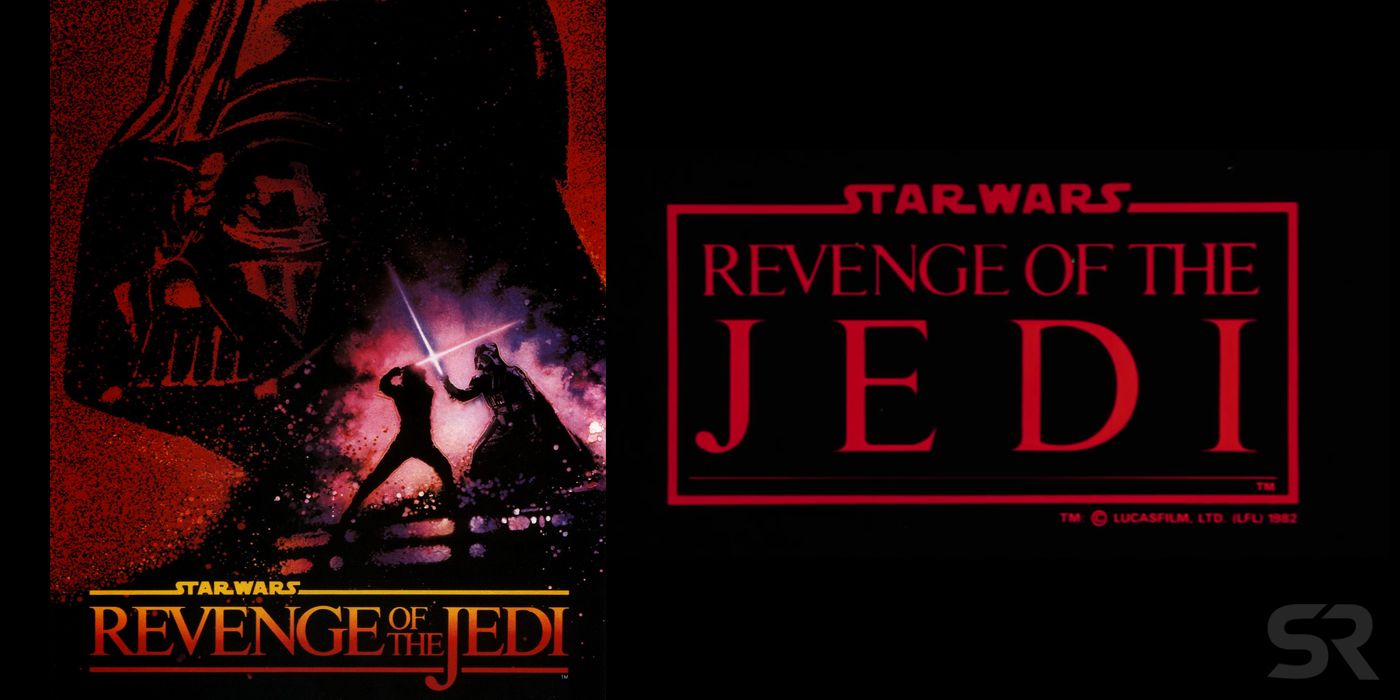
It’s the most famous title that never was. Honestly, if you grew up in the eighties, you probably remember the posters. They were everywhere. Deep red backgrounds, Luke Skywalker wielding a blue lightsaber (wait, blue?), and those four words printed in bold: Revenge of the Jedi.
Then, it just vanished.
George Lucas changed his mind, and the world got Return of the Jedi instead. Most people think it was just a marketing hiccup or a last-minute whim. But the reality is a bit more complicated, involving moral philosophy, a massive pile of wasted merchandise, and a very grumpy Howard Kazanjian.
The Birth of Revenge of the Jedi
When Lawrence Kasdan and George Lucas were hashing out the finale of the original trilogy, the stakes were sky-high. The Empire Strikes Back had ended on a massive cliffhanger. Han Solo was a decorative wall piece in Jabba’s palace. Luke was missing a hand and dealing with the ultimate "daddy issues" revelation.
Lucas initially settled on the title Revenge of the Jedi. It sounded punchy. It had that B-movie serial grit he loved.
The production moved forward under this banner for months. It wasn't just a working title; it was the actual title. Thousands of teaser posters were printed and shipped to theaters. Kenner, the toy giant, began prepping packaging. The hype was real. But then, Lucas had a realization that shifted the entire ethos of the Force.
Why the title felt "wrong" to Lucas
"Jedi don't seek revenge."
That’s basically what it boiled down to. According to various interviews and the comprehensive history in The Making of Return of the Jedi by J.W. Rinzler, Lucas started to feel that "revenge" was a dark side concept. A Jedi is a guardian of peace and justice. Seeking vengeance is an emotional, selfish act—the very thing that leads a Padawan to the dark side.
It didn't fit Luke Skywalker's arc. Luke’s journey in the third film is about choice, specifically the choice to not kill his father. If the movie was called "Revenge," it would imply that his victory was one of retribution rather than redemption.
The Massive Logistics Nightmare
Changing a movie title six months before release is a disaster. You've got trailers already in circulation. You've got licensing deals signed in blood. Howard Kazanjian, the film’s producer, has spoken about the sheer headache of the pivot.
Imagine the waste.
- The Posters: Roughly 6,800 "Revenge" teaser posters had already been distributed to theaters. Most were recalled, but many "fell off the truck" and became the most coveted items in Star Wars collecting history.
- The Toys: Kenner had to scramble. If you find a "Revenge of the Jedi" card-back action figure today, you’re looking at a small fortune.
- The Trailers: A teaser trailer had already played in British cinemas alongside the re-release of Star Wars and The Empire Strikes Back.
Fans were confused. Was it a sequel? A prequel? A spin-off? In 1982, you couldn't just check Twitter for a clarification. You just had to wait for the next issue of Starlog magazine to tell you what was going on.
The "Blue" Lightsaber Mystery
Here’s a detail most people miss. In those original Revenge of the Jedi posters, Luke is holding a blue lightsaber. In the actual film, he famously uses a green one.
The change wasn't actually related to the title swap. It was a technical necessity. During the outdoor filming of the Sarlacc Pit sequence in Yuma, Arizona, the blue blade kept disappearing against the bright blue sky. It looked like Luke was swinging a metal stick. To make the blade pop against the desert backdrop, the post-production team at ILM switched it to green.
It’s a funny coincidence that the title and the saber color changed at almost the same time, leading to decades of fan theories about "Jedi Master colors" that didn't actually exist back then.
Star Trek’s Weird Role in the Chaos
There’s a long-standing rumor that Lucas changed the name because Paramount was releasing Star Trek II: The Revenge of Khan.
That's partially true.
Paramount eventually changed their title to The Wrath of Khan to avoid confusion with the Star Wars sequel. Once they cleared the way, Lucas actually had the "Revenge" title all to himself. Ironically, he used the path they cleared to change his own title anyway.
It’s a bizarre bit of Hollywood history where two of the biggest franchises in existence were playing a game of "chicken" with the word Revenge.
The Legacy of a Cancelled Title
Even though the name was scrapped, it never truly died.
Decades later, when Lucas was writing the final chapter of the prequel trilogy, he finally got to use the word. Revenge of the Sith (2005) was the perfect mirror. It signaled that the Sith—unlike the Jedi—are defined by their desire for retribution. It brought the naming convention full circle.
If you look at the 2026 collecting market, the "Revenge" branding is still the gold standard. A genuine, folded teaser poster can fetch anywhere from $1,500 to $3,000. If it’s unfolded and in mint condition? You’re looking at five figures.
What This Tells Us About George Lucas
Lucas gets a lot of flak for "tinkering" with his movies. The Special Editions are proof of that. However, the Revenge of the Jedi name change shows a different side of his creative process.
It shows he cared about the internal logic of his universe. He was willing to sacrifice millions of dollars in marketing materials and deal with a PR nightmare just to ensure the title reflected the spiritual core of the Jedi Order.
He knew that words matter.
"Return" implies a restoration of balance. It suggests that the Jedi are coming back to their rightful place as protectors. "Revenge" implies a cycle of violence that never ends.
How to Spot an Authentic "Revenge" Item
Since the market is flooded with fakes, you need to be careful. If you're hunting for a piece of this history, look for these specific markers:
- The Tagline: Authentic posters usually lack the "Coming to your galaxy this Summer" text found on some later reprints.
- The Date: Look for the May 25, 1983 release date.
- The Printers Mark: Genuine posters have a very specific "Gau" union logo at the bottom.
- The Paper Weight: Most 1980s posters were printed on a thinner, slightly more fibrous paper than the glossy, thick stuff used for modern reprints.
Honestly, it's safer to buy from a certified auction house than a random seller on a marketplace. The "Revenge" era is a minefield of high-quality bootlegs.
Actionable Steps for Fans and Collectors
If you're fascinated by this era of Star Wars history, don't just stop at the movies.
- Research the "Blue Snaggletooth": It’s another example of early production errors leading to legendary collectibles.
- Track down the Making of books: The Rinzler books are the definitive source. They contain actual memos from Lucasfilm discussing the title change in real-time.
- Check local vintage toy shops: Sometimes, you can find the "Revenge of the Jedi" logo on old iron-on patches or small promotional items that weren't recalled as strictly as the posters.
The shift from Revenge of the Jedi to Return of the Jedi wasn't just a marketing pivot. It was the moment Star Wars defined what a hero actually looks like. It wasn't about winning a fight through anger; it was about the strength it takes to put the sword down. That single word change protected the legacy of the Jedi for generations to come.
Search for the 1982 teaser trailer on archival sites to see the original logo in motion; it's a surreal glimpse into an alternate timeline where the Jedi were a little bit darker. Check the "Property of Lucasfilm" stamps on any "Revenge" memorabilia you find, as these are often the first things counterfeiters get wrong.
Keep an eye on heritage auction results to understand the current valuation of these items before you invest, as the market for "Pre-Return" items fluctuates heavily based on the anniversary cycles of the franchise. Understanding the "Revenge" era isn't just about trivia—it's about understanding the pivot point where Star Wars became a story of redemption rather than just another space opera.