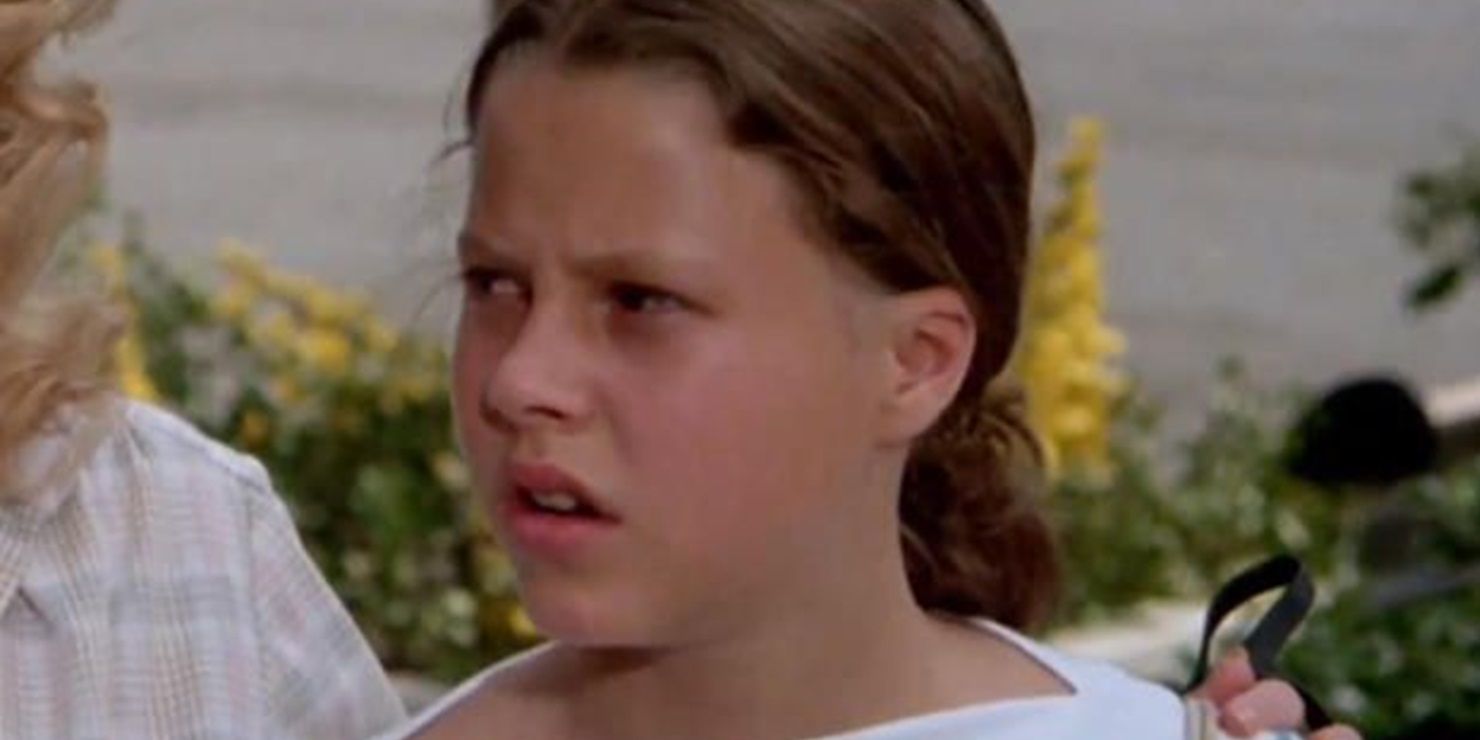
National Lampoon’s Vacation is a weird franchise. Honestly, it’s one of the few series where the audience just collectively agreed to ignore one of the most glaring continuity errors in cinema history. I'm talking, of course, about the ever-changing face of Rusty Griswold from National Lampoon.
If you grew up watching the Griswolds, you know the drill. Clark is always played by Chevy Chase. Ellen is always Beverly D'Angelo. But Rusty? He's a shape-shifter. Every single time the family packs up the station wagon or heads to the airport, there’s a brand-new kid sitting in the backseat. It’s become a meta-joke, a bit of Hollywood lore that defines the series almost as much as the "Holiday Road" theme song itself.
But why did it happen? Was it just bad scheduling? Or was there something more intentional behind the rotating door of Rustys?
The Anthony Michael Hall Era: The Original Rusty
It all started in 1983. Anthony Michael Hall was the first to take on the role of Rusty Griswold from National Lampoon’s Vacation. At the time, Hall was the quintessential 80s nerd-turned-cool-kid. He brought a specific kind of dry, observant wit to the character. Think back to the scene where Clark is losing his mind in the desert, and Rusty is just trying to navigate the sheer awkwardness of his father’s mid-life crisis.
Hall was great. He had chemistry with Chevy Chase that felt authentic—a mix of "I look up to you" and "I can’t believe we’re related."
Then came the sequel, European Vacation. Fans expected Hall to return. Instead, we got Jason Lively. The rumor for years was that Hall was busy filming Weird Science, which is true, but there’s also the legend that Chevy Chase himself wanted the kids changed to keep the family feeling "fresh" and eternally young. If the kids aged in real-time, the Griswolds would have been empty nesters by the third movie. By recasting, the producers could keep Rusty and Audrey in that sweet spot of teenage angst forever.
The Many Faces of the Griswold Son
Following Hall was Jason Lively in European Vacation (1985). Lively’s Rusty was... different. He was taller, more of a "teen heartthrob" type, and arguably less cynical than Hall’s version. He spent half the movie wearing a "Rusty" beret and trying to get lucky in London. It felt like a different character entirely, which set the tone for the rest of the series.
Johnny Galecki: The Christmas Icon
Most people, if you ask them to picture Rusty Griswold from National Lampoon, immediately think of Johnny Galecki. Long before he was making millions on The Big Bang Theory, Galecki was the definitive Rusty in 1989’s Christmas Vacation.
Galecki brought back that deadpan humor. He was the kid trying to help his dad untangle 25,000 Italian twinkle lights while freezing his toes off. He looked nothing like Jason Lively or Anthony Michael Hall, yet he fit the family dynamic perfectly. Interestingly, Galecki has mentioned in interviews that he stayed in touch with Chevy Chase and Beverly D'Angelo, noting that the atmosphere on that set was chaotic but magical.
Then came Vegas Vacation in 1997. Enter Ethan Embry.
Embry’s "Nick Papagiorgio" alter-ego is arguably the peak of the Rusty character arc. In this version, Rusty finally eclipses his father. While Clark is losing the family’s savings at the blackjack table, Rusty is winning cars and hanging out with high rollers. It was a total departure from the "kid" version of the character, leaning into a slicker, luckier version of the Griswold DNA.
The Logic Behind the Recasting
It’s easy to call it a mistake. You could say the casting directors just didn't care about continuity. But that’s not really the case. The recasting of Rusty Griswold from National Lampoon actually served a narrative purpose, even if it was accidental at first.
- Age Stagnation: Keeping the kids young allowed the movies to repeat the "family vacation" trope indefinitely. If Rusty grows up and moves out, the franchise becomes a different kind of story.
- The "Everyman" Factor: By changing the actor, Rusty became a stand-in for every American teenage son. He wasn't a specific person with a deep backstory; he was a mirror of whatever era the movie was filmed in.
- Chevy’s Influence: Chase has famously remarked that he liked the idea of the kids being different every time. It added to the surreal, slightly cartoonish reality of the Griswold universe.
Ranking the Rustys: Who Did It Best?
This is where fans get heated. Everyone has "their" Rusty.
Usually, the debate settles between Anthony Michael Hall and Johnny Galecki. Hall has the "original" credit, and his performance is arguably the most grounded. However, Christmas Vacation is the most watched movie in the series, making Galecki the face of the character for millions of families every December.
Ethan Embry deserves a lot of credit for the Vegas performance, though. He took the character into adulthood (sort of) without losing the essential "Rusty-ness"—that sense of being slightly smarter than his dad but still trapped in his dad's orbit.
The 2015 Legacy: Ed Helms Takes the Reins
When the franchise was revived in 2015 with Vacation, the "Rusty" problem finally had to be addressed. They couldn't just cast a kid. They needed a grown-up Rusty to lead the new family.
Ed Helms was chosen to play the adult version of Rusty Griswold from National Lampoon. The movie even makes a self-referential joke about the recasting. In an early scene, Rusty is looking at old family photos (which are actual photos of the previous actors), and he mentions how much he's changed. It was a wink to the fans, acknowledging that the franchise knows it's being ridiculous.
Helms played Rusty as a version of Clark—well-meaning, desperate for family bonding, and prone to disaster. It brought the character full circle. Rusty was no longer the skeptical observer in the backseat; he was the guy behind the wheel, making all the same mistakes his father made.
Why We Still Care About the Griswolds
The character of Rusty matters because he represents the transition from childhood to adulthood. We see him through the lens of family trips, those high-pressure environments where everyone is supposed to be having "fun" but usually ends up screaming.
Whether he was played by a nerd, a jock, or a future sitcom star, Rusty was always the same at his core: a kid trying to survive his father's expectations. That's universal. That's why the character sticks, despite the four different faces (five if you count the 2015 reboot) we saw in the original run.
The Impact on Pop Culture
The "Rusty Shuffle" has become a shorthand in Hollywood for when a show or movie series replaces an actor without explaining it. It’s the "Darrin from Bewitched" effect on steroids. But unlike other shows where it feels like a failure, in National Lampoon, it feels like a badge of honor. It’s part of the series’ chaotic, irreverent DNA.
Moving Forward With the Griswold Legacy
If you’re a fan looking to dive deeper into the world of Rusty Griswold from National Lampoon, there are a few things you should actually do to appreciate the evolution of this character beyond just binge-watching the movies.
- Watch the movies in chronological order, back-to-back. You’ll notice that the character’s personality shifts slightly to match the actor’s strengths. Hall is cynical; Lively is romantic; Galecki is helpful; Embry is lucky.
- Look for the "Easter Eggs" in the 2015 film. The production team went to great lengths to include photos of the previous Rustys, which is a rare moment of the franchise acknowledging its own messy history.
- Compare the "Audrey" recasts. People always talk about Rusty, but his sister Audrey was also recast every single time (Dana Barron, Dana Hill, Juliette Lewis, Marisol Nichols). Interestingly, Dana Barron is the only "kid" actor to return to her role, playing Audrey again in the 2003 TV movie Christmas Vacation 2: Cousin Eddie's Island Adventure.
The rotating cast of Rustys isn't a flaw in the National Lampoon universe—it's the feature. It kept the Griswolds frozen in a perpetual state of 1980s and 90s Americana, allowing each generation to claim a version of the family as their own. When you watch a Vacation movie, you aren't looking for a tight continuity. You're looking for that specific brand of Griswold chaos, and a new Rusty is just part of the ride.
To truly understand the legacy, pay attention to the dialogue in Christmas Vacation compared to the original 1983 film. You’ll see that while the actors changed, the "voice" of the Griswold son remained a constant anchor for Clark’s insanity. It’s a masterclass in how a character can survive multiple identities as long as the heart of the story—the disastrous family trip—remains the same.