Paul Reubens wasn't just a guy in a tight gray suit. Honestly, he was a genius of discomfort. When you look back at the Saturday Night Live Pee-wee Herman appearances, you aren't just seeing a kids' show character gone rogue; you’re seeing a masterclass in character acting that basically redefined what "weird" meant for 80s television.
It's strange.
Most people remember the bowtie and the laugh, but they forget how dangerous the character felt in a live sketch environment. Reubens didn't just play Pee-wee; he inhabited a version of childhood innocence that was wrapped in layers of neurosis and adult irony.
The Night Paul Reubens Hosted SNL
In 1985, the show was in a weird spot. It was the start of the eleventh season, and Lorne Michaels had just returned after a five-year hiatus. The cast was a bizarre mix of established actors like Joan Cusack, Robert Downey Jr., and Anthony Michael Hall. It's widely considered one of the most "misfit" seasons in the show's history. Into this chaos stepped Paul Reubens.
But he didn't host as Paul Reubens. He hosted as Pee-wee Herman.
This was a massive deal. Usually, hosts show up, do a monologue as themselves, and then jump into various characters. Reubens refused. He stayed in character the entire night. From the monologue to the goodnights, he was Pee-wee. It created this surreal, meta-commentary on the nature of celebrity and performance.
One of the most iconic bits from that night involved the "Thanksgiving Dinner" sketch. You had this manic energy meeting the deadpan style of the mid-80s cast. It shouldn't have worked. Somehow, it did. Reubens’ commitment to the bit was so total that the rest of the cast had no choice but to play along with his reality.
Why the 1985 Episode Was Different
The 1980s were a pivot point for comedy. We were moving away from the counter-culture grit of the 70s into something more polished, yet more absurd. Saturday Night Live Pee-wee Herman episodes captured that transition perfectly.
- The Monologue: He didn't tell jokes. He showed off his toys. It was a deconstruction of what a late-night monologue was supposed to be.
- The Chemistry: Watching him interact with a young Jon Lovitz or Phil Hartman (who actually helped create the Pee-wee character at The Groundlings) was a reminder of how deep those comedy roots went.
- The Aesthetic: The bright colors of the Pee-wee universe clashing with the gritty, dark SNL stage of that era created a visual tension that kept the audience on edge.
Phil Hartman: The Secret Link
You can't talk about Pee-wee on SNL without talking about Phil Hartman. Before they were famous, they were both part of The Groundlings in Los Angeles. Hartman actually co-wrote Pee-wee’s Big Adventure and played Captain Carl on the Pee-wee’s Playhouse series.
When Reubens showed up at 30 Rock, it was a reunion.
There's a specific texture to their interactions. You can see the shorthand. In sketches like "Monster in the Closet," the timing is so precise it feels like they’re sharing a brain. Hartman’s ability to play the "straight man" allowed Reubens to go as big and loud as he wanted. It’s a dynamic that most modern sketch comedy struggles to replicate.
They weren't just trying to get laughs; they were building a world.
The 2011 Cameo and the "Digital Short" Era
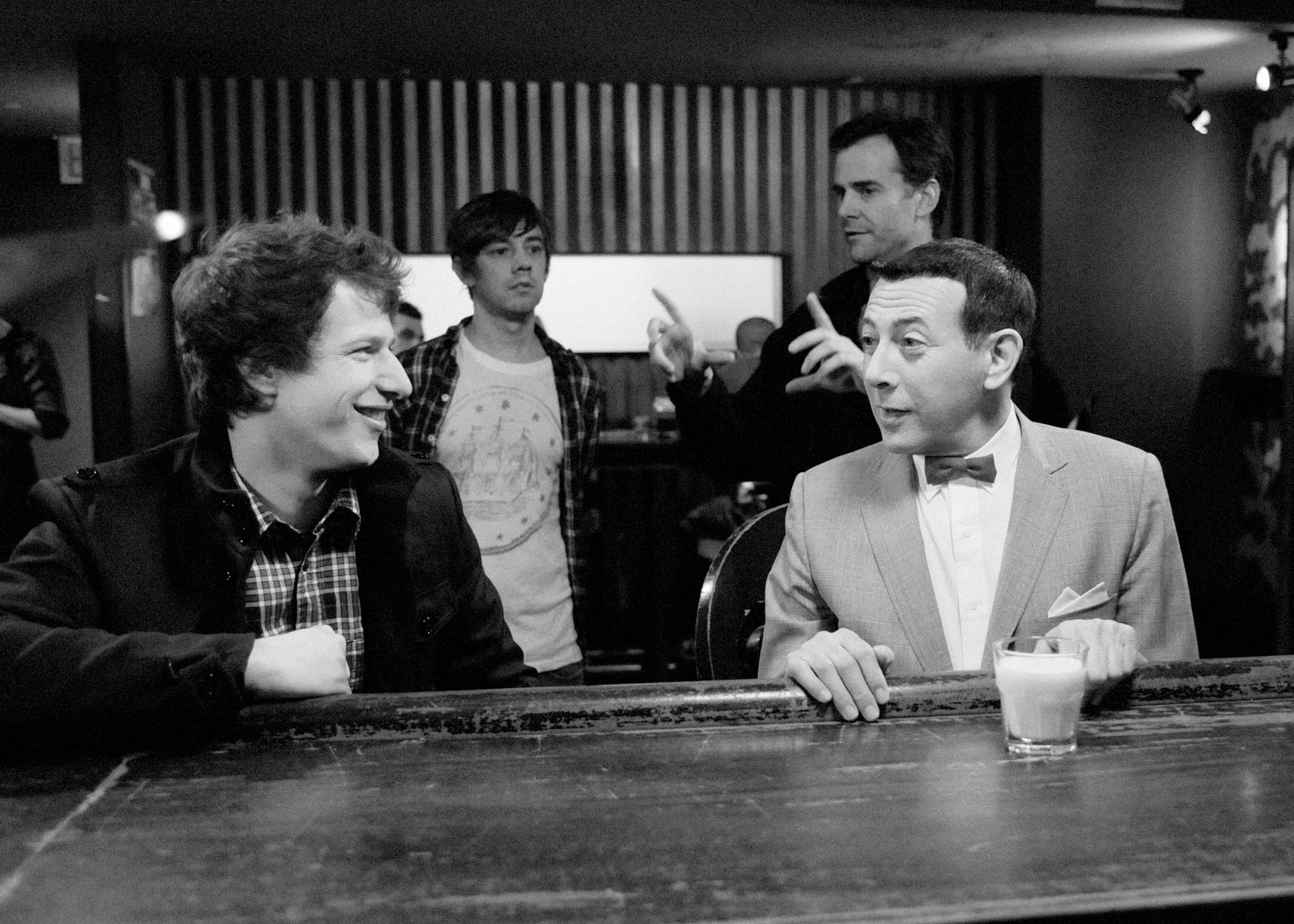
Fast forward several decades. The world had changed. Paul Reubens had gone through his well-documented personal struggles and a long period of professional exile. Then, in 2011, he returned to the SNL stage in a Digital Short with Andy Samberg.
It was a total "lightning in a bottle" moment.
The sketch, titled "The Midnight Party," featured Pee-wee and Samberg getting increasingly drunk, doing shots, and engaging in chaotic behavior. It was the perfect way to bridge the gap between the Gen X fans who grew up with the Playhouse and the Millennial/Gen Z crowd who lived for Lonely Island shorts.
It worked because it didn't try to make Pee-wee "edgy" in a cheap way. It just put him in a situation where his manic energy could spiral out of control. Seeing Pee-wee Herman get into a bar fight is something you didn't know you needed until you saw it. It was a high-water mark for the Digital Short era.
Breaking Down the Digital Short Impact
- Relevance: It proved the character wasn't a relic. He still felt fresh because the performance was so specific.
- Visual Storytelling: The use of slow-motion and quick cuts gave the character a cinematic feel that the old multi-cam sketches lacked.
- The "Cool" Factor: Suddenly, Pee-wee was cool again. It paved the way for his Netflix movie, Pee-wee's Big Holiday, years later.
What Most People Get Wrong About the Character
A lot of critics at the time thought Pee-wee was just a "kid's character" that SNL used for easy ratings. That’s a total misunderstanding of what Paul Reubens was doing.
Pee-wee was a subversion.
He was a comment on the forced cheerfulness of 1950s children's television. When he appeared on Saturday Night Live Pee-wee Herman segments, he was often used to highlight the absurdity of adult social norms. He was the "innocent" who saw how weird the "normal" people were.
Think about the "Art Shop" sketch. It’s not just about silly voices. It’s about the pretension of the art world. Pee-wee walks into these environments and accidentally dismantles them just by being himself. It’s a classic comedic trope—the holy fool—but dressed in a shrunken suit.
The Technical Difficulty of Playing Pee-wee
People don't realize how physically demanding that role was. Reubens had to maintain a specific pitch, a specific posture, and a specific "twitchiness" for hours during rehearsals and the live show.
During the 1985 episode, there were reports of the cast being exhausted just trying to keep up with him. He was a whirlwind. He didn't break character even when the cameras weren't rolling. That kind of method acting is rare in sketch comedy. Most people want to "wink" at the audience to show they're in on the joke. Reubens never winked. He stayed in the bubble.
This level of commitment is why those clips still get millions of views on YouTube and TikTok today. There's no "dated" feel to the performance because it's so stylized. It exists in its own timeline.
Looking Back at the Legacy
Paul Reubens passed away in 2023, leaving behind a legacy that is honestly hard to categorize. Was he a comedian? An actor? A performance artist? He was all of those things.
His SNL appearances serve as a time capsule. They show a performer at the absolute height of his powers, taking a character that should have been a one-note joke and turning him into an American icon.
When you watch these sketches now, you see the influence on modern comedy. You see bits of Pee-wee in everything from SpongeBob SquarePants to the absurdist humor of I Think You Should Leave. He taught us that being "weird" wasn't just okay—it was a superpower.
Key Takeaways for Comedy Fans
- Watch the 1985 episode for the history: It’s a fascinating look at a transitional era for the show.
- Study the Phil Hartman connection: Their chemistry is a lesson in how to support a partner in a sketch.
- Don't skip the Digital Short: It’s the best example of how to modernize a classic character without losing the soul of what made them great.
- Observe the audience: Notice how the live audience goes from confused to totally onboard within the first ten minutes. It’s a masterclass in winning over a crowd.
Actionable Steps for Exploring More
If you want to truly understand the impact of Saturday Night Live Pee-wee Herman moments, don't just watch the highlights.
First, track down the full 1985 episode. Look for how Reubens handles the "between-sketch" moments. Most streaming platforms have the edited versions, but the original broadcast tapes (which you can often find on archival sites) show the true scale of his commitment.
Second, compare his SNL work to his early appearances on Late Night with David Letterman. You’ll see how he refined the character for a late-night audience versus a sketch audience.
Finally, read Phil Hartman’s biographies or interviews regarding the Groundlings era. Understanding the "birth" of the character helps you appreciate the "maturity" of the character during the SNL years.
The most important thing to remember is that Pee-wee wasn't a joke; he was a choice. Paul Reubens chose to see the world through a lens of wonder and slight irritation, and for a few Saturday nights in New York, he invited all of us to do the same.