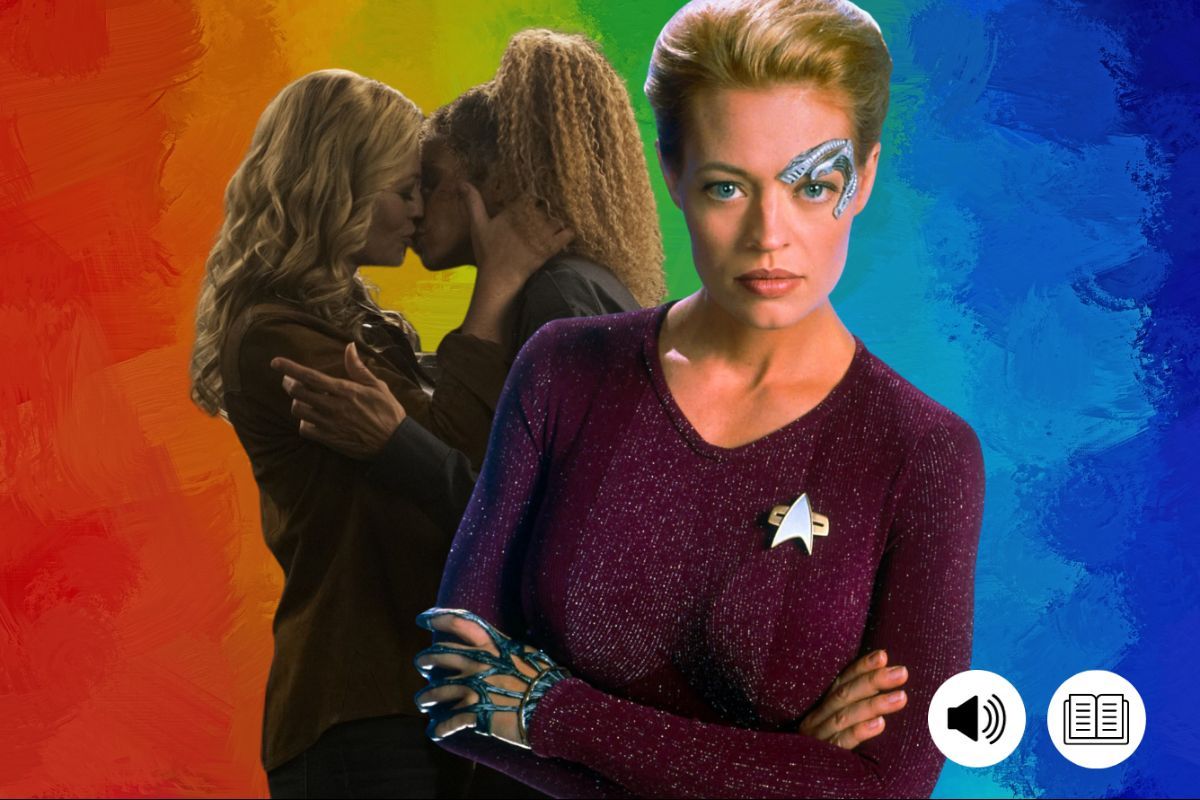
Jeri Ryan didn’t want the job. That’s the part people usually forget. When she was first offered the role of Seven of Nine on Star Trek Voyager, she turned it down. Multiple times. She saw the silver spandex. She saw the "Borg babe" aesthetic the UPN executives were clearly pushing to save their flagging ratings. It looked like a gimmick. Honestly, it was a gimmick. But then something weird happened. Between the tight corset and the ocular implant, a character emerged that actually saved the show's soul.
Seven of Nine wasn't just eye candy. She became the mirror that showed Captain Janeway—and the rest of us—what it actually means to be human.
The Cold Logic of Seven of Nine
Voyager was struggling by Season 4. The ratings were dipping and the writing felt stagnant. Then came "Scorpion." We met Annika Hansen, a human woman who had been assimilated by the Borg at the age of six. She wasn't a hero. She was a drone. When she was severed from the Collective, she didn't celebrate. She screamed. She wanted to go back to the hive.
That’s a dark starting point for a TV protagonist.
Most of the crew hated her. B'Elanna Torres, specifically, had zero patience for the "former" monster who had helped destroy entire civilizations. This created a friction the show desperately needed. Before Seven, the crew was a bit too polite. A bit too "Starfleet." Suddenly, you had this tall, intimidating woman standing in Cargo Bay 2, telling the Captain that her morals were inefficient. It was gold.
The costume controversy vs. the acting
It’s impossible to talk about Seven of Nine without mentioning the suit. It was a nightmare. Jeri Ryan has spoken openly at conventions about how the first silver suit was so tight she could barely breathe, let alone act. Production had to keep oxygen tanks nearby. It was a blatant attempt to grab the "18-34 male" demographic.
Yet, Ryan out-acted the outfit.
She developed this rigid, precise way of moving. Her speech patterns were clipped and devoid of contractions. She used her eyes—the one part of her face not restricted by the Borg makeup or the stifling costume—to convey a deep, hidden vulnerability. You could see the terrified little girl, Annika, peeking through the Borg armor. That nuance is why the character stayed relevant long after the show ended.
Why the Janeway and Seven Dynamic Worked
The heart of the show shifted in Season 4. It wasn't just about getting home anymore; it was about the maternal, yet professional, tug-of-war between Kathryn Janeway and Seven of Nine. Kate Mulgrew famously had a difficult time with the addition of the character. She felt it undermined the feminist strides the show had made.
But on screen? The chemistry was undeniable.
Janeway became a mentor. Seven became the rebellious daughter who happened to be a mathematical genius. They fought over ethics. They fought over the Prime Directive. In the episode "The Gift," we see the literal stripping away of Seven’s Borg tech, but the metaphorical stripping away of her defenses was much more painful to watch. Janeway forced her to be human. Seven didn't think she had the right to do that. It raises a valid philosophical question: Is it "saving" someone if you're forcing them into a culture they no longer remember?
Learning to eat, laugh, and love
Some of the best Seven of Nine moments were the small ones. Watching her try to navigate a social dinner in "Someone to Watch Over Me" was both hilarious and heartbreaking. The Doctor, played by Robert Picardo, acted as her Pygmalion. He taught her how to make small talk.
"I have no desire to consume bovine embryo," she says when offered an egg.
It’s funny, sure. But it also highlights the absolute alienness of our daily lives. Seven didn't have a childhood. She had a collective. Every "first" she had on Voyager—her first strawberry, her first song, her first friendship—was a victory for the audience. We weren't just watching a sci-fi show; we were watching a recovery story.
The Borg Factor: Changing the Villain Forever
Before Voyager, the Borg were an unstoppable force of nature. They were a storm. They didn't have personalities. By bringing Seven of Nine into the main cast, Star Trek humanized the most terrifying villain in sci-fi history.
We learned about the "Unimatrix." We learned about the "Vinculum." We saw the Borg through the eyes of someone who missed the silence of the hive. It made the Borg more tragic than scary. When Seven encounters other former drones, like in the episode "Survival Instinct," we see the permanent psychological scarring the Collective leaves behind. It’s basically PTSD in space.
- The Collective: A hive mind where individuality is deleted.
- The Individual: Seven’s struggle to find a "self" after years of "we."
- The Conflict: Starfleet’s ideals vs. Borg efficiency.
What Most People Get Wrong About Seven
A common criticism is that Seven of Nine "took over" the show. Fans of Harry Kim or Chakotay often complain that their characters were sidelined to make room for more Seven-centric episodes.
There’s some truth there.
The writers leaned heavily on her because her stories had stakes. When Harry Kim has a bad day, he’s just sad. When Seven has a bad day, she might accidentally download a Borg virus that shuts down the ship or she might have a mental breakdown where she manifests twenty different personalities ("Infinite Regress"). She was a high-stakes character. You can't blame the writers for going where the drama was.
The Legacy of Seven of Nine in Modern Trek
When Jeri Ryan returned in Star Trek: Picard, fans lost their minds. But she wasn't the same Seven. She was older. She was more cynical. She had finally learned to use contractions!
Seeing her as a Fenris Ranger, a vigilante taking care of the lawless parts of the galaxy, felt like the natural evolution of her character. She had moved past the "trying to be human" phase and into the "being a person with a complicated past" phase. It validated everything we watched on Voyager. She didn't just become a perfect Starfleet officer; she became a rugged survivor.
Actionable Insights for Fans and Writers
If you're revisiting Voyager or writing your own character arcs, there are a few key takeaways from Seven's journey:
- Contrast is King: Seven worked because she was the polar opposite of everyone else. If your cast is too similar, find a "drone" to shake things up.
- Growth Must Be Earned: Seven didn't become "human" in one episode. It took four seasons, and she still wasn't "normal" by the finale. Slow-burn development is always more satisfying.
- Embrace the Flaws: Seven’s arrogance was her most interesting trait. She genuinely believed she was smarter than everyone. Don't be afraid to make your protagonists unlikeable sometimes.
- Visual Storytelling: The gradual removal of her Borg implants mirrored her internal journey. Use physical changes to signal internal growth.
To truly understand Seven of Nine, you have to look past the 1990s marketing tactics. You have to look at the woman who was told she was a monster until she started to believe it, and then had to spend years unlearning that lie. She wasn't just a character on a spaceship; she was an exploration of the trauma of loss and the grueling, beautiful process of finding oneself again.
Next Steps for the Voyager Enthusiast
Start by re-watching the "Seven of Nine Trilogy" of episodes to see her full range: "Scorpion, Part II," "The Gift," and "Raven." Notice how the camera work changes as she becomes less of a "threat" and more of a crew member. If you've already seen those, dive into the Star Trek: Picard seasons to see how Jeri Ryan evolved the performance into something even more grounded and gritty. Pay close attention to her interactions with Admiral Picard; it’s a fascinating look at two people who share the same "Borg" trauma but handled it in completely different ways.