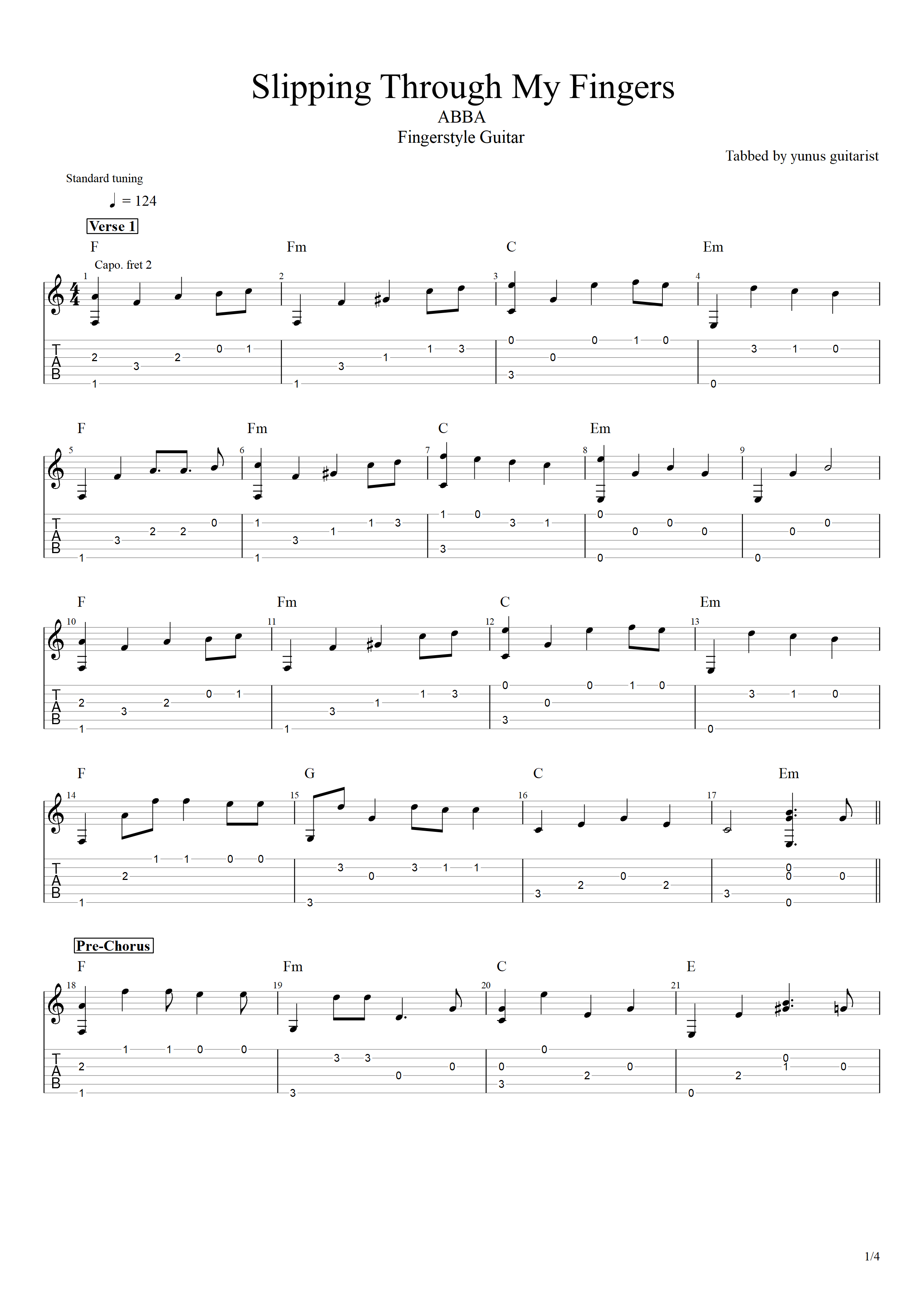
It happens every single time. You're sitting there, maybe watching a school play or just catching a glimpse of your kid walking toward the school bus with a backpack that looks way too big for their frame, and suddenly those piano chords start playing in your head. Slipping Through My Fingers by ABBA isn't just a song; it’s a shared emotional breakdown set to a 4/4 beat.
Honestly, most people think of ABBA and picture disco balls, silver platform boots, and the high-energy camp of "Waterloo." But this track is different. It’s quiet. It’s heavy. It’s arguably the most "human" moment in their entire discography. Björn Ulvaeus wrote the lyrics while watching his and Agnetha Fältskog’s seven-year-old daughter, Linda, walk off to school. He realized she was becoming her own person, a separate entity from him, and he felt the crushing weight of time.
That feeling? It’s universal.
The heartbreaking reality behind the lyrics
We need to talk about the context here because it matters. By the time The Visitors was released in 1981, the internal dynamics of ABBA were basically a disaster. The "happy couples" image was dead. Björn and Agnetha were divorced. Benny and Frida were on the brink. You can hear that exhaustion in the production.
Agnetha’s vocals on Slipping Through My Fingers by ABBA are haunting because she isn't just playing a character; she was living the reality of being a working mother co-parenting through a messy public split. When she sings about that "precocious child" and the "funny little girl," you can tell she’s picturing Linda. It’s raw. It’s not polished pop perfection.
Most pop songs about "growing up" feel Hallmark-sweet. This one feels like a panic attack. The lyrics describe the guilt of being distracted—of looking away for one second and realizing a whole year has vanished. "Do I really see what's in her mind?" Agnetha asks. It’s the ultimate parental imposter syndrome. We’re all just faking it, hoping we caught the important bits before the childhood chapter closes for good.
Why it hits harder than "Dancing Queen"
Let’s be real. "Dancing Queen" is for the wedding dance floor. Slipping Through My Fingers by ABBA is for the car ride home after you drop them off at college.
Musically, the song uses a descending melody line that mirrors the "slipping" sensation mentioned in the title. It feels like sand falling through an hourglass. While most 80s tracks were layering synthesizers until they sounded like a spaceship, this track keeps the focus on the acoustic piano and Agnetha’s breathy, almost-crying delivery.
There's a specific line that always gets me: "The guilt is even greater when I'm not there." That hits home for anyone who has ever balanced a career and a family. Björn was touring the world, becoming a global icon, while his kids were growing up in Sweden. He knew he was missing it. He knew he couldn't get it back.
The Mamma Mia! effect and the song's second life
If you're under the age of 40, there’s a good chance you didn't discover this song on a vinyl record in 1981. You probably saw Meryl Streep brushing Amanda Seyfried’s hair in the Mamma Mia! movie.
That scene changed everything for this track.
It moved the song from a niche fan-favorite on a "darker" album to a global anthem for weddings and graduations. In the film, Donna (Streep) is helping Sophie (Seyfried) get ready for her wedding. It’s the passing of the torch. It’s the realization that the "funny little girl" is now a woman about to start her own life.
What’s interesting is how the movie version differs from the original. The original 1981 version is more melancholic and lonely. The movie version is a communal moment of grief and celebration. Both work, but the original has a certain Swedish coldness—that vemod, as they call it—that feels more honest to the experience of aging.
It's not just about kids
While the song is explicitly about a parent and child, its resonance has leaked into other parts of life. I’ve talked to people who associate Slipping Through My Fingers by ABBA with the loss of a parent or even the end of a long-term relationship.
It captures the "Last Time" phenomenon.
You never know when the last time you’ll pick up your child will be. One day you put them down, and you just never lift them up again because they've grown too big. You don't realize it's the last time while it's happening. That’s the tragedy the song taps into. It’s about the lack of awareness in the present moment. We only realize the value of the "breakfast table" chatter once the chairs are empty.
Technical mastery in the songwriting
Björn Ulvaeus doesn't get enough credit as a lyricist. English wasn't his first language, which often led to these incredibly direct, unpretentious lines that hit harder than poetic metaphors.
"Each time I pull her closer, I know I'm leaving more behind."
That’s a paradox. It’s a perfect summary of the human condition. To love someone is to eventually lose them to their own life.
The structure of the song is also clever. It doesn't have a massive, explosive chorus. Instead, it builds tension and then releases it into that sweeping, slightly tragic refrain. It feels like a sigh.
- It avoids the "big 80s" drum sound.
- The tempo is slow enough to feel heavy but fast enough to feel like time is moving.
- The use of the first person ("I") makes it feel like an internal monologue.
The legacy of The Visitors
Slipping Through My Fingers by ABBA sits on The Visitors, an album that was essentially a breakup letter to the band's fans. It’s an album about cold wars, surveillance, aging, and regret.
If you listen to the whole record, this song is the emotional anchor. It’s the one moment of pure, unadulterated vulnerability. Without it, the album might feel too cold. With it, the album becomes a masterpiece of "adult" pop. It proved that ABBA wasn't just a hit machine; they were artists who understood the terrifying passage of time.
How to actually handle the "slipping" feeling
So, what do we do with this? If you’re currently feeling like time is moving too fast—if you’re listening to this song on repeat and crying into your coffee—here are a few ways to actually process that "slipping through my fingers" sensation without losing your mind.
First, stop trying to "cherish every moment." Honestly, that’s terrible advice. You can’t cherish a toddler's tantrum or a messy kitchen. Instead, focus on "micro-captures." Take a mental snapshot of the boring stuff. The way they hold a spoon. The way the light hits the floor in the afternoon.
Second, record the mundane. We all have videos of birthdays and holidays. But do you have a video of your kid just talking about their favorite dinosaur? Those are the memories Slipping Through My Fingers by ABBA is mourning.
Third, accept the change. The "slipping" isn't a failure; it’s the goal. If they aren't slipping away, they aren't growing. The goal of parenting is to work yourself out of a job. It sucks, but it’s the highest form of success.
Actionable steps for the sentimental parent
- Create a "Time Capsule" Playlist: Put this song on it, but surround it with the songs your kids actually like right now. It creates a bridge between your nostalgia and their current reality.
- Write the Letter: Björn wrote a song. You can write a letter. Write down the "funny little girl" or "boy" stories now, before the details blur.
- Physical Presence over Perfection: When you feel that "guilt" Agnetha sings about, put the phone in another room for 20 minutes. You don't need to be perfect; you just need to be there.
- Revisit the Album: Listen to The Visitors in its entirety. It helps to hear the song in its original context of transition and change. It makes you feel less alone in your "end of an era" feelings.
The song won't stop the clock. It won't make the "slipping" stop. But it gives us a language for that specific ache. It lets us know that even the biggest stars in the world, at the height of their fame, were sitting at their breakfast tables feeling exactly as small and helpless as we do when the morning sun hits the kitchen floor.