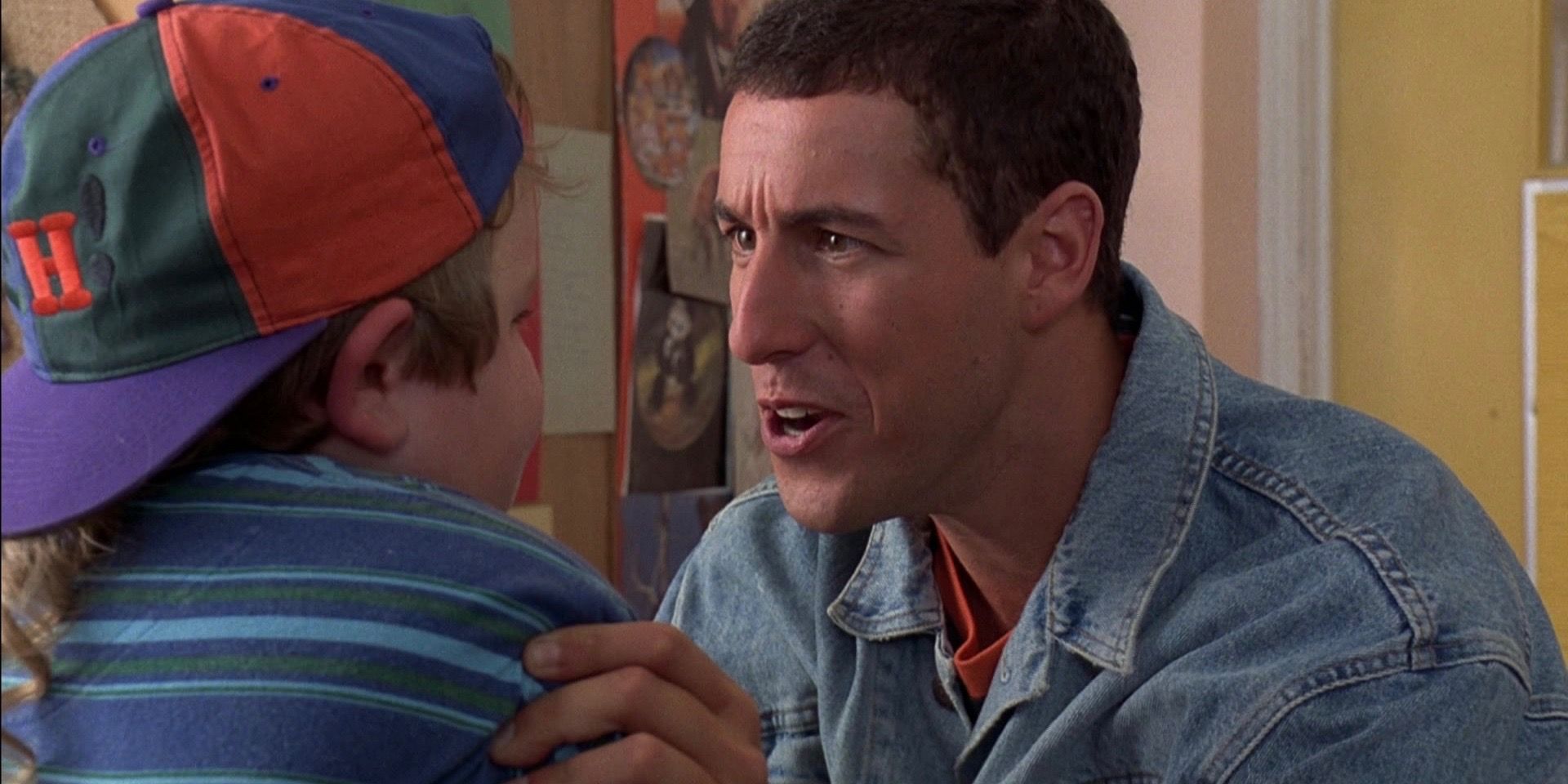
You know that feeling when you're watching a guy in a XXXL oversized polo shirt scream at a golf ball, and suddenly, a Lynyrd Skynyrd riff kicks in and everything just feels right? That is the specific, weirdly brilliant magic of songs in Adam Sandler movies.
Honestly, music isn't just a background detail for Happy Madison productions. It's the skeleton. It’s the thing that stops the movies from being just a series of "guy gets hit in the crotch" jokes and turns them into something people actually watch twenty years later. Sandler is a musician first in many ways—he was the guy with the guitar on Saturday Night Live, after all—and he treats his soundtracks like a personal mixtape he’s making for his best friends.
The Styx Obsession and the Power of the "Needle Drop"
If you’ve watched more than three Sandler films, you’ve noticed he has a thing for 70s and 80s arena rock. Specifically Styx.
In Big Daddy, there’s a whole running bit about Sonny Koufax being the world’s biggest Styx fan. We get "Renegade," "The Best of Times," and "Babe." It’s not just because the songs are catchy; it’s because those songs represent a specific brand of unpretentious, blue-collar joy. When Billy Madison blasts "Stroke Me" by Billy Squier while driving his car on the first day of school, it tells you everything you need to know about his character's arrested development without a single line of dialogue.
But it’s not all just classic rock. Sandler’s team, including long-time music supervisors like Teddy Castellucci or Rupert Gregson-Williams, knows exactly how to use a "needle drop" to pivot from slapstick to heart. Think about Happy Gilmore. You have the chaotic energy of "Rock and Roll Part 2" during the tournament montage, but then it closes out with "Tuesday’s Gone." That transition is why the movie sticks. It gives the comedy a soul.
Why 50 First Dates Changed the Game
Most people don't realize how much work went into the 50 First Dates soundtrack. For a long time, the standard move for songs in Adam Sandler movies was just "play the original hit." But for the Hawaii-set rom-com, Sandler actually went out and convinced bands like 311 to record reggae-infused covers of 80s classics.
Nick Hexum from 311 recently talked about how Sandler basically hand-picked the vibe. Sandler felt their song "Amber" was the "sound" of the movie, so he asked them to cover The Cure’s "Lovesong." That led to a waterfall of other covers:
- Seal and Mikey Dread doing "Lips Like Sugar"
- Jason Mraz taking on "I Melt With You"
- Dryden Mitchell of Alien Ant Farm covering "Friday I’m In Love"
It transformed the movie from a standard comedy into a cohesive aesthetic experience. You can't think of that film without hearing those specific versions. It’s a masterclass in using music to build a world that feels both nostalgic and totally new.
The Original "Sandler Songs" We All Memorized
We have to talk about the songs Sandler actually writes himself. It started on SNL with "The Chanukah Song" and "Lunchlady Land," but it peaked in his movies.
"Grow Old With You" from The Wedding Singer is a weird anomaly. It’s a tiny, two-minute song played on a plane, yet it has become a legitimate wedding staple in the real world. Why? Because it’s sincere. For all the yelling Sandler does, his music is where he lets the "nice guy" persona breathe.
Then you have the darker stuff. "Somebody Kill Me" in The Wedding Singer captures that specific 1980s post-punk angst (Sandler famously said his character was "listening to The Cure a lot" during that scene). It’s funny because it’s relatable—everyone has had that "kill me" breakup moment, even if they didn't write a song about it.
A Quick Look at the Deep Cuts
If you're a real fan, you know the music goes deeper than the hits.
- The Waterboy: The soundtrack is a love letter to the South, featuring Creedence Clearwater Revival ("Born on the Bayou") and The Charlie Daniels Band. It grounds the absurdity of Bobby Boucher in a real-feeling place.
- Click: This movie gets surprisingly heavy. When "Linger" by The Cranberries plays, it’s not for a joke. It’s for a gut-punch realization about lost time.
- Reign Over Me: In his more dramatic turns, Sandler uses music as a shield. His character is obsessed with The Who, and the scene where he breaks down to "Love Reign o'er Me" is arguably the best acting of his career.
The Secret Strategy of Happy Madison
There is a reason you never hear "cool" indie music in these movies. You won't find some obscure underground track that only three people in Brooklyn know. Sandler picks songs that everyone knows the words to—or songs that feel like you should know the words.
It’s about community. When you hear "Carry On Wayward Son" in a Sandler flick, he’s inviting you into the joke. He’s saying, "We all grew up with this, right?" It creates an immediate bond between the screen and the audience.
Interestingly, Sandler also uses his soundtracks to help out his friends. You’ll often see songs by his buddies or family members tucked into the credits. His daughter, Sadie, has even had musical moments. It’s a family business, and the soundtrack is the family's record collection.
What This Means for Your Playlist
If you’re looking to capture that specific Sandler energy, you don't need a complicated algorithm. You just need a mix of high-energy 70s rock, a few 80s synth-pop ballads, and maybe a goofy original song about a turkey.
The takeaway here is that songs in Adam Sandler movies aren't accidental. They are the emotional glue. They tell us when to laugh, when to feel bad for the guy who just fell off a tractor, and when to believe that the underdog might actually win the girl.
Next time you’re watching Mr. Deeds and "Space Oddity" starts playing during the helicopter ride, pay attention. It’s not just a gag; it’s Sandler’s way of making sure you’re actually having a good time.
To really dive into this, start by revisiting The Wedding Singer soundtrack—it's essentially a perfect time capsule of 80s pop culture that still holds up as a standalone album today. You might also want to check out some of the newer Netflix specials, like 100% Fresh, to see how his songwriting has evolved into something more personal and, honestly, pretty touching.