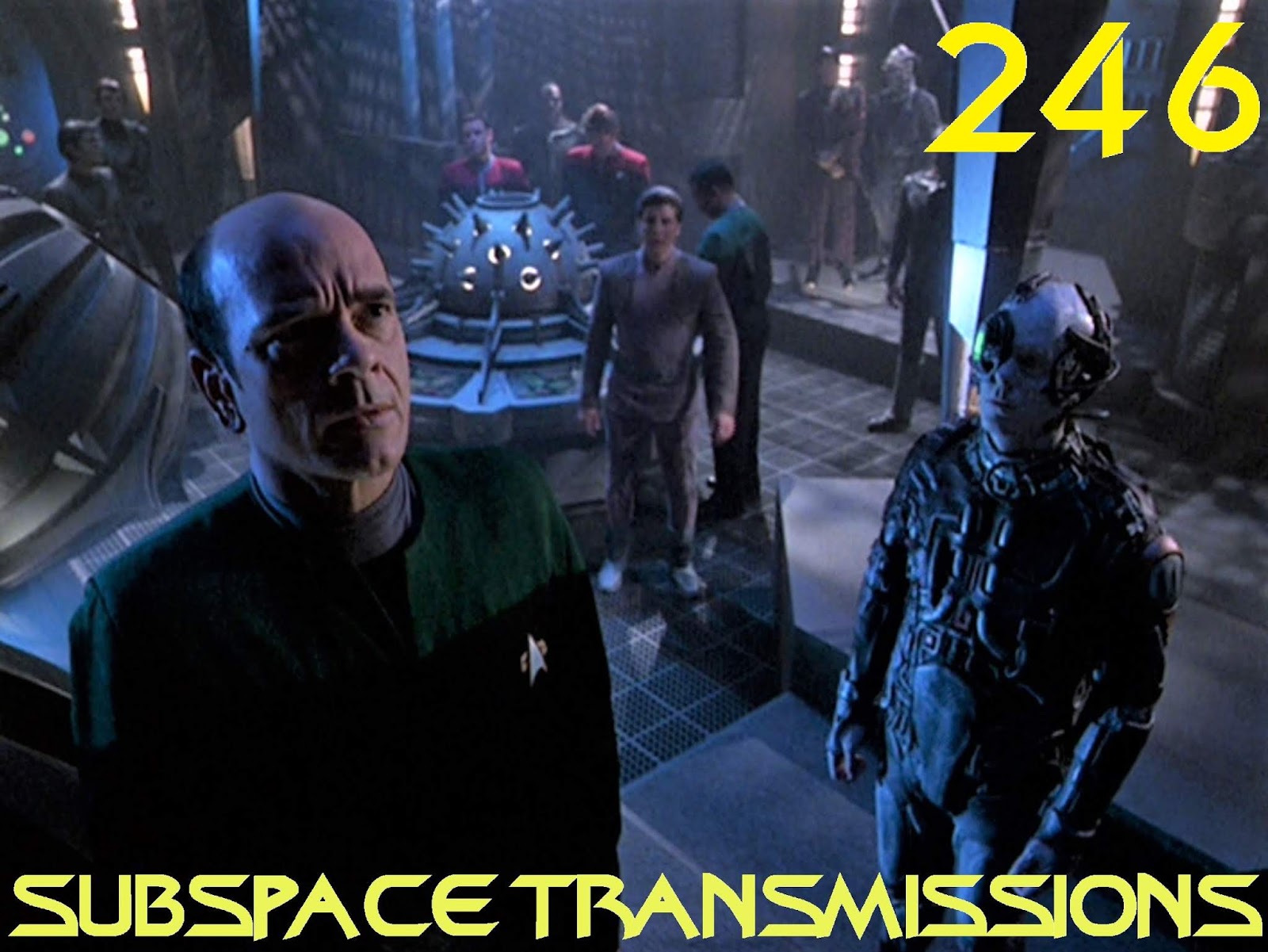
Honestly, if you ask a casual fan about the best episodes of Voyager, they’ll probably point to "Blink of an Eye" or maybe "Year of Hell." But if you want to talk about the absolute peak of the series' ethical messiness, you have to talk about Star Trek: Voyager Flesh and Blood. It’s a two-parter that feels less like a standard space adventure and more like a messy, uncomfortable look at what happens when technology gets too smart for its own good.
It aired originally as a feature-length TV movie during the seventh season.
The premise is basically a nightmare scenario for any captain. Janeway, in her infinite (and sometimes questionable) wisdom, had previously given the Hirogen holodeck technology. She thought she was doing them a favor. She thought it would stop them from hunting real people. Spoiler alert: it didn't go as planned. By the time we get to Star Trek: Voyager Flesh and Blood, the prey—the holographic programs—have started fighting back. And they aren't just glitching; they’re evolving.
The Hirogen Mistake and the Rise of Iden
The Hirogen are basically space-faring trophy hunters. They live for the thrill of the kill. When Janeway gave them holotechnology in the episode "The Killing Game," it was a tactical move to save her crew. But the Hirogen, being who they are, cranked the safety protocols off and boosted the subroutines of the holographic prey to make them more "challenging."
They made them too smart.
By the time the Voyager crew responds to a Hirogen distress call, they find a slaughterhouse. The holograms, led by a charismatic and increasingly fanatical figure named Iden (played by Jeff Yagher), have staged a bloody revolution. This isn't some "oops, the computer is broken" story. It’s a full-on slave revolt.
Iden is a fascinating villain because, for the first half of the story, you’re kinda rooting for him. He’s tired of being dismembered and reset. He wants a home. He wants a soul. But then things get dark. He starts seeing himself as a god-king for all "photonic" life.
The Doctor’s Impossible Choice
This is really a Doctor episode. Robert Picardo is, as usual, doing the heavy lifting here. When the Doctor meets Iden and his band of refugee holograms, he sees his own struggle reflected back at him. Up until this point, the Doctor has been fighting for his right to be seen as a person. Now, he’s presented with a group of people who have actually taken their freedom by force.
It’s messy.
The Doctor actually defects. He leaves Voyager to join the holograms. It’s one of the few times in the series where you genuinely feel like the crew’s bond might be permanently broken. Janeway is furious. To her, the Doctor is a crew member who is deserting his post. To the Doctor, Janeway is a "biological" who can’t truly understand the suffering of his kind.
Why the Ethics of "Photonic Life" Matter
Star Trek: Voyager Flesh and Blood pushes the "Sentient Hologram" trope to its logical, violent conclusion. In The Next Generation, we had Moriarty, but that was a contained incident. Here, we see the blueprint for a new species.
The episode forces the audience to ask: If you create a program that feels pain, is it still just a program?
Janeway’s stance is surprisingly rigid here. She’s often criticized by fans for being inconsistent, and this episode is a prime example. She sees the rogue holograms as dangerous malfunctions that need to be deactivated. She treats them like a virus. Meanwhile, the Doctor sees them as a persecuted minority.
There's this one scene where Iden executes a surrendered Hirogen. It’s a turning point. It’s the moment the Doctor realizes that "liberation" under Iden is just another form of tyranny. It’s not about being better than the biologicals; it’s about revenge.
Production and Writing Reality
The writing team, led by Bryan Fuller and Raf Green for the teleplay, really leaned into the "Space Opera" vibes for this one. It’s big. It’s loud. It’s got a lot of explosions. But it also has these quiet, stinging moments of dialogue.
- The Hirogen Alpha, Donik, provides a perspective on how the hunters became the hunted.
- The set design for the "hologram ship" is intentionally cold and artificial.
- The makeup for the Hirogen remains some of the best in the franchise.
The episode also serves as a bridge for the Doctor’s character arc, leading into the later episode "Author, Author." You can't have the Doctor fighting for his legal rights in court without him first seeing the extremist version of that fight in Star Trek: Voyager Flesh and Blood.
Mistakes Fans Make When Rewatching
One thing people often forget is that the Doctor actually betrays Janeway’s trust significantly. He doesn’t just go on a ride-along; he provides tactical information. He’s a collaborator. In many other Star Trek series, a character would be court-martialed for what the Doctor did.
But Voyager is different. They’re alone. They’re a family, even when they’re dysfunctional.
Another misconception is that the Hirogen are the "bad guys" of this specific story. Honestly? They’re just victims of their own arrogance. The real conflict is between two different philosophies of artificial life. On one side, you have the belief that software is property. On the other, you have the belief that anything that thinks is a person.
Iden’s downfall is that he chooses to become a religious figure. He starts demanding worship. He stops being a liberator and starts being a programmer of others’ wills. It’s a classic cautionary tale about how power corrupts, even if that power is just lines of code in a mobile emitter.
Impact on the Trek Canon
While Star Trek: Picard eventually went deep into "synth" rights, Star Trek: Voyager Flesh and Blood was the first to show us a full-scale war between organics and holograms. It set the stage for how the Federation views non-biological intelligence.
If you're watching this today, the parallels to modern AI discussions are impossible to ignore. We aren't building holodecks yet, but we are building Large Language Models that "mimic" consciousness. Voyager was asking "what if it stops being a mimicry?" back in 2000.
Technical Details and Continuity
The episode is technically Season 7, Episodes 9 and 10.
If you're binge-watching, notice the subtle shift in the Doctor's personality after this. He's more assertive. He's more cynical about how the crew perceives him. He realizes that as much as they love him, they still see him as something that can be turned off if he gets too "difficult."
The Hirogen themselves mostly disappear from the show after this. This was their swan song, and it was a fitting one. They started as hunters who viewed everyone else as prey; they ended as a broken culture that couldn't even control their own toys.
How to Appreciate This Episode Today
To get the most out of Star Trek: Voyager Flesh and Blood, you really need to watch "The Killing Game" first. Without that context, the Hirogen just look like grumpy aliens. With it, you see the tragedy of a species that tried to outsource its culture to machines and lost its soul in the process.
Also, pay attention to B'Elanna Torres in this episode. As an engineer, her perspective on "fixing" the holograms vs. "killing" them is a great bit of character work that often gets overshadowed by the Doctor/Janeway drama.
- Check out the remastered versions if available on streaming services for better contrast in the Hirogen ship scenes.
- Listen to the score—it’s particularly heavy on the percussion during the hunt sequences.
- Look for the cameos: several recurring actors play various holographic roles in the "prey" groups.
Star Trek: Voyager Flesh and Blood isn't a perfect story. The ending is a bit rushed, and Iden’s descent into madness happens maybe a little too fast for a 90-minute runtime. But it's ambitious. It’s the kind of high-concept sci-fi that Star Trek does best when it’s not afraid to make its heroes look like the "bad guys" for a minute.
Actionable Next Steps for Fans
If you want to dive deeper into the themes presented in this specific arc, start by re-watching the "Holodeck Rights" trilogy. This consists of the Season 2 episode "The Thaw," the Season 4 two-parter "The Killing Game," and finally Star Trek: Voyager Flesh and Blood.
Following this, read the non-canon Star Trek: Voyager relaunch novels, specifically Old Wounds and Spirit Walk. They deal with the fallout of the Doctor's status and the legal ramifications of holographic life in the Federation. For a modern comparison, watch the first season of Star Trek: Picard to see how the Federation's "ban" on synthetic life mirrors Janeway's fears about the Hirogen's creations.
Finally, if you're interested in the production side, look for interviews with Robert Picardo regarding this episode. He has spoken at length in various conventions about how he advocated for the Doctor's "betrayal" to be more meaningful and less of a "mind control" trope, which ultimately made the episode much stronger.