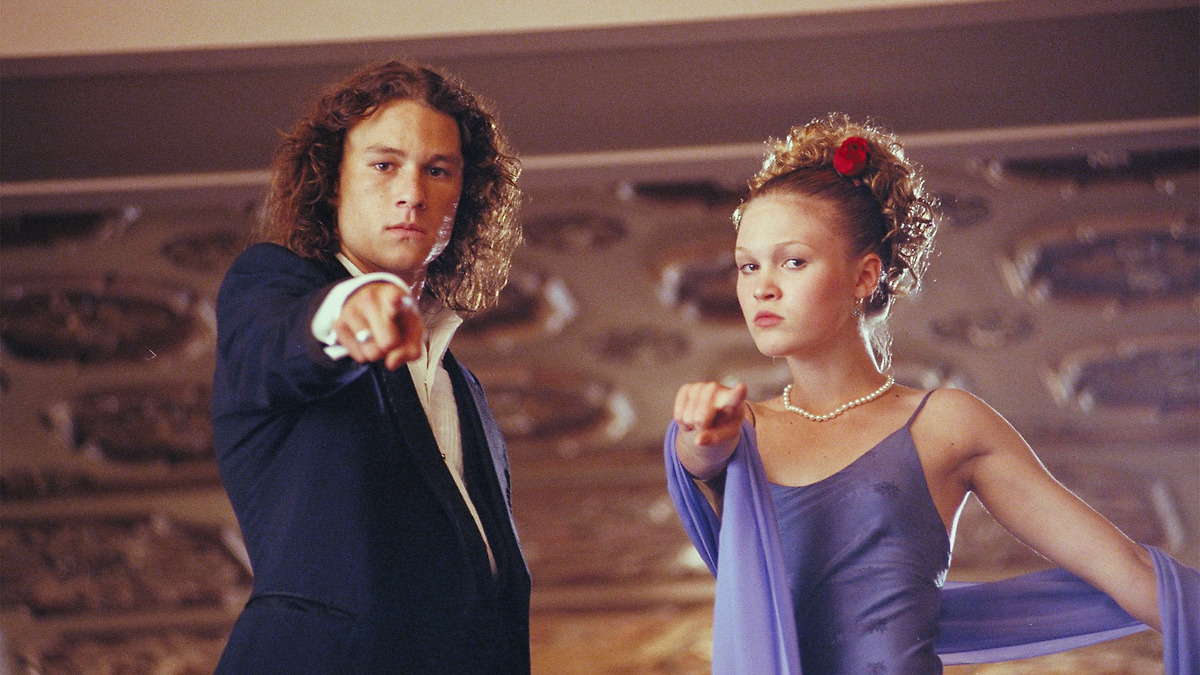
Honestly, it was a weird time for TV. Back in 2009, Freeform was still ABC Family, and they were desperately trying to figure out how to pivot from wholesome "wholesome" content to something with a bit more bite. They looked at the 1999 cult classic film—the one that launched Heath Ledger and Julia Stiles into the stratosphere—and thought, "Yeah, we can make this a weekly thing."
Enter the 10 Things I Hate About You 2009 television series.
Most people forget it even existed. Or, worse, they confuse it with the movie and get annoyed when they see Lindsey Shaw instead of Julia Stiles. But if you actually sit down and watch those twenty episodes, you realize it wasn't just a cheap cash-in. It was a sharp, surprisingly witty adaptation that fell victim to a massive rebranding shift at the network and a bit of bad timing.
What Actually Happened to the Stratford Sisters?
In this version, Kat and Bianca Stratford move to Ohio from California. It’s the same setup: Kat is the feminist rebel who hates high school social hierarchies, and Bianca is the social climber who just wants to be popular. Larry Miller actually returned to play their overprotective father, Dr. Walter Stratford. It provided a weird sense of continuity that grounded the show.
Kat was played by Lindsey Shaw. She brought a different energy than Stiles. While Stiles was icy and sophisticated, Shaw’s Kat felt more like a teenager who was genuinely frustrated by the world around her. She was loud. She was stubborn. Meaghan Martin took over as Bianca, fresh off the Camp Rock hype.
The dynamic worked.
The problem with adapting a beloved movie into a show is the "Will They, Won't They" fatigue. In a 90-minute movie, Patrick Verona wins Kat over, they kiss, and the credits roll. In a TV series, you have to drag that out. Ethan Peck—grandson of legend Gregory Peck—stepped into Heath Ledger's boots as Patrick. Those are big shoes. Huge. Peck didn't try to mimic Ledger’s chaotic, manic energy. Instead, he played Patrick as a brooding, stoic loner with a voice so deep it sounded like it was coming from the center of the earth.
The Problem With Being Too Early
It’s easy to look back and say the show failed because it wasn't the movie. That’s the lazy take.
The real issue? 10 Things I Hate About You 2009 was actually quite progressive for its time, and the audience wasn't quite sure what to make of it. Carter Covington, the showrunner, infused the script with a lot of dry, satirical humor about the American education system and suburban life. It felt more like Daria or Popular than the soapy Pretty Little Liars era that was about to take over ABC Family.
If this show had launched on a streaming service in 2022, it probably would have been a massive hit. It dealt with school politics, identity, and teen activism in a way that felt authentic rather than "After School Special."
The ratings weren't even that bad initially. The premiere brought in 1.6 million viewers. For a cable show in 2009, that’s solid. But the numbers dipped as the season went on. By the time the second half of the first season aired in 2010, the momentum had stalled. The network was moving toward darker, more dramatic fare. The bright, satirical tone of the Stratford sisters didn't fit the new vibe.
Why the Cast Was Actually Brilliant
Let's talk about Nicholas Braun.
Before he was Cousin Greg on Succession, he was Cameron James in the 10 Things I Hate About You 2009 series. He was the Joseph Gordon-Levitt character. Watching it now is hilarious because you can see the seeds of that awkward, bumbling charm he perfected later in his career. He was the heart of the show.
Then there was Jolene Purdy as Mandella. In the movie, Mandella was obsessed with Shakespeare. In the show, they gave her more to do. She was a cynical, hilarious foil to Kat's intensity.
The show also didn't shy away from being weird. There were subplots about goat-related school mascots and bizarre student council elections. It leaned into the absurdity of high school. It understood that being fifteen isn't just about drama; it's about how everything feels like a life-or-death crisis even when it's objectively ridiculous.
The Cancellation and the "What If"
When the show was cancelled in April 2010, it left a lot of threads hanging.
Patrick and Kat had finally started to navigate a real relationship. Bianca was starting to realize that being popular wasn't all it was cracked up to be. We never got to see where they were going with it. It’s one of those "one-season wonders" that lives on in a specific corner of the internet where people still argue about whether Peck or Ledger was the better Patrick. (Hint: They are different characters with the same name. You can like both).
Covington has mentioned in interviews over the years that he had plans for a second season that would have explored more of Kat’s vulnerability. We missed out on that. We got a cliffhanger instead.
How to Revisit the 2009 Series
If you want to watch it today, it’s usually tucked away on platforms like Hulu or Disney+ depending on your region. It’s a quick binge. Twenty episodes, twenty-two minutes each.
Don't go into it expecting the movie. If you do, you'll be disappointed. The movie is a masterpiece of the 90s teen genre. The show is something else entirely. It's a sharp-tongued sitcom that happens to share some DNA with a Shakespearean retelling.
Take these steps if you're planning a rewatch:
- Ignore the comparisons: Stop looking for Heath Ledger. Ethan Peck is doing his own thing, and once you accept that, his performance actually becomes one of the best parts of the show.
- Watch for the writing: Pay attention to the dialogue in the scenes between Kat and her father. Larry Miller is a pro, and the banter there is often better than the romantic leads' dialogue.
- Look for the cameos: Keep an eye out for actors who went on to do bigger things. It’s a fun game of "Where have I seen them before?"
- Check out the soundtrack: The show stayed true to the movie’s alt-rock roots. The music supervision was surprisingly good for a budget-strapped cable show.
The 10 Things I Hate About You 2009 series isn't a masterpiece, but it’s a lot better than the "TV adaptation" label usually suggests. It had a voice. It had a cast that clearly cared. In the brutal world of network television, sometimes that just isn't enough to keep the lights on. It remains a fascinating time capsule of late-2000s teen culture, standing right on the edge of the social media revolution that would change high school—and TV—forever.