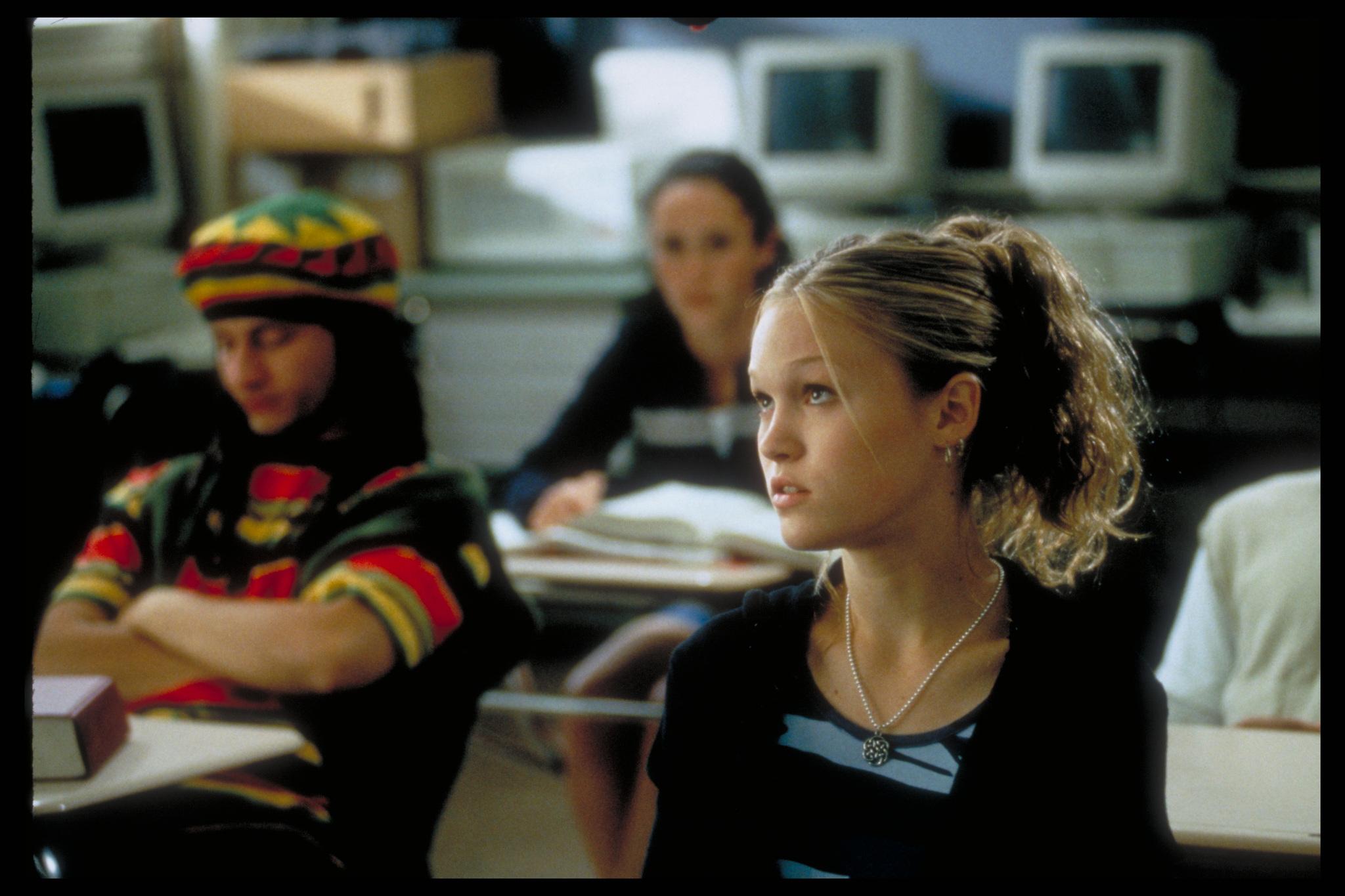
If you were anywhere near a screen in 1999, you probably remember the moment. Kat Stratford stands at the front of her classroom. Her voice shakes. She isn’t the "heinous bitch" her classmates think she is anymore. She’s just a girl with a crumpled piece of paper, crying over a guy who took a bribe to date her. That 10 things i hate about you video—specifically the poem scene—basically defined a generation of teen angst. It wasn’t just a movie moment; it became the blueprint for how we talk about the messy, contradictory feeling of loving someone who absolutely sucks.
Honestly, it’s a bit weird how well it holds up. Most rom-coms from the late nineties feel like dusty relics now. The fashion is questionable, and the "makeover" tropes are usually pretty offensive. But Kat’s breakdown? It still feels raw. It’s the kind of thing that ends up on every "Best Movie Scenes" list because Julia Stiles didn't just act it—she felt it.
The Raw Truth Behind the 10 Things I Hate About You Video
Let’s get into the weeds of why that specific scene works. First off, it was done in a single take. That’s right. One shot. Julia Stiles wasn't even supposed to cry, or at least it wasn't written into the script that way. The tears were real. When she gets to the line about hating the way he doesn't hate her, and her voice cracks? That’s pure, unadulterated performance.
Directors often try to manufacture those moments with "tear sticks" or by making actors think about their dead pets. Not here. Stiles has talked about how the character’s frustration just bubbled over. It’s the peak of the movie's emotional arc. Up until that point, 10 Things I Hate About You is a fast-paced, witty Shakespearean adaptation of The Taming of the Shrew. It’s cynical. It’s sharp. Then, suddenly, the 10 things i hate about you video forces the audience to sit with the actual pain of being a teenager.
Why Shakespeare Liked This (Probably)
It’s easy to forget this movie is literally The Taming of the Shrew. But while the original play ends with Katherine being "broken" into submission, the movie flips the script. The poem isn't an admission of defeat; it’s an admission of humanity. By putting this on film, director Gil Junger created a cultural touchstone.
We see Kat as a fully realized human, not just a "problem" to be solved by Patrick Verona (Heath Ledger). The video captures that shift. It’s the moment the mask drops. Patrick is sitting in the back of the room, looking like he wants to crawl into a hole. He realizes he’s not just playing a game anymore. He’s actually hurt someone who didn't deserve it.
The Cultural Longevity of the Poem Scene
If you go on TikTok or Instagram today, you’ll see thousands of recreations. Why? Because the writing is deceptively simple.
- "I hate the way you talk to me, and the way you cut your hair."
- "I hate the way you drive my car."
- "I hate it when you stare."
It’s a list. It’s something any kid could write in their notebook during a boring history lecture. It doesn't use flowery, poetic language. It uses the mundane frustrations of a relationship to build toward that final, crushing blow: "But mostly I hate the way I don't hate you. Not even close, not even a little bit, not even at all."
That’s the hook. Everyone has been there. Everyone has had that person they should be done with but can't quite quit. That’s why the 10 things i hate about you video stays relevant while other teen movies fade into the background.
Behind the Scenes Facts You Might Not Know
There are some layers to this production that explain why the vibe was so authentic. The cast was genuinely close.
- Heath Ledger’s Charisma: During the filming of the "Can't Take My Eyes Off You" stadium scene—another iconic 10 things i hate about you video moment—Ledger was actually nervous. He had to sing live in front of a stadium of extras. That raw energy bled into the rest of the film.
- The Location: Stadium High School in Tacoma, Washington, is a real place. It looks like a castle. It gave the film a timeless, almost "fairytale" aesthetic that contrasts with the gritty reality of Kat’s emotions.
- The Improvisation: A lot of the banter was sharpened on set. The chemistry between Stiles and Ledger wasn't forced. It was palpable. When you watch the video of them together, you're seeing two young actors who were actually discovering their craft in real-time.
The Legacy of Patrick Verona
We can't talk about the video without talking about Heath Ledger. For many, this was the first time they saw him. He brought a soulfulness to the "bad boy" trope that changed the genre. He wasn't just a jerk; he was a guy with his own layers of protection. When he watches Kat read that poem, his face goes through about six different emotions in ten seconds.
It’s a masterclass in reactive acting. He doesn't say a word, yet you know exactly what he's thinking. He’s realizing that his "easy money" scheme just destroyed the only real connection he’s made in years. This is the weight that makes the 10 things i hate about you video so heavy. It’s about the consequence of being a "shrew" or a "player."
Why It Still Generates Millions of Views
You might wonder why people are still searching for this video in 2026. Part of it is nostalgia, sure. But there’s also the "Discover" factor. Google and social algorithms keep pushing this content because it evokes a high emotional response.
It’s the "universal truth" factor.
Teenage life hasn't changed that much. The phones are different, but the feeling of being misunderstood by your peers and betrayed by your crush? That’s eternal. When someone shares the 10 things i hate about you video, they aren't just sharing a clip from an old movie. They’re sharing a mood. They’re saying, "This is how I feel right now."
The Technical Brilliance of the Scene
From a filmmaking perspective, the scene is incredibly minimalist. There’s no swelling orchestral music. There are no fast cuts. It’s just a girl, a classroom, and a camera that stays focused on her face.
This creates an intimacy that’s rare in modern cinema, which often relies on flashy editing to keep people’s attention. By forcing the viewer to just watch her cry, the director makes it impossible to look away. You’re trapped in that room with her. You feel the silence of the other students. You feel the heat of her embarrassment. It’s uncomfortable, and that’s why it’s great.
Actionable Steps for Fans and Creators
If you’re looking to dive deeper into this classic or perhaps use its influence for your own creative projects, here is how you can engage with the legacy of the film:
- Watch the 25th Anniversary Content: Various cast interviews have surfaced recently where they break down the filming of the poem scene. Julia Stiles’ retrospective on her career often highlights this as her most "honest" moment on screen.
- Analyze the Script: For aspiring writers, the "10 Things" script is a lesson in adaptation. Compare it to Shakespeare’s The Taming of the Shrew. Look at how they translated 16th-century power dynamics into 1990s high school politics.
- Check Out the Soundtrack: The music in the film—from Letters to Cleo to Save Ferris—is integral to the "video" experience. The soundtrack helps set the "riot grrrl" tone that Kat lives by.
- Visit the Locations: If you’re ever in Tacoma, Stadium High School is a public building. Standing in the spots where these scenes were filmed provides a strange, visceral connection to the movie’s history.
The 10 things i hate about you video isn't just a piece of 90s media. It’s a document of a specific kind of teenage heartbreak that doesn't age. Whether you're watching it for the first time or the hundredth, that poem still hits like a ton of bricks. It reminds us that being vulnerable is the scariest thing you can do, but it’s also the only way to be truly seen.
To truly appreciate the nuance of this performance, watch the scene again but focus entirely on the background characters' reactions. You'll see the slow realization dawning on the entire "class" that they are witnessing something private and painful. This layer of social pressure adds a secondary level of tension that makes Kat’s bravery even more impressive. Study the way the camera slowly zooms—it’s a subtle pull that draws you into her headspace without you even noticing the movement.