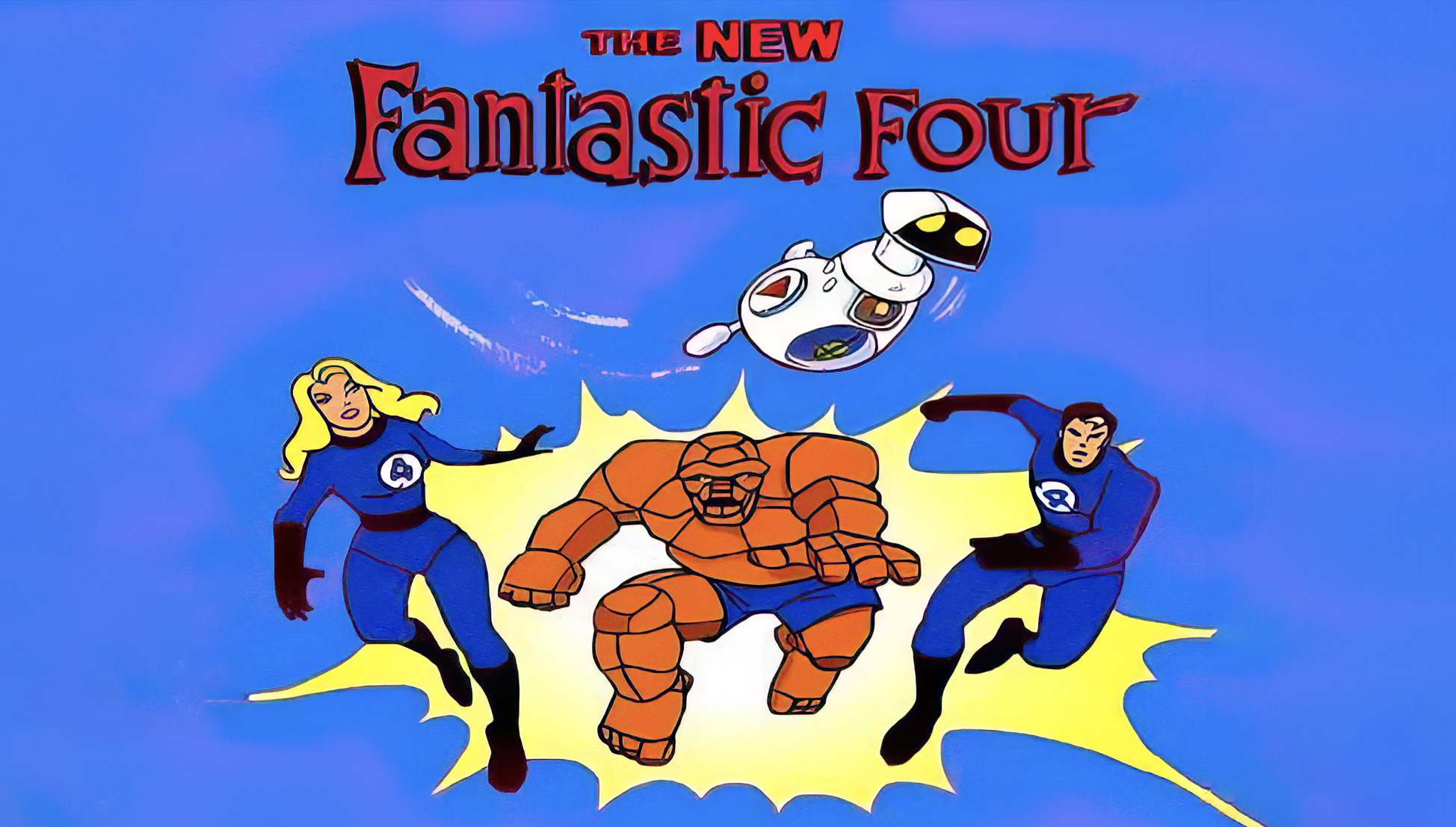
Honestly, if you ask most people about Marvel’s First Family on screen, they’ll start complaining about the 2015 movie or maybe reminisce about Chris Evans eating a burger in the mid-2000s. But that's not where the real chaos started. To understand the Fantastic 4 TV show legacy, you have to go way back to 1967.
This was the era of Hanna-Barbera. Think The Flintstones meets cosmic radiation.
It was weird.
Jack Kirby was actually involved in the character designs, which is why the show looks surprisingly accurate to the comics, but the animation was... let's call it "budget-conscious." You’ve got these massive, world-ending stakes being handled by characters who sometimes look like they’re sliding across a static background. It’s charming. It’s also deeply bizarre.
The 1967 original and the Alex Toth influence
Alex Toth is a legend in the animation world. He’s the guy who gave the 1967 Fantastic 4 TV show its distinct visual bite. While the animation was stiff, the lines were clean. Reed Richards looked like a mid-century scientist because, well, he was one.
The show didn't care about origin stories for twenty episodes. It just dropped you into the action. One week they’re fighting Mole Man, the next it’s Galactus. Speaking of Galactus, the 1967 version remains one of the most faithful adaptations of the "Galactus Trilogy" ever put to film, mostly because it didn't try to turn him into a giant space cloud. He was just a huge guy in a purple bucket hat who wanted to eat the world. Simple.
There's something uniquely 60s about the pacing. Reed spends a lot of time explaining science that makes absolutely no sense, and Sue Storm spends a lot of time being "the girl," which hasn't aged particularly well. But the chemistry between The Thing and the Human Torch? That was perfect from day one.
That time H.E.R.B.I.E. replaced the Human Torch
We have to talk about 1978. This is the part of Fantastic 4 TV show history that sends purists into a literal tailspin.
In the 1978 series The New Fantastic Four, Johnny Storm—the Human Torch—was gone. He was replaced by a small, chirpy robot named H.E.R.B.I.E.
The rumor for decades was that NBC was terrified kids would set themselves on fire trying to imitate Johnny. People genuinely believed this. It’s one of those "common knowledge" facts that is actually totally wrong. The real reason? Universal Studios had already licensed the Human Torch for a solo movie that never actually happened. Because of that legal mess, the cartoon couldn't use him.
So, we got a robot.
Stan Lee actually worked on the concept for H.E.R.B.I.E. with Dave Cockrum, and eventually Jack Kirby himself. Imagine being Kirby, the man who co-created the entire Marvel Universe, and being told you need to draw a tiny robot to replace one of your most iconic characters because of a contract dispute. That’s the reality of 70s television.
H.E.R.B.I.E. stands for Humanoid Experimental Robot, B-type, Integrated Electronics. He was voiced by Frank Welker, the same guy who does Megatron and Scooby-Doo. Despite the talent involved, the show felt empty without the brother-sister dynamic of the Storms. It’s a fascinating relic of how legal red tape can fundamentally break a creative project.
The 1994 disaster and the "New Marvel" era
By the time the 90s rolled around, Marvel was trying to build a shared universe on Saturday mornings. You had X-Men and Spider-Man: The Animated Series killing it. Then came the 1994 Fantastic 4 TV show.
Season one was rough.
The animation was handled by Wang Film Productions, and it looked dated the second it hit the air. The theme song was this incredibly cheesy "The Fantastic Four!" chant that felt like it belonged in a different decade. It didn't have the grit of X-Men. It felt like a parody.
But then, something happened. Season two saw a complete overhaul.
New animation studio (Philippine Animation Studio Inc.), new character designs, and a much darker tone. They started adapting actual storylines from the John Byrne era of the comics. It became good. Really good. This is where most Gen X and older Millennials get their fondness for the team. It proved that the Fantastic Four works best when you treat them like a family that happens to be explorers, rather than just superheroes who punch things.
Why the 2006 "World's Greatest Heroes" was ahead of its time
In 2006, we got another Fantastic 4 TV show, titled World's Greatest Heroes. This one was produced by the French company MoonScoop.
It looked like anime.
It was stylized, fast-paced, and funny. It also got absolutely buried by scheduling issues. Cartoon Network would air two episodes and then vanish it for six months. It was impossible to follow.
What makes this version stand out today is its focus on the mundane parts of being a superhero. They deal with lawsuits. They deal with bad PR. They deal with the fact that they live in a giant skyscraper in the middle of Manhattan and their neighbors probably hate them. It’s a very modern take that feels closer to the current MCU vibe than anything else that came before it.
The missing pieces of the Fantastic 4 puzzle
There are a few things most people miss when looking back at these shows:
- The Voice Casts: In the 94 series, Beau Weaver played Reed Richards. He brought this specific "distracted professor" energy that nobody has quite nailed since.
- The Doom Problem: Doctor Doom is the greatest villain in comics. In the TV shows, he’s often reduced to a cackling caricature. Only the 2006 series really captured his regal, terrifying arrogance.
- The Music: The 67 series has a jazz-infused score that is genuinely fantastic. It’s worth listening to on its own if you can find the clips.
The Fantastic Four are notoriously hard to get right. If you lean too hard into the "science," it’s boring. If you lean too hard into the "superheroics," you lose the heart. The TV shows have spent fifty years trying to find that middle ground.
How to watch these shows today
If you’re looking to dive into the history of the Fantastic 4 TV show, you’ll find most of them on Disney+. However, the 1967 series is notoriously difficult to find in high quality due to rights issues involving Hanna-Barbera (which is now owned by Warner Bros.).
- Start with Season 2 of the 1994 series. It’s the most "Marvel" experience you’ll get. Skip Season 1 unless you want to see a weirdly buff Reed Richards.
- Watch the 2006 series for the visuals. The art style is divisive, but the movement is incredible.
- Track down the 1978 episodes if you want to witness the H.E.R.B.I.E. era for yourself. It’s a piece of history that has to be seen to be believed.
Actionable insights for fans and collectors
If you're interested in the history of these adaptations, don't just stick to the shows. Look for the "The Art of Hanna-Barbera" books which often detail the 1967 production.
For those looking to collect, the 1994 series had a great line of Toy Biz action figures that are still relatively affordable on the secondary market. They capture that specific 90s aesthetic perfectly.
The biggest takeaway from the history of the Fantastic 4 on television is that the property is resilient. No matter how many times a studio messes up the tone or replaces a main character with a robot, the core concept of a family exploring the unknown remains the strongest hook in Marvel's catalog.
Keep an eye on the upcoming live-action MCU film, as rumors suggest it will take heavy inspiration from the retro-futurism seen in the 1967 cartoon. Understanding where the team started is the only way to appreciate where they’re going next.