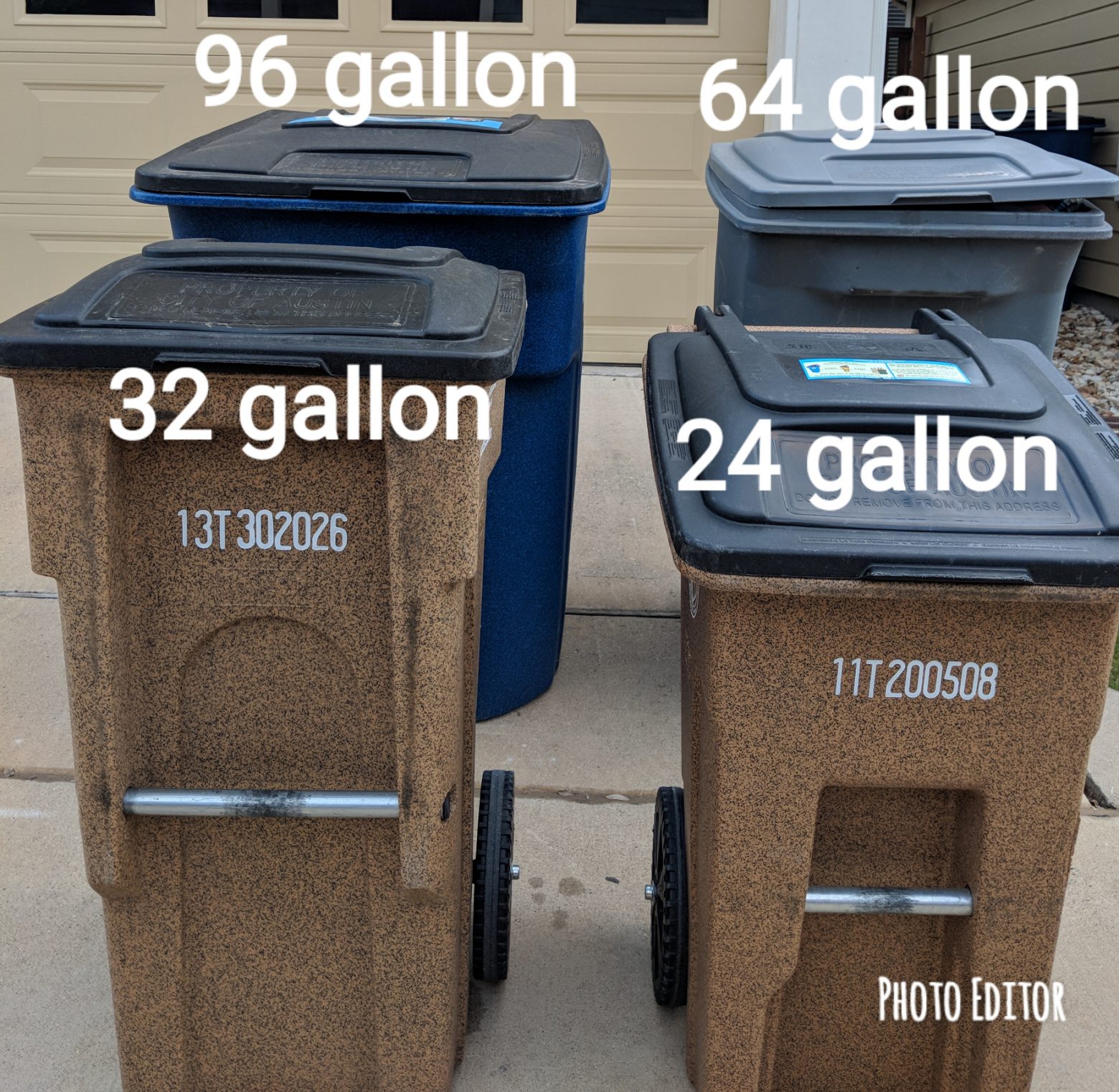
Stop overthinking your waste management. Seriously. Most people spend way too much time debating between a medium-sized bin and something industrial, but if you’ve got a family, a yard, or even just a busy life, the 90 gallon trash can is basically the industry standard for a reason. It’s huge. It’s heavy. It’s also the only thing standing between you and a garage that smells like rotting leftovers because your 50-gallon bin overflowed by Tuesday.
I’ve seen people try to "optimize" their trash by getting smaller bins to encourage less waste. Noble, sure. But life happens. You host a birthday party, you clean out the pantry, or you finally tackle those weeds in the backyard, and suddenly that "efficient" bin is a nightmare. A 90 gallon trash can, which usually equates to about six or seven large kitchen bags, gives you the breathing room you actually need.
The Reality of the 90 Gallon Trash Can
Let's talk specs. Most of these big boys, like the ones made by Toter or Rubbermaid, aren't just scaled-up versions of your kitchen bin. They’re engineered differently. A standard 90-95 gallon cart stands about 43 to 46 inches tall. It’s big. If you're shorter, you're going to be reaching up to drop things in. But the footprint isn't as massive as you’d think—usually around 28 to 30 inches wide. It fits in a standard garage corner or alongside the house without becoming a total eyesore.
The secret sauce is the "Advanced Rotational Molding" process. Companies like Toter use this to ensure the plastic is thick where it needs to be, specifically at the bottom and around the rim where the garbage truck’s mechanical arm grabs it. Have you ever seen a cheap bin split down the side in the middle of winter? That’s usually because it was injection-molded, which leaves stress points. Rotational molding creates a single, seamless piece of plastic that can handle the weight of 300+ pounds of literal hot garbage.
Weight matters. A 90 gallon trash can full of wet grass clippings or heavy debris is a beast. You need wheels that aren't just plastic discs. Look for rugged, rubber-treaded wheels with a solid steel axle. If the axle bends, the whole thing is junk. You want something that rolls over gravel or through a thin layer of snow without you having to put your entire body weight into it.
Why Size Actually Dictates Your Lifestyle
It sounds dramatic. It's just a bin, right? Wrong.
Think about your weekly flow. If you have a 90 gallon trash can, you aren't playing "trash tetris" on Thursday night. You know the game. It’s when you’re out in your slippers, trying to shove one last bag into a bin that’s already bulging, hoping the lid stays down enough so the crows don't get in. With 90 gallons, you just drop the bag and walk away. Honestly, the peace of mind is worth the extra fifteen square inches of floor space it occupies.
The HOA and Municipal Factor
Before you go out and buy a bright blue or "safety orange" bin, check your local ordinances. A lot of cities have very specific rules about what they will pick up. Some municipalities provide the bin for you, and if you try to use your own 90 gallon trash can, the automated truck might not be able to lift it.
The "Universal Design" is what you’re looking for. This means the bin has a specific bar at the front and a molded-in handle area that works with both fully automated and semi-automated lifting systems. Most major brands like Otto and Rehrig Pacific follow these standards. If your city uses those trucks with the big mechanical arms, you must have a compatible bin, or they’ll just drive right past your house.
Durability: What Most People Get Wrong
People think "heavy duty" just means thick plastic. That's only half the story. The real enemy of your trash can isn't the weight of the trash; it's the sun.
UV degradation is what makes plastic brittle. You’ve seen it—those old grey bins that shatter like glass if you hit them with a lawnmower. High-quality 90 gallon trash cans are treated with UV inhibitors. This is why you’ll see a 10-year or even 12-year warranty on premium models. If a brand doesn't mention UV resistance, it’s going to fail in three years of direct sunlight.
Another thing? The lid.
A 90 gallon trash can needs a lid that’s heavy enough to stay shut during a windstorm but easy enough for a kid to flip open. Some have a "living hinge" design, while others use a heavy-duty plastic rod. The rod is better. It allows the lid to flip all the way back (270 degrees) so it doesn’t get snapped off when the truck tips it upside down. If the lid doesn't sit flush, you're basically putting out a buffet for raccoons and opossums.
Comparing the Big Players
If you're shopping at a big-box store, you’re likely seeing Toter vs. Rubbermaid.
- Toter: These are the tanks of the industry. They use a textured finish that hides scratches well. Their 90 gallon trash can (often sold as a 96-gallon) is famous for its "Rugged Rim" which prevents bowing.
- Rubbermaid Brute: Usually seen in commercial settings, but their roll-out carts are solid. They tend to be a bit more "smooth" in finish, which makes them easier to spray out with a hose, but they show wear and tear a bit faster.
- Suncast: Often found at a lower price point. They’re fine for lighter duty, but if you’re filling it with heavy bags every week, the axle might feel a bit more "squishy" over time.
Honestly, if you can find a Toter, just buy it. They are the gold standard for a reason. They even have a specific "tilt-to-roll" ratio that makes 200 pounds feel like 50.
Maintenance (Yes, You Have to Clean It)
You can't just let 90 gallons of space sit there collecting "trash juice." It gets gross. Fast.
Once a month, tip it over and hose it out. Use a bit of Dawn dish soap and maybe a splash of vinegar if the smell is getting aggressive. The beauty of these large bins is that they are usually designed with a slightly sloped bottom toward a drainage point, though you'll still have to tip it to get all the water out.
Pro tip: Throw a couple of old newspapers or a piece of flattened cardboard at the very bottom before you put your first bag in. It absorbs any leaks and prevents the "vacuum seal" effect that makes it hard to pull bags out later.
Environmental Impact and Recycling
Many 90 gallon trash cans are now made from up to 50% recycled content. This is a huge shift in the industry over the last five years. However, the sheer volume of plastic involved means you want this thing to last twenty years, not five. Choosing a high-quality bin is actually more "green" than buying a cheap one that ends up in a landfill in 36 months because the wheels fell off.
If you're using a 90 gallon bin for recycling, make sure it’s clearly marked. Most people go for the classic blue, but "Recycle" decals are essential. Because of the size, people tend to throw un-rinsed containers in there, which leads to contamination. Since you have so much space, you might be tempted to just toss everything in, but stay disciplined.
Common Misconceptions
One thing people get wrong is thinking a 90 gallon trash can is too big for a single person or a couple. It’s not. It just means you only have to take it to the curb once every two or three weeks (if your city allows that). It’s about convenience.
Also, people worry about them blowing away. A 90 gallon trash can weighs about 35 to 40 pounds empty. That’s a lot of surface area for wind to catch, but because of the weight distribution and the low center of gravity, they are remarkably stable. Unless you’re facing hurricane-force winds, a closed, upright 90-gallon bin usually stays put.
Actionable Next Steps for Choosing the Right Bin
- Measure your gate. Seriously. A 90 gallon trash can is wide. Make sure it can actually fit through your side gate or into your garage nook before you bring it home.
- Check the "Lift Bar." Look at the front of the bin. There should be a sturdy metal or heavy plastic bar about a foot from the ground. If that's not there, your city’s automated truck might not be able to grab it.
- Check the Axle. Turn the bin over. Look for a solid steel axle that goes all the way through. Avoid models where each wheel is snapped onto a separate plastic peg.
- Confirm the Warranty. If it’s under 5 years, skip it. You want a 10-year warranty to ensure the plastic is high-grade and UV-protected.
- Test the Tilt. Grab the handle and tip it toward you. It should feel balanced. If it feels like it’s going to crush your feet the moment you tilt it, the wheel placement is wrong.