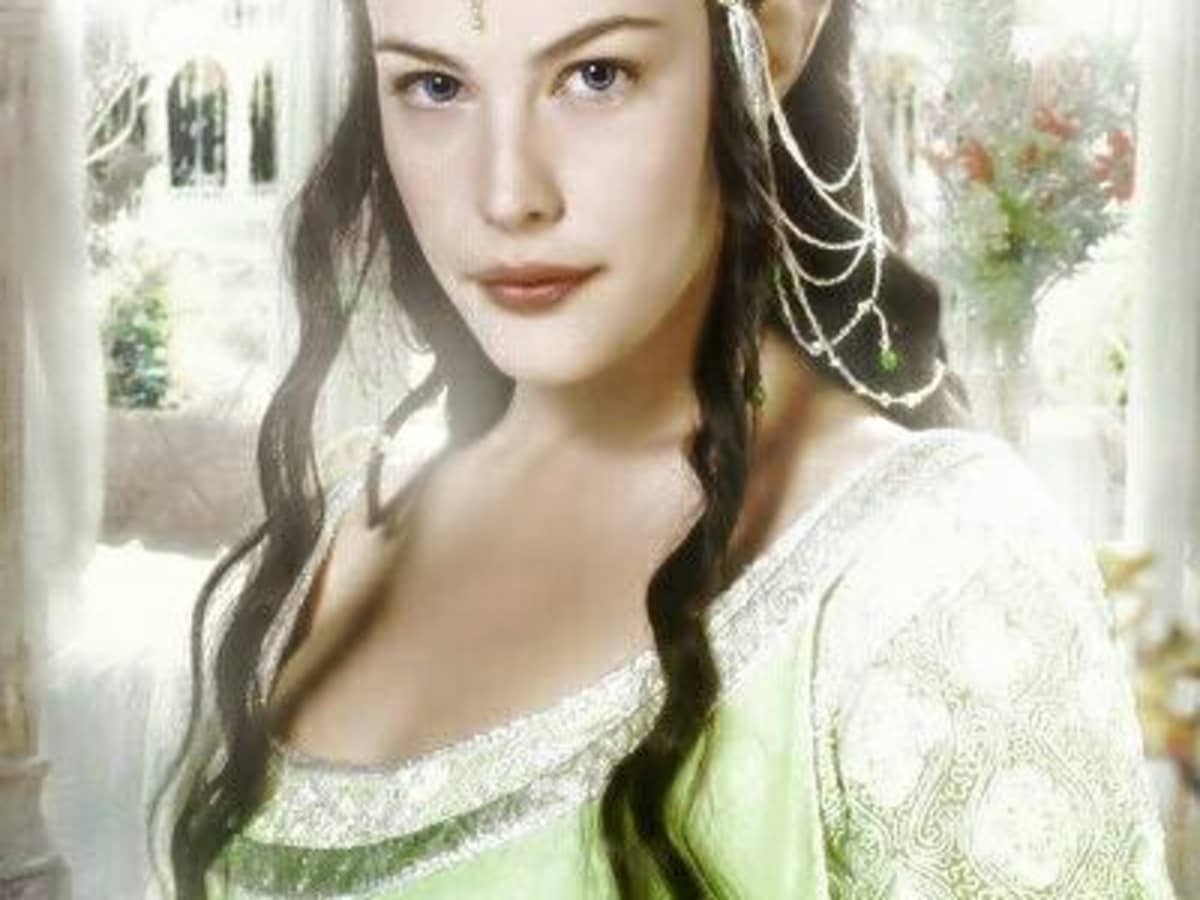
Peter Jackson took a massive gamble. When he started filming in New Zealand back in the late nineties, people thought he was crazy. How do you adapt J.R.R. Tolkien’s massive, dense, and—let's be honest—fairly male-centric world for a modern global audience? It wasn’t just about the Orcs or the Ring. It was about the women.
The actresses of Lord of the Rings had a mountain to climb. Tolkien’s books are masterpieces, but female characters don't get a lot of page time compared to the fellowship. If you look at the stats, there are barely any women in the original text. Cate Blanchett, Liv Tyler, and Miranda Otto had to take names that were sometimes just footnotes or peripheral figures and turn them into the emotional backbone of a nine-hour cinematic odyssey. They succeeded. Honestly, without the gravitas of Galadriel or the grit of Éowyn, the movies would have felt like a hollow costume party.
Galadriel wasn't just a pretty elf. Blanchett made her terrifying. That "Dark Queen" moment in The Fellowship of the Ring? It still gives me chills.
The Ethereal Power of Cate Blanchett as Galadriel
When we talk about the actresses of Lord of the Rings, Cate Blanchett is usually the first name that pops up. It’s for a good reason. She brought this weird, ageless authority to Galadriel. She wasn't playing a person; she was playing a force of nature that had seen the rise and fall of empires.
Interestingly, Blanchett almost didn’t do it. She has mentioned in interviews that she basically just wanted to wear the prosthetic ears. She’s a fan of the craft. But her performance did something vital for the film's pacing. Her opening monologue—"The world is changed"—sets the entire stakes for the trilogy. If she didn't sell that history in the first three minutes, the audience would have been lost.
She also had to handle the "creepy" factor. Galadriel is telepathic. She’s ancient. Blanchett used a specific, slow blinking technique and a lowered vocal register to make the Lady of Lothlórien feel "other." It’s a masterclass in minimalist acting. She barely moves her face, yet you feel the weight of three thousand years of regret.
Arwen and the Controversy of the "Warrior Elf"
Liv Tyler’s Arwen is where things got complicated. If you're a die-hard book reader, you know Arwen basically sits in Rivendell and sews a banner for most of the story. Peter Jackson knew that wouldn't fly in a big-budget movie.
There was a rumor back in the day—and it’s been confirmed by behind-the-scenes footage—that they originally filmed Arwen fighting at the Battle of Helm’s Deep. They actually put Liv Tyler in armor.
But they cut it.
Fans at the time were furious about the idea of Arwen being a "Xena-style" warrior. They felt it betrayed Tolkien’s vision of her as a symbol of grace and the "Evenstar" of her people. So, the filmmakers pivoted. Tyler still got her big action moment at the Ford of Bruinen, replacing the book character Glorfindel, but then her role shifted back to the emotional and spiritual.
It’s a tough balance. Tyler had to play a woman who is literally dying of a broken heart while the world ends around her. People give her flak for the breathy voice, but it fits the ethereal, melancholic vibe of the Elves leaving Middle-earth. She represented the personal cost of the war. While Aragorn was out decapitating Uruks, Arwen was the reason he wanted to come home.
The Shieldmaiden: Why Miranda Otto Stole the Show
If Blanchett was the myth and Tyler was the romance, Miranda Otto was the reality.
Éowyn is arguably the most relatable character in the whole series. She’s trapped. She’s stuck in a dying kingdom (Rohan) caring for a king who’s been brainwashed by a creep named Wormtongue. Every one of the actresses of Lord of the Rings brought something unique, but Otto brought a raw, human desperation that the Elves couldn't touch.
"I am no man."
That line is iconic. It's the "Avengers Assemble" moment of 2003. But what makes it work isn't just the kill shot on the Witch-king. It's the setup. Otto spent two movies looking like she was vibrating with repressed rage. She didn't want to be a "lady" in a cage. She wanted to fight for her people.
When she disguises herself as Dernhelm to go to war, you aren't thinking about fantasy tropes. You’re thinking about a person who is so desperate to matter that she’s willing to die in a field of mud. That’s why her victory feels so earned. It’s not a "girl power" moment written by a committee; it’s the climax of a tragic character arc.
The Often Overlooked: Rosie Cotton and Morwen
We can’t forget Sarah McLeod as Rosie Cotton. Sure, she has maybe four lines. But she represents the "Shire" that Samwise Gamgee is trying to save. Without Rosie, Sam’s journey is just a long walk with a heavy necklace. She’s the anchor.
Then there’s Robyn Malcolm as Morwen. She’s the mother in The Two Towers who sends her children away on a horse to escape the Wildmen. It’s a tiny role, but it grounds the war in actual human suffering. It’s one thing to see CGI armies clashing; it’s another to see a mother’s face as she realizes she might never see her kids again.
The actresses of Lord of the Rings were tasked with providing the stakes. The men did the fighting, but the women gave us the reasons why the fighting mattered.
Ranking the Impact: A Nuanced Look
If we're being honest, the trilogy's legacy wouldn't be the same without these specific casting choices. Imagine a different Galadriel. If she had been played as a standard "good fairy," the Ring's temptation wouldn't have felt dangerous.
- Galadriel (Blanchett): Provided the historical and supernatural scale.
- Arwen (Tyler): Provided the romantic and sacrificial stakes.
- Éowyn (Otto): Provided the human grit and the defiance of fate.
These weren't just "love interests." They were pillars.
What Most People Get Wrong About the Female Roles
There’s this weird misconception that the movies "added" too much for the women. Actually, if you look at Tolkien’s Appendices, there is a ton of depth there. Jackson just pulled it to the foreground.
For instance, the relationship between Arwen and Elrond (played by Hugo Weaving) is much more fleshed out in the films. The movie shows the pain of an immortal father watching his daughter choose a mortal death. That’s heavy stuff. It adds a layer of grief to the victory.
Another thing? The stunts. These women weren't just sitting in trailers. Miranda Otto had to learn to ride a horse one-handed while wielding a sword. Liv Tyler spent weeks in the rain for the chase sequence in Fellowship. The physical toll was real.
Why These Performances Still Matter in 2026
We live in an era of "strong female leads" that sometimes feel like they're written by an algorithm. They’re often perfect, invulnerable, and—frankly—boring.
The actresses of Lord of the Rings gave us characters with flaws. Éowyn was lonely and reckless. Arwen was terrified. Galadriel was tempted by power. They felt like real people caught in a cosmic struggle.
If you're looking to dive deeper into the lore or perhaps start a rewatch, pay attention to the silence. Notice how Blanchett uses her eyes. Watch the way Otto's posture changes when she puts on the helmet. That’s where the real storytelling is happening.
Practical Steps for Fans and Collectors
If you're looking to appreciate these performances more deeply, here is what you should actually do:
- Watch the Appendices: The Extended Edition behind-the-scenes features are legendary. Specifically, look for the "Daughters of Middle-earth" segment. It details the casting process and the training the actresses underwent.
- Read the Appendices of the Book: Specifically "The Tale of Aragorn and Arwen." It’s located at the back of The Return of the King. It provides the context that explains why Liv Tyler’s performance was so focused on melancholy.
- Check out the Costume Design: Look at the work of Ngila Dickson. The costumes for the female characters weren't just beautiful; they were functional and told a story. Arwen’s "Blood Red" dress, for example, symbolized her fading life force.
- Listen to the Score: Howard Shore wrote specific themes for these characters. The "Evenstar" theme and the Rohan "Shieldmaiden" motifs are distinct. Listening to them separately helps you realize how much work went into making these women feel like distinct parts of the world's mythology.
Middle-earth is huge, but it's the small, human moments that keep us coming back twenty years later. The women of the trilogy weren't just supporting cast members; they were the soul of the story. Without them, the Ring might as well have stayed in the river.