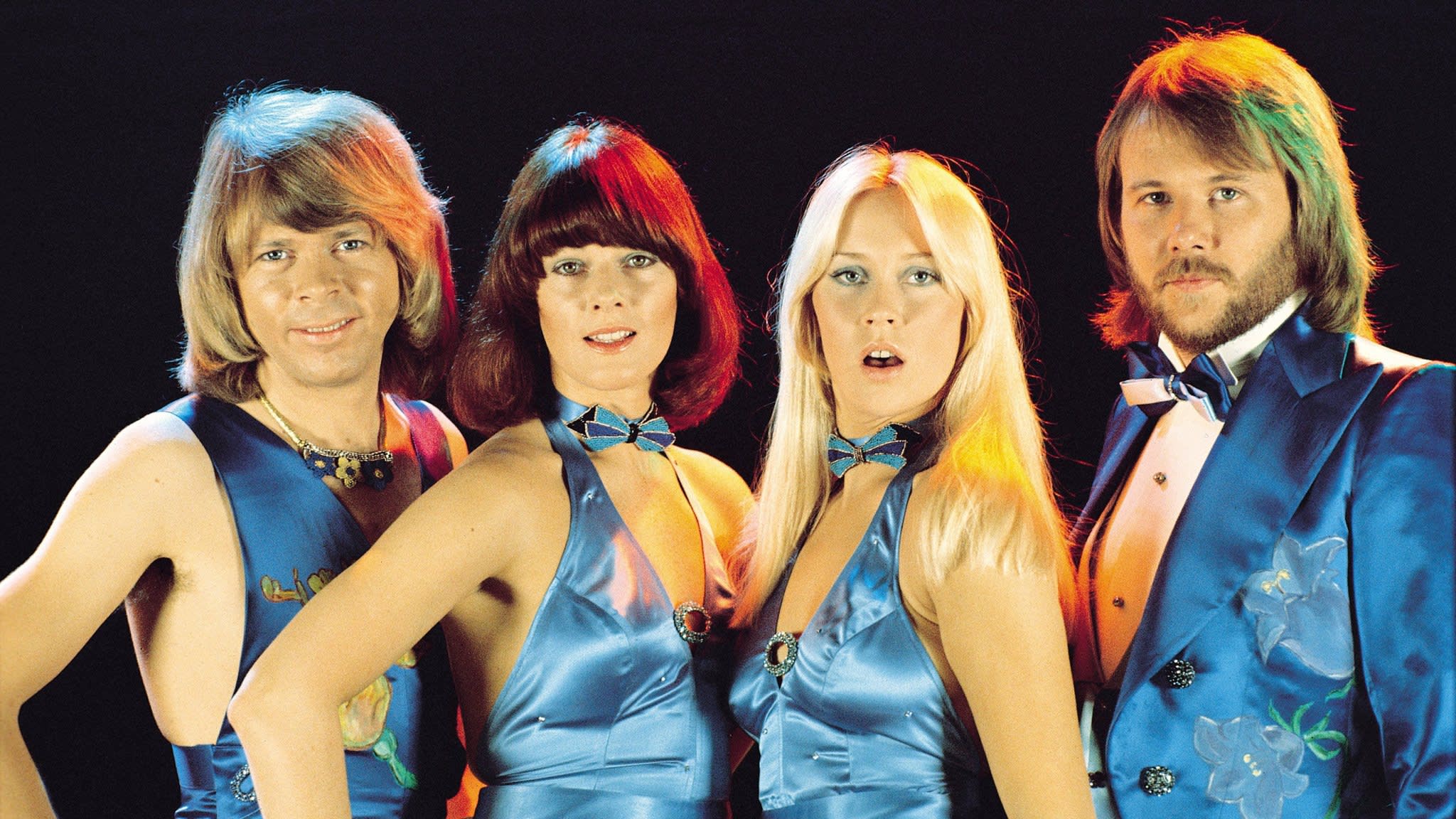
Everyone thinks they know the Dancing Queen album ABBA released back in the seventies. But here is the thing: there isn’t actually an album called Dancing Queen.
Wait. Seriously.
If you go looking for a studio record with that exact title from the original run, you’ll be looking forever. Most people are actually thinking of Arrival, the 1976 powerhouse that turned ABBA from "those Eurovision winners" into a global phenomenon that arguably rivaled The Beatles in sheer melodic dominance. It’s a common mix-up. Because "Dancing Queen" is so massive—so ubiquitous at every wedding, club, and birthday party for the last fifty years—it has effectively swallowed the identity of the album it lived on.
It's weird how memory works. We associate the song with the white kimonos and the feathered hair, and naturally, our brains just assume the album shared the name. In reality, Arrival was the vessel for that magic.
The Arrival of a Masterpiece
When Björn Ulvaeus, Benny Andersson, Agnetha Fältskog, and Anni-Frid Lyngstad walked into Metronome Studio in Stockholm in late 1975, they weren't just trying to make a hit. They were trying to survive. Eurovision fame is usually a death sentence for long-term careers. Most winners vanish. ABBA didn't want to vanish.
The sessions for the Dancing Queen album ABBA period were intense. Benny and Björn were notorious perfectionists. They’d spend days just getting the right "shimmer" on a keyboard track. "Dancing Queen" itself took months to perfect. Fun fact: the original title was "Boogaloo." Imagine a world where we’re all singing "You are the Boogaloo Queen." Doesn't quite have the same ring, does it?
The track was inspired by George McCrae’s "Rock Your Baby" and the disco beats coming out of the Dr. John album Gumbo. You can hear that R&B influence in the backbeat, which is way funkier than people give ABBA credit for. When they first played the finished backing track for Agnetha and Frida, Frida reportedly started crying. She knew. They all knew.
It Wasn't Just One Song
While "Dancing Queen" is the sun that the rest of the album orbits, Arrival is stacked with gems that prove they weren't one-hit wonders. "Knowing Me, Knowing You" is basically the blueprint for the "sad banger." It deals with divorce and breaking up before the band members actually started breaking up in real life. Talk about foreshadowing.
Then you have "Money, Money, Money." It’s theatrical. It’s almost Brechtian. It showed that ABBA could do more than just "mamma mia" pop; they could do narrative songwriting that felt like a Broadway production.
- Money, Money, Money: A cynical look at wealth, heavily influenced by cabaret styles.
- Knowing Me, Knowing You: One of the first great "breakup" songs of the pop era, featuring those iconic "ah-ha" echoes.
- Fernando: Though often included on later pressings or international versions of the Dancing Queen album ABBA era, it actually preceded the album as a single but cemented their status in the Southern Hemisphere, especially Australia.
- Tiger: A weird, aggressive, proto-rock track that shows a darker side of the band.
The production on Arrival was lightyears ahead of its time. Michael B. Tretow, their long-time engineer, used a technique called "varispeeding." He’d record instruments at slightly different speeds to create a thick, lush sound that felt like a wall of music. It’s why ABBA sounds so "big" even on crappy radio speakers.
Why People Get the Name Wrong
So, why do we call it the Dancing Queen album ABBA?
Marketing. Pure and simple. Over the decades, Polydor and Universal have released dozens of "Greatest Hits" packages. ABBA Gold, released in 1992, is one of the best-selling albums of all time. It features "Dancing Queen" as the crown jewel. For younger generations, these compilations are the albums.
Also, in certain territories, budget labels would slap "Dancing Queen" on the cover of whatever ABBA collection they were selling to entice buyers. If you grew up in the 80s or 90s, you probably saw a cassette in a gas station with that title. It’s a Mandela Effect created by brilliant branding.
Honestly, the real Arrival album cover is iconic in its own right. The four of them sitting in a Bell 47G helicopter. It looked futuristic. It looked like they had truly "arrived" in the stratosphere of superstardom.
The Technical Brilliance of the Song "Dancing Queen"
Let's nerd out for a second. The reason this specific era of ABBA works is the vocal layering. Agnetha and Frida didn't just sing the melody. They doubled it, tripled it, and then added harmonies that were slightly "off" to create a natural chorus effect.
In "Dancing Queen," the piano glissando—that "slip" down the keys—wasn't even supposed to be that prominent. But in the mix, it became the hook that signals the start of the party. When that piano hits, everyone knows exactly what time it is.
It’s a song about a 17-year-old girl having the time of her life, but the music sounds strangely nostalgic, almost bittersweet. That’s the ABBA secret sauce: happy lyrics over slightly melancholy chords. Or vice versa. It’s a "Wall of Sound" technique borrowed from Phil Spector but cleaned up with Swedish precision.
The Global Takeover
The impact of the Dancing Queen album ABBA era cannot be overstated. In 1976, they were bigger than Volvo. They were Sweden's biggest export.
- They cracked the US market, which was notoriously hard for European acts who didn't speak English as a first language.
- They became gods in Australia. During their 1977 tour, "ABBA-mania" was so intense it was compared to the height of the Beatles' popularity.
- They proved that pop music could be "perfect." Before ABBA, pop was often seen as disposable. After Arrival, critics had to admit the craftsmanship was undeniable.
The album reached Number 1 in the UK, Germany, New Zealand, and Australia. In the US, it went Gold, which was a massive deal for a Swedish group at the time. "Dancing Queen" remains their only Number 1 hit on the Billboard Hot 100. It’s the song that defined their American legacy.
Misconceptions About the "Dancing Queen" Era
A lot of people think ABBA was just manufactured fluff. That’s the biggest lie in music history.
Björn and Benny wrote everything. They produced everything. They were the architects. They weren't a group put together by a label. They were two guys from folk and rock backgrounds who happened to fall in love with two incredible singers.
Another misconception: that they were "uncool." Sure, in the late 70s, punk rock tried to kill disco and pop. But even the punks secretly loved ABBA. Elvis Costello later admitted that the opening of "Oliver's Army" was a direct rip-off of the piano style on "Dancing Queen." Sid Vicious supposedly followed them around Stockholm. You can't be uncool if the Sex Pistols are stalking you.
The music from the Dancing Queen album ABBA sessions is actually incredibly complex. If you try to play "Dancing Queen" on guitar, you’ll realize the chord changes are way more sophisticated than your average three-chord pop song. There are major seventh chords and unexpected transitions that keep the ear engaged without you even realizing why.
How to Experience the Real Dancing Queen Album Today
If you want to hear what the world heard in 1976, don't just put on a "Best Of" playlist. Go find a vinyl copy of Arrival.
Listen to it from start to finish. You’ll hear "When I Kissed the Teacher," which is a lighthearted opener. You’ll hear the instrumental title track, "Arrival," which sounds like a Celtic folk hymn played on synthesizers. It’s weird and beautiful. Mike Oldfield even covered it later.
By listening to the full record, you get a sense of the band’s ambition. They weren't just making dance music. They were making music. Period.
Actionable Steps for Music Lovers
To truly appreciate the Dancing Queen album ABBA legacy, here is how you should dive back in:
- Listen to the "Arrival" album on high-fidelity headphones. Pay attention to the stereo separation. You'll hear backing vocals tucked into the far left and right channels that you never noticed before.
- Watch the 1977 film "ABBA: The Movie." It captures the absolute madness of this era. It’s a mix of concert footage and a weird fictional subplot about a DJ trying to get an interview. It’s a time capsule of 70s fashion and pure pop joy.
- Analyze the lyrics of "Knowing Me, Knowing You." Forget the upbeat tempo for a second and read the words. It is one of the most mature takes on the end of a relationship ever written. "Memories, good days, bad days, they're all gone." That’s heavy stuff for a "pop" group.
- Check out the "ABBA Voyage" show in London if you can. While it uses digital avatars, the audio is based on the master tapes from the Arrival era. It’s the closest you’ll get to seeing the band in their prime.
The legacy of the Dancing Queen album ABBA isn't just about nostalgia. It’s about a moment in time when songwriting, production, and performance all hit a perfect peak. It’s the reason why, fifty years later, when that piano slide hits, the dance floor still fills up in seconds. Pop music has changed, but the gold standard remains exactly where ABBA left it in 1976.