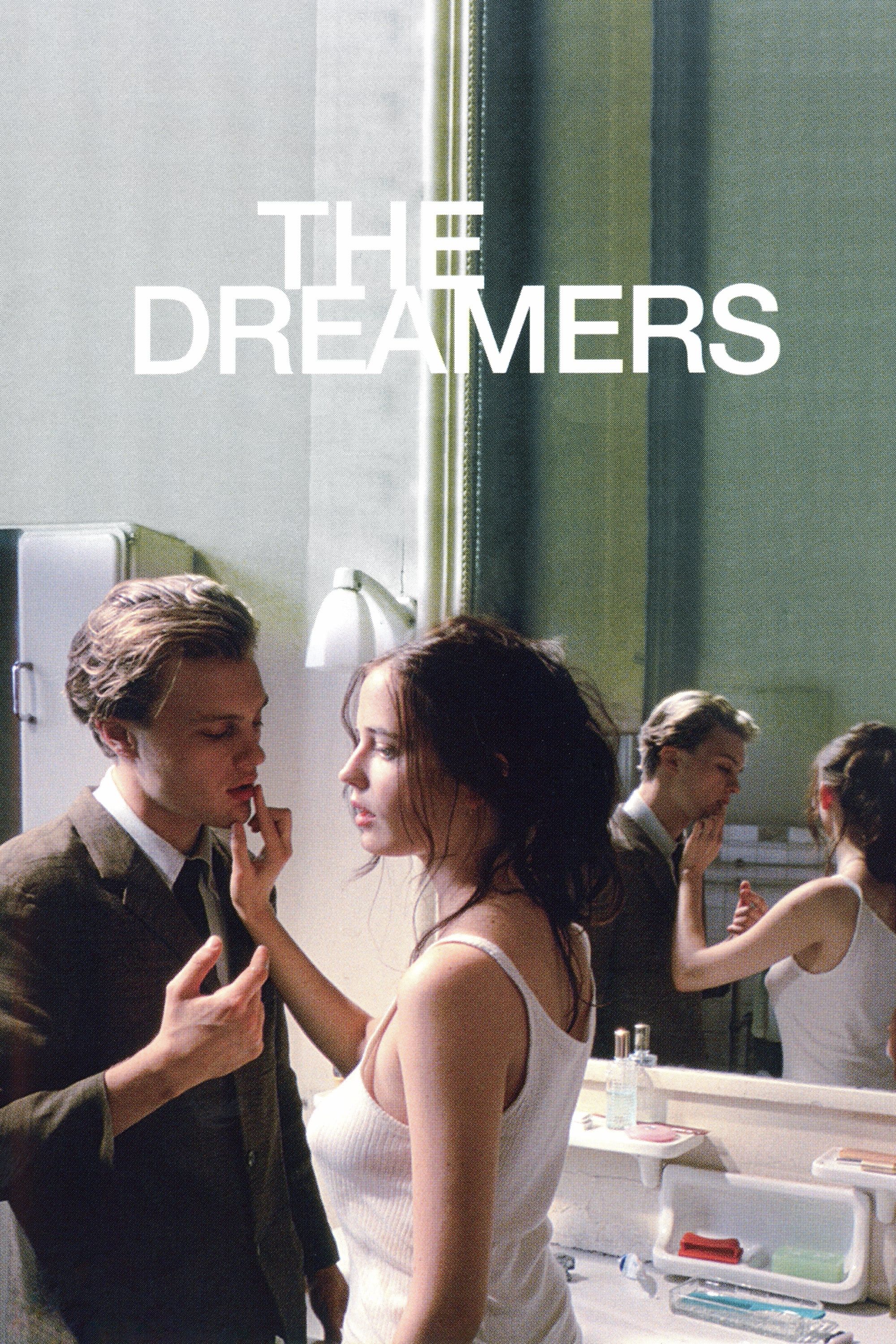
Paris in 1968 was a fever dream of tear gas and cinema. You’ve probably seen the posters—three beautiful young people chained to the gates of the Cinémathèque Française. Bernardo Bertolucci’s The Dreamers isn’t just a movie about a specific political moment; it’s a claustrophobic, messy, and deeply uncomfortable exploration of what happens when the outside world stops existing. It is a film that feels like it’s being whispered in your ear while a riot happens three floors below.
Matthew, an American student played by Michael Pitt, finds himself wandering into the life of twins Isabelle (Eva Green in her explosive debut) and Théo (Louis Garrel). They are cinephiles. They are obsessed. They are also, frankly, weird as hell. As the May 1968 student protests begin to dismantle the social fabric of France, these three lock themselves in a sprawling, cluttered apartment to play games of cinematic trivia that carry high, often sexual, stakes.
The Cinémathèque Crisis and Why It Matters
Most people watching The Dreamers today might miss the catalyst. The film kicks off with the firing of Henri Langlois. For those who aren't film history nerds, Langlois was the co-founder of the Cinémathèque Française and basically the spiritual father of the French New Wave. When the government tried to oust him, the film community lost its mind.
Bertolucci uses this real-world event to anchor the film’s drift into fantasy. It’s the last moment of reality Matthew experiences before he’s swallowed by the twins’ insular world. It’s important to remember that for Théo and Isabelle, movies aren't just entertainment. They are a religion. They are more real than the cobblestones being thrown at police in the Latin Quarter.
Is it a coming-of-age story? Maybe. But it’s more of a "staying-at-age" story. It’s about the refusal to grow up while the world demands you take a side.
Challenging the "Incestuous" Dynamics
Let’s talk about the elephant in the room. The relationship between Théo and Isabelle.
The film leans hard into the discomfort of their bond. They share a bed. They bathe together. They move as a single organism. When Matthew enters the fray, he thinks he’s the one who is going to "save" Isabelle from this arrested development. He’s wrong. Instead, he gets sucked into their orbit.
Bertolucci, ever the provocateur, uses the NC-17 rating not just for shock value, but to show the breakdown of boundaries. There is a scene involving an egg—if you’ve seen it, you know—that serves as a bizarre metaphor for consumption and birth. It’s gross. It’s beautiful. It’s quintessentially Bertolucci. The director, who previously gave us Last Tango in Paris, was never one for subtlety. He wanted the audience to feel the same intrusive, sweaty intimacy that Matthew feels.
Honestly, the movie is a bit of a trap. It seduces you with the glamor of 1960s Paris—the wine, the cigarettes, the Velvet Underground soundtrack—and then hits you with the realization that these people are incredibly damaged. They are "dreamers" in the worst sense of the word. They are asleep.
The Film References: A Secret Language
If you haven't seen Bande à part or Mouchette, some of the best moments in The Dreamers might feel like random non-sequiturs. They aren't. The trio re-enacts famous scenes as a way of communicating.
- The Louvre Run: They attempt to break the record for the fastest sprint through the Louvre museum, a direct homage to Jean-Luc Godard. It’s a frantic, breathless sequence that represents their brief attempt to engage with the public world, only to retreat back to their private sanctuary.
- The Queen Christina ending: Isabelle mimics Greta Garbo’s famous blank stare. It’s a hint that she’s playing a role. She doesn't have a "self" outside of the movies she watches.
- Shock Corridor: The references aren't just French. They worship Sam Fuller and Hollywood classics, showing the bridge between the old studio system and the radical New Wave.
The Politics of the Bedroom
While the trio is arguing over whether Charlie Chaplin is better than Buster Keaton (Théo says Keaton, obviously), a revolution is happening.
This is where the film gets its bite. Théo talks a big game about Maoism and the revolution. He has posters of Chairman Mao on his wall. He talks about the "people" and the "struggle." But he’s doing it from a luxury apartment while drinking expensive wine provided by his bourgeois parents.
Matthew is the only one who calls him out. He points out that Théo isn't a revolutionary; he's a voyeur. This tension—the gap between radical rhetoric and comfortable reality—is still incredibly relevant. You see it today in every "activist" who spends more time on social media than on the street. Bertolucci isn't celebrating these kids. He’s criticizing them, even as he finds them beautiful.
Michael Pitt, Eva Green, and the Performance of Youth
Eva Green’s performance is legendary for a reason. She is fearless. She managed to make Isabelle both a victim and a predator. Louis Garrel, who is basically French royalty in the film world (his father is director Philippe Garrel), brings a brooding, petulant energy that perfectly balances Pitt’s wide-eyed American innocence.
The chemistry is almost too much. You can feel the heat coming off the screen. But look closer at Matthew’s face during the third act. He’s exhausted. The "dream" is becoming a nightmare. The house is a mess, they are running out of food, and the smell of unwashed bodies and cigarette ash practically wafts through the screen.
The Ending: A Brutal Wake-Up Call
The dream ends when a rock shatters the window.
Suddenly, the outside world isn't an abstract concept or a black-and-white newsreel. It’s a physical object in their living room. The ending of The Dreamers is often debated. Does Matthew "lose"? Do the twins "win"?
Théo and Isabelle run toward the barricades, finally joining the riot. They embrace the violence. Matthew refuses. He walks away. He realizes that their "revolution" is just another game, another movie they want to star in. He chooses the messy, boring reality of the street over the curated madness of the apartment.
Why the Movie Remains Controversial
Even in 2026, The Dreamers remains a flashpoint for discussion. Some critics argue it’s self-indulgent. Others say it’s a masterpiece of atmosphere. There are valid concerns about the "male gaze," especially considering Bertolucci’s history with his female leads (the tragic stories surrounding Maria Schneider in Last Tango cast a long shadow over his entire filmography).
However, looking at the film as a historical artifact, it captures a specific "vibe" that few other movies have ever touched. It’s a film about the danger of nostalgia. It’s about how art can be a window, but it can also be a prison.
Actionable Steps for the Modern Viewer
If you’re going to watch—or rewatch—this film, don't just take it at face value.
- Watch the source material first: You’ll appreciate the "games" much more if you’ve seen at least one film by Godard or Truffaut.
- Research the "Events of May": The student protests weren't just about movies. They nearly toppled the French government and changed the country's labor laws. Knowing the stakes makes the trio’s isolation seem much more selfish.
- Look at the production design: Notice how the apartment gets progressively darker and more cluttered as the film goes on. It’s a visual representation of their mental states.
- Compare the book: Gilbert Adair wrote the novel The Holy Innocents, which the movie is based on. It’s even darker and more explicit than the film, providing more context for Matthew’s internal monologue.
The film is a reminder that you can’t hide from history forever. Eventually, someone is going to throw a rock through your window, and you’ll have to decide if you’re going to pick it up or keep dreaming.