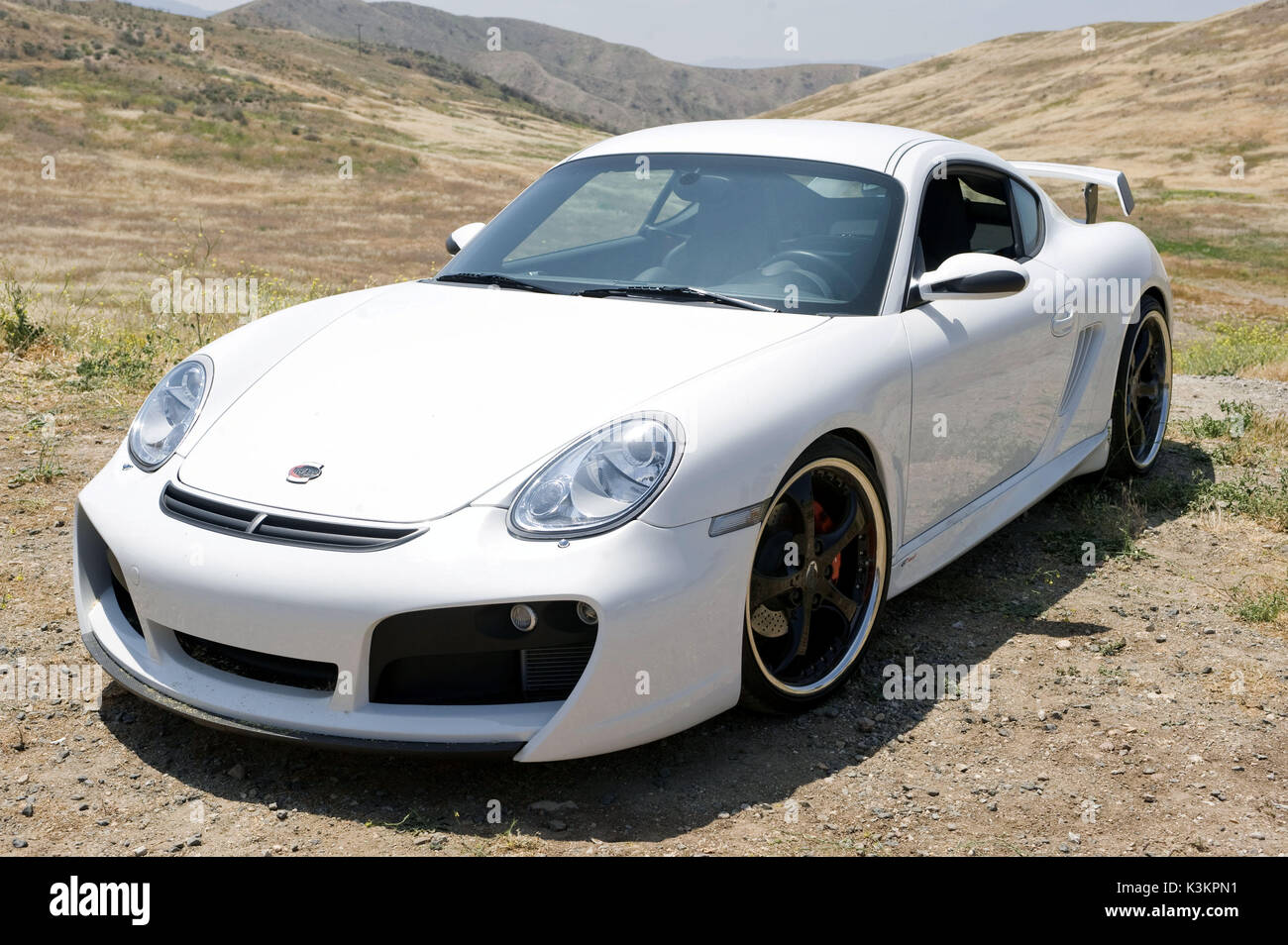
Everyone talks about the Supra. Or the Charger. Maybe that neon-green Eclipse if they’re feeling nostalgic for the early 2000s. But if you really look at the history of the films, the Fast and the Furious Porsche moments—specifically that 997.2 GT3 RS from Fast Five—represent a massive shift in how the series handled car culture. It wasn't just another shiny prop. It was a signal that the franchise was moving away from "tuner" culture and into the world of elite, world-class performance.
Honestly, that blue 911 GT3 RS didn't get enough screen time.
Brian O’Conner, played by the late Paul Walker, wins the car in a high-stakes street race in Rio. We don't even see the race. Just the aftermath. A group of guys standing around, looking defeated, while Brian walks away with the keys to a precision-engineered German masterpiece. It’s one of those "if you know, you know" moments for car enthusiasts.
The Blue 997.2 GT3 RS That Changed Everything
In Fast Five, the crew needs cars that are fast enough to beat the security cameras at a police station. They don't want flashy chrome; they want "invisible" speed. While they eventually settle on the matte black Dodge Charger Police Cruisers for the actual vault heist, the Fast and the Furious Porsche was the benchmark.
The car used in the film was a 2010 or 2011 Porsche 911 GT3 RS (997.2 generation). It’s instantly recognizable by its wide hips, that massive rear wing, and the distinct graphics. Under the hood—well, in the back—sits a 3.8-liter flat-six engine. This isn't a car you just "drive." It’s a car you command. It produced about 450 horsepower from the factory. In a world of heavily modified Supras pushing 1,000 hp (in movie logic, anyway), 450 might sound small. It's not.
The 997.2 is often cited by purists as the "peak" 911 because it was the last of the Mezger-engine-derived RS models with a true manual transmission. It’s raw. Noisy. Brute force in a tuxedo.
Why the GT3 RS Was a Character Choice, Not Just a Stunt Car
Paul Walker was a real-life Porsche fanatic. He owned a 911 Carrera RS 2.7, which is basically the holy grail for collectors. Because of his personal influence, the cars Brian O’Conner drove started reflecting real-world enthusiast tastes.
Think about the transition.
In the first movie, Brian is in an Eclipse and a Supra.
By the fifth, he's hunting down a Porsche.
It shows growth. The character went from a street racer trying to prove himself to a professional operative who understands that a balanced chassis and precision braking are just as important as nitrous oxide.
Interestingly, the production didn't just have one Porsche. They usually have "hero" cars for close-ups and "stunt" cars for the heavy lifting. But because the GT3 RS is so specialized, you can't just build a cheap replica using a base-model Carrera shell without people noticing the narrow body or the wrong bumpers. The car on screen had to look authentic because Porsche fans are notoriously obsessive about details.
The "Other" Fast and the Furious Porsche: The 996 and the Cayman
While the blue 997.2 is the icon, it wasn't the first or last time the brand appeared. People often forget the 911 Carrera (996 generation) in the first film. It belonged to one of the characters at the first race—basically a background car to show that "rich guys" were also in the scene.
Then there’s the Porsche Cayman. In some of the later films, Porsches show up as part of the background fleet or driven by secondary villains. But they never quite captured the magic of that Rio street race win.
There's a specific reason for this. Porsche, as a brand, used to be very protective of its image. They didn't always want their cars associated with illegal street racing. Unlike Dodge or Mitsubishi, who leaned heavily into the marketing, Porsche was a bit more "refined." Seeing the GT3 RS being driven hard in Fast Five felt like a breakthrough.
Technical Specs: What Made the Fast Five Porsche Special
If you were to buy Brian's Porsche today, you'd be looking at a serious investment.
- Engine: 3.8L naturally aspirated Flat-6.
- 0-60 mph: Roughly 3.8 seconds.
- Top Speed: 193 mph.
- Weight: It was light. Around 3,000 lbs.
The movie car featured a gorgeous "Aqua Blue Metallic" paint job with red or gold accents depending on the lighting and the specific stunt car used. It stood out because it wasn't "over-modified." It didn't have underglow or a roof scoop. It looked like a car you could actually see at a track day at Laguna Seca or the Nürburgring.
The Tragedy Behind the Brand Association
It’s impossible to talk about the Fast and the Furious Porsche connection without mentioning the Carrera GT.
While the Carrera GT was never a primary "hero car" in the movies, it is the car in which Paul Walker lost his life. This created a complex, somber relationship between the fans, the franchise, and the Porsche brand. For a while, the sight of a high-end Porsche in the films felt heavy.
However, the 2023 release of Fast X and subsequent tributes have pivoted back to celebrating Walker's genuine love for these machines. Fans have reclaimed the image of the blue GT3 RS as a symbol of Brian O'Conner's peak as a driver.
Misconceptions About the Stunt Cars
A lot of people think every car in Fast and the Furious is a total wreck under the skin.
That’s mostly true for the cars that get blown up. But for the "performance" shots, the production team often uses real, high-quality vehicles. For the GT3 RS, they couldn't just use a body kit on a Volkswagen Beetle chassis (which they’ve done for other cars in the past). The way a Porsche moves—the "squat" of the rear end under acceleration—is unique.
If they had used a fake, the audience would have smelled it a mile away.
What Happened to the Movie Cars?
Tracking down movie cars is like trying to find a needle in a haystack. Most are crushed for liability reasons. Some end up in private collections.
The "hero" 911 GT3 RS from Fast Five has been a topic of debate in car forums for years. Some claim it’s in a climate-controlled garage in Dubai; others say it was returned to a specialist dealer. Unlike the "F-Bomb" Camaro or the original Supra, the Porsche hasn't made frequent appearances at auctions like Barrett-Jackson. It remains a bit of a ghost.
How to Get the "Fast" Porsche Look Without Spending $300k
You probably don't have a quarter-million dollars for a 997.2 GT3 RS. Few people do.
But the "Brian O'Conner" aesthetic is actually pretty easy to mimic if you're a Porsche fan. It’s all about the Aqua Blue Metallic paint and the "RS" decals.
- Find a 997-generation Carrera. These are becoming modern classics but are still somewhat attainable.
- Focus on the stance. The GT3 RS sits low. Coilover suspension is a must.
- The Wing. You can find aftermarket GT3-style wings, but be careful—cheap fiberglass looks terrible on a Porsche.
- Color match. The specific blue used in the film is a factory Porsche color, which makes it easier to replicate than the custom "House of Kolor" mixes used on the early movie cars.
The Legacy of the 911 in the Franchise
The Fast and the Furious Porsche isn't just a car. It represents the moment the "tuner" movies became "heist" movies.
When Brian and Dom stopped worrying about 10-second cars and started worrying about international drug lords, their taste in cars had to evolve. The Porsche was the bridge. It was the first car in the series that felt truly sophisticated.
It proved that you didn't need a giant "NOS" bottle to be the fastest person on the street. You just needed world-class engineering and a driver who knew how to use it.
If you're looking to dive deeper into the world of movie cars, your next step is to research the actual auction history of the Fast Five stunt fleet. Many of the "background" Porsches were actually sourced from local owners in Puerto Rico (where much of the Rio footage was filmed), and some of those cars are still roaming the island today, unknowingly carrying the DNA of one of the biggest action franchises in history. Check out the registries for 997 RS models; you might be surprised where these cars end up.