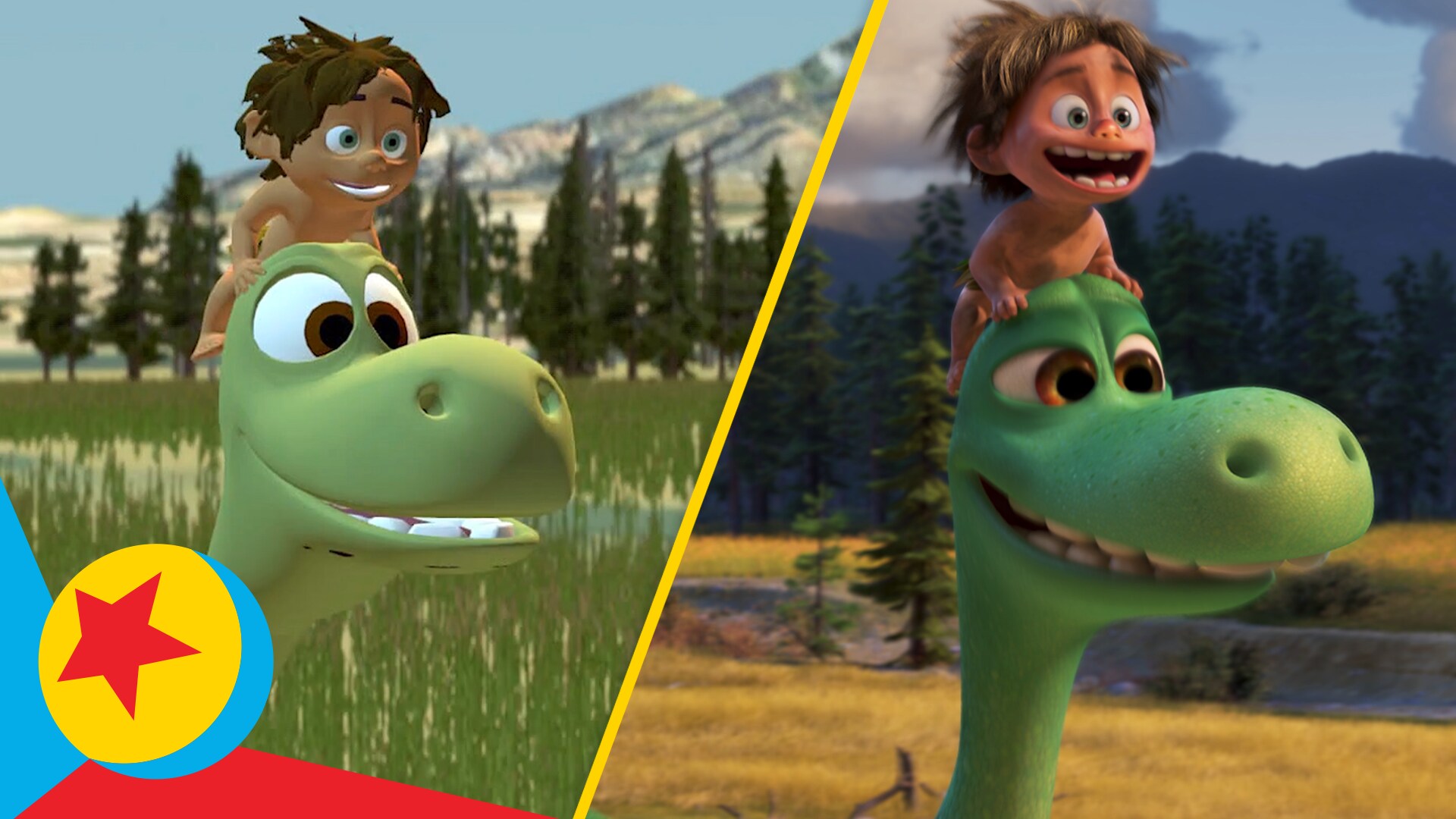
Let’s be real for a second. Mention Pixar and people immediately start humming the Toy Story theme or tearing up over the first ten minutes of Up. But then there is the outlier. The Good Dinosaur movie Disney released in 2015 usually gets treated like the awkward middle child of the studio's golden era. It’s the one people forget. Or, worse, it’s the one people call "just okay."
That’s a bit of a tragedy, honestly.
When you actually sit down and look at what went on behind the scenes—the total creative overhaul, the delayed release, the firing of the original director—it’s kind of a miracle the movie even exists. It’s a weird, beautiful, occasionally terrifying Western masquerading as a kid’s flick. It didn't just break the Pixar mold; it basically melted it down and tried to build something else entirely.
What Actually Happened with The Good Dinosaur Movie Disney Produced?
Usually, Pixar is the gold standard for "getting it right." But this production was a mess. Originally, Bob Peterson (the voice of Dug in Up) was directing. The concept was there: what if the asteroid missed? What if dinosaurs became the farmers and humans remained the "critters"?
But by 2013, the story wasn't working. Pixar did something they rarely do—they pulled the plug mid-sprint. They pushed the release date back, which left 2014 as the first year in a decade without a Pixar movie. They brought in Peter Sohn to steer the ship. Most of the voice cast was replaced. Imagine being an actor, recording your lines, and then getting a call saying, "Hey, we're starting over." That’s what happened to John Lithgow and Bill Hader. They were out. Jeffrey Wright and Frances McDormand were in.
It was a total gut renovation.
The result? A movie that feels strangely empty, but in a way that’s intentional. It’s about the wilderness. It’s about Arlo, an Apatosaurus who is, frankly, a bit of a coward, trying to find his way home after his father dies in a flash flood. If that sounds like The Lion King, you’re not wrong. But the vibe is much more True Grit.
The Visual Paradox
You can’t talk about this film without mentioning the water. The clouds. The jagged peaks of the Clawtooth Mountains. The Good Dinosaur movie Disney pushed technical boundaries that we still see the effects of in 2026. The landscapes look like high-definition nature photography. You could almost feel the cold of the river.
Then you have Arlo.
He looks like a green gummy bear.
This contrast was a huge sticking point for critics. Why put a cartoonish, bulbous dinosaur in a world that looks like a National Geographic documentary? Sohn’s logic was that the environment needed to be a character itself—an antagonist that could actually kill you. If the world looked "cartoony," the stakes wouldn't feel real. When Arlo gets swept away by the river, you need to feel the weight of that water. It’s terrifying.
Why the Story Divides Fans
Most Pixar movies are incredibly dense with dialogue and complex metaphors. Inside Out is literally a psychological map of a child's brain. The Good Dinosaur movie Disney went the opposite direction. It’s sparse. There are long stretches where nobody says anything.
It’s a story told through movement and growls, mostly thanks to Spot. Spot is the "dog" in this scenario, even though he's a human boy. He’s feral. He doesn't speak. The bond between Arlo and Spot is built on shared trauma and survival.
There’s a specific scene involving fermented fruit that stands out. It’s essentially a "hallucination" sequence. In a Disney-branded movie, seeing the main characters get high on rotten fruit and start seeing weird shapes is... a choice. It’s these moments of weirdness that make the movie feel more like an indie film than a billion-dollar franchise starter.
The "Apatosaurus in the Room": The Box Office
We have to talk about the numbers because they define the movie's legacy. It was Pixar's first "flop," if you can call $332 million a flop. Against a massive production and marketing budget, it didn't hit the heights of Finding Dory or Inside Out.
People weren't ready for a Pixar movie that felt like a somber Western. They wanted belly laughs and catchy songs. Instead, they got a meditation on grief and the harshness of nature.
The Lessons the Animation Industry Learned
Even though it didn't break records, the influence of The Good Dinosaur movie Disney created is everywhere now.
- Photorealistic Environments: This movie paved the way for the "Hyper-Real" look. Without the cloud-rendering tech developed for Arlo’s journey, we wouldn't have the stunning vistas in later films like Toy Story 4.
- Simplified Narratives: It proved that you don’t need a fast-talking sidekick to carry an emotional beat. Sometimes silence is better.
- The "Critter" Dynamic: Reversing the human-animal relationship was a clever subversion that writers still study for world-building tips.
The movie deals with a very specific type of fear. Not the "monster under the bed" fear, but the "I am too small for this world" fear. Arlo is tiny compared to the mountains. He’s weak compared to the storms. His journey isn't about becoming a hero who saves the world; it’s just about making it back to the porch of his farm.
That’s relatable.
What People Get Wrong About Arlo
A common complaint is that Arlo is "annoying" because he’s scared of everything. But that’s the point. He has anxiety. He’s grieving. The movie doesn't give him a magical power-up. He just learns to keep walking even when he's shaking.
Honestly, it’s a more honest portrayal of courage than most superhero movies.
How to Revisit the Film Today
If you’re going to watch The Good Dinosaur movie Disney plus has available right now, you have to change your headspace. Don’t go in expecting The Incredibles.
- Watch it on the biggest screen possible. The scale of the environment is lost on a phone.
- Pay attention to the score. Mychael and Jeff Danna used an unusual mix of orchestral and folk instruments that really nails that "frontier" feeling.
- Look for the "Easter Eggs." Like every Pixar film, the Pizza Planet truck is hidden in there (look for a rock formation that looks suspiciously like a truck in the opening asteroid scene).
Moving Forward with the Legacy
Despite its rocky start, the film has found a second life on streaming. Parents have realized it’s a great way to talk to kids about loss without the sugar-coating of some other animated features. It’s raw.
Actionable Insights for Movie Lovers:
- Analyze the "Rule of Three" in the Script: Notice how Arlo faces three major weather events, each one stripping away a bit more of his fear. It’s a classic screenwriting trope used perfectly here.
- Compare the Landscapes: If you’re a tech nerd, compare the water physics in this movie to Moana. You can see the evolution of Disney’s fluid simulation engines.
- Discuss the Subversion: Use the "Spot as a dog" concept to spark a conversation about perspective. How does changing the species of a character change how we feel about their actions?
The film isn't perfect. The pacing can be clunky in the second act, and some of the side characters (like the cultist pterodactyls) feel like they’re from a different movie entirely. But as a piece of visual art, it’s arguably the most beautiful thing Pixar has ever put out. It’s a reminder that even when a studio "fails" by its own high standards, it can still produce something deeply moving and technically revolutionary.
Take a look at the credits next time. You’ll see a list of hundreds of people who spent years trying to figure out how to make a cartoon dinosaur look like he belonged in a real forest. They succeeded. It just took the rest of us a few years to catch up to what they were doing.