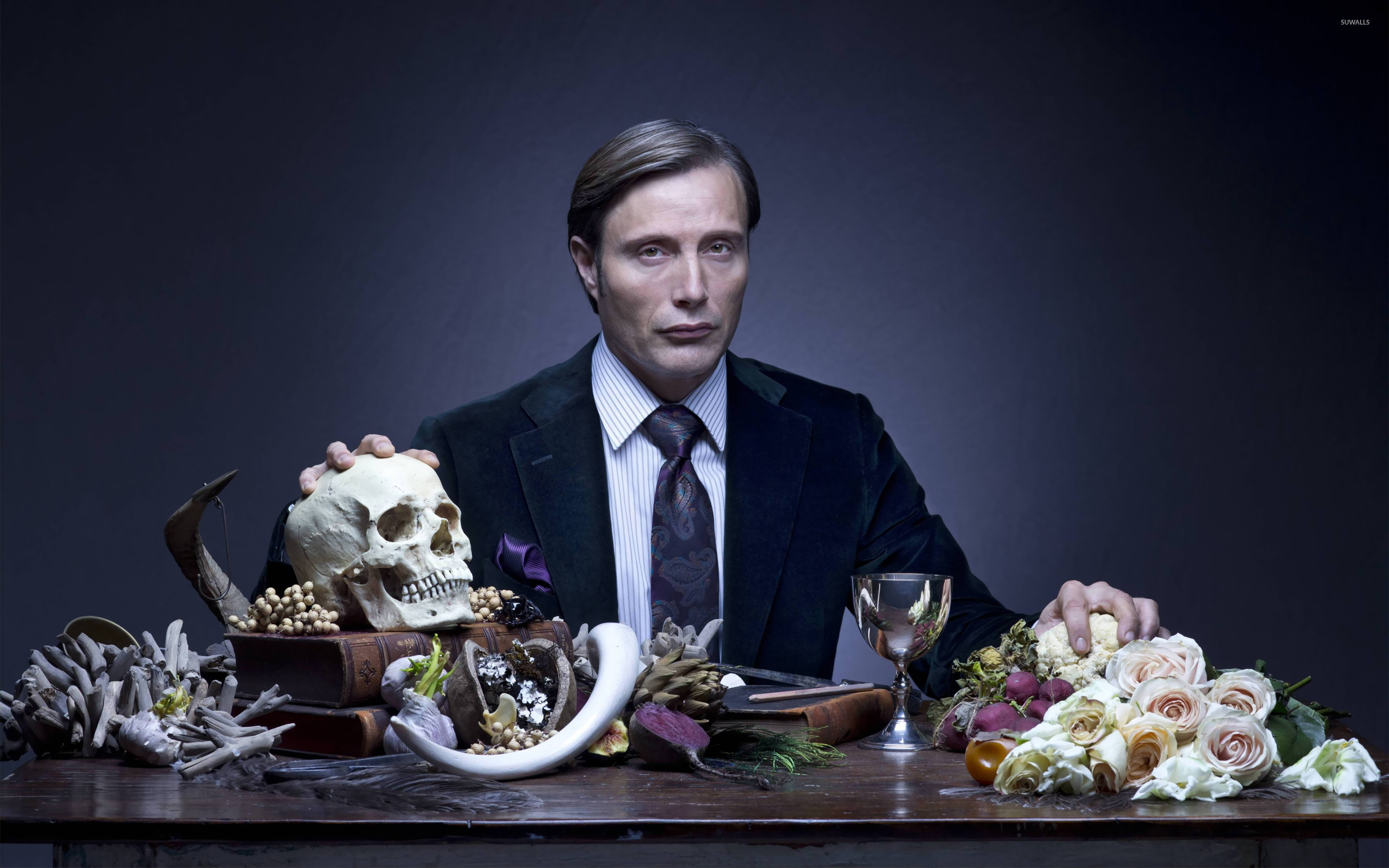
It’s been over a decade since Mads Mikkelsen first sat across from Hugh Dancy in a dimly lit office, and honestly, network television hasn't been the same since. When people talk about the Hannibal TV show, they usually start with the food. Or the suits. Or the way a stag made of shadows stalks through a forest of human remains. But what’s actually wild about this show—the thing that keeps it alive in Tumblr tags and Reddit threads years after NBC swung the axe—is how it managed to be the most pretentious, artistic, and violent thing on a major broadcast network.
It shouldn't have worked.
NBC was the home of The Voice and Chicago Fire. Suddenly, Bryan Fuller shows up with a high-budget psychological horror series that looks like a Renaissance painting and smells like expensive truffles and copper. It was a miracle it lasted three seasons.
The Bryan Fuller vision and the gore-as-art problem
Bryan Fuller is a bit of a weirdo, in the best way possible. Before he got his hands on Thomas Harris's Red Dragon characters, he was known for the candy-colored whimsy of Pushing Daisies. Taking that aesthetic sensibility and applying it to a cannibalistic serial killer was a stroke of genius. Most crime procedurals at the time, like CSI or Criminal Minds, treated violence as a puzzle or a tragedy. In the Hannibal TV show, violence is a medium.
Remember the cello man? The guy whose vocal cords were replaced with gut strings so he could be "played"? It’s gruesome. It’s objectively terrifying. But the way it’s filmed—the lighting, the slow-motion cinematography by James Hawkinson—makes you feel guilty for thinking it’s pretty. This is where the show gains its "E-E-A-T" (Experience, Expertise, Authoritativeness, and Trustworthiness). It didn't just adapt a book; it created a visual language for empathy and madness.
Will Graham’s "empathy disorder" isn't just a plot point. It’s the lens. We see what he sees. When he stands in a crime scene and the golden pendulum swings, we’re not just watching a detective; we’re watching a man lose his mind to understand a monster.
Mads Mikkelsen vs. Anthony Hopkins
We have to talk about the elephant in the room. Anthony Hopkins won an Oscar for less than twenty minutes of screen time in The Silence of the Lambs. He was the definitive Hannibal Lecter. He was hammy, terrifying, and iconic. So, when a Danish actor with sharp cheekbones and a thick accent was cast for the Hannibal TV show, people were skeptical.
Mads didn't try to be Hopkins.
He played Hannibal as a "fallen angel." He’s a man who finds the world rude and boring, so he entertains himself by orchestrating chaos. He doesn't hiss. He doesn't blink much. He just watches. There’s a specific scene in the pilot where he feeds Will Graham some "protein" (we all know it's people), and the subtle smirk on his face tells you everything you need to know about the power dynamic for the next thirty-nine episodes.
Why the "Fannibals" won’t let it die
Most shows have fans. Hannibal has a cult.
The "Fannibal" community is largely responsible for why we’re still talking about a show that ended in 2015. They saw the "Hannigram" relationship—the twisted, romantic, destructive bond between Will and Hannibal—long before the writers explicitly confirmed it. It’s a "will-they-kill-each-other-or-kiss" dynamic that redefined how queer-coding works in modern prestige TV.
Honestly, the chemistry between Hugh Dancy and Mads Mikkelsen is lightning in a bottle. You can't fake that. In the final moments of the series finale, "The Wrath of the Lamb," the two of them are covered in blood, leaning against each other after a brutal fight. It’s intimate. It’s gross. It’s perfect.
The food prep was actually real
Janice Poon, the show’s food stylist, is a legend. She had to figure out how to make pork, veal, and edible flowers look like human organs. She actually wrote a cookbook based on the show called Feeding Hannibal. Every meal Hannibal serves is a real recipe, often based on classic French techniques from Escoffier.
When you see Hannibal preparing a foie gras or a timballo, he’s actually doing the work. Mikkelsen learned how to flip crepes and handle knives with the grace of a professional chef. That attention to detail is why the show feels so grounded despite its surrealist dreams. It’s a sensory experience. You can almost smell the expensive wine and the underlying scent of iron.
The legal mess of Clarice Starling
One of the biggest hurdles the Hannibal TV show faced was the "Clarice Problem." Because of complicated rights issues between Metro-Goldwyn-Mayer (MGM) and the Dino De Laurentiis Company, Bryan Fuller couldn't use the character of Clarice Starling or any elements specifically introduced in The Silence of the Lambs.
They had the rights to Red Dragon, Hannibal, and Hannibal Rising.
This forced the writers to be creative. They took bits of Clarice’s personality and history and grafted them onto other characters. Miriam Lass (Anna Chlumsky) became the "trainee who got too close." Bedelia Du Maurier (Gillian Anderson) became the intellectual equal and confidante. By not having Clarice, the show actually became better. It focused more on the central romance/obsession between Will and Hannibal instead of retreading the same ground the movies already covered.
How to watch it and what to look for
If you're diving into the Hannibal TV show for the first time, or maybe doing your fifth rewatch because you miss the aesthetic, here is the best way to process it:
- Ignore the "Case of the Week" at first. In Season 1, it feels like a standard procedural. It isn't. Every killer Will catches is a mirror for his own psyche or a lesson Hannibal is teaching him.
- Watch the backgrounds. Hannibal’s office is full of clues. The sketches on his desk, the books on his shelves—nothing is accidental.
- Listen to the sound design. Brian Reitzell’s score isn't music in the traditional sense. It’s a collection of jagged noises, heartbeats, and scratching that is designed to make you feel as anxious as Will Graham.
- Pay attention to the suits. Hannibal’s wardrobe is a weapon. As he gets more comfortable and more predatory, his patterns get louder. It’s peacocking.
The show is currently available on various streaming platforms, though it hops around between Hulu, Netflix, and Prime depending on the month. If you can find the Blu-rays, the "post-mortem" featurettes with Scott Thompson are worth the price alone.
What really happened with Season 4?
The question everyone asks: Is it coming back?
Every few months, a rumor sparks up. Mads says he’s down. Hugh says he’s down. Bryan Fuller says he has a plan for The Silence of the Lambs arc if they can get the rights. But as of 2026, we’re still in a stalemate. The issue is partly rights and partly budget. Hannibal looks like a movie because it cost a lot to make.
But even if we never get another frame, the three seasons we have are a complete work of art. The ending of Season 3 is arguably one of the best series finales in television history. It’s definitive, poetic, and stays true to the "Eat the Rude" philosophy.
The Actionable Path Forward for New Viewers:
- Start with "Apéritif" (S1E1): Pay attention to the clock Will draws. It’s a real neurological test for encephalitis, which becomes a major plot point.
- Read "Red Dragon" by Thomas Harris: Seeing how Fuller flips the source material is fascinating.
- Follow Janice Poon’s blog: If you’re a foodie, seeing how the "human" dishes were constructed adds a layer of appreciation for the craft.
- Don't watch it while eating: Or do. If you have the stomach for it.
The Hannibal TV show isn't just a horror series. It’s an exploration of what it means to be truly seen by someone else, even if that person is a monster. It’s about the cost of empathy and the beauty of the macabre. Whether we get a revival or not, the table is set, and the guest list is permanent.