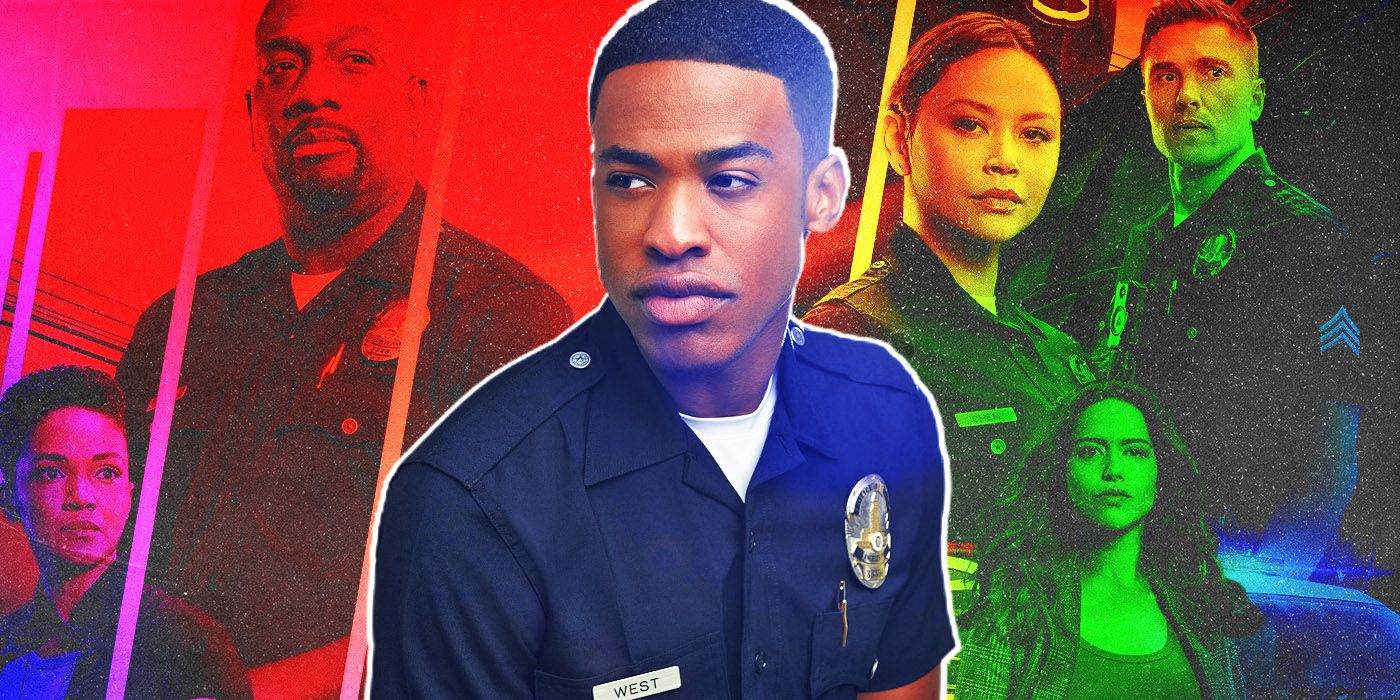
It was the kind of moment that makes you drop your remote. You're sitting there, expecting a high-stakes season premiere of The Rookie, thinking Jackson West—one of the "Original Three"—is going to have some narrow escape. But then, the CCTV footage rolls. It’s grainy. It’s cold. And just like that, he’s gone. Titus Makin Jr.’s character didn’t get a heroic monologue or a slow-motion goodbye. He got a bullet in the back while being shoved into a trunk.
Honestly, the Jackson West death scene felt like a gut punch because it was so unceremonious. In a show that often balances lighthearted "shop talk" with intense action, this was a stark, jarring reminder of how the series handles reality when it has to. But why did it happen that way? Fans were livid. People were confused. If you look at the social media threads from that night in late 2021, the vibe was basically a mix of "I’m never watching this again" and "Wait, did that actually just happen?"
The brutal reality of the Jackson West death scene
When Season 4, Episode 1, "Life and Death," aired, it didn't waste time. We didn't see a live-action struggle in the way we expected. Instead, the show used a body double from behind and security camera footage to show Jackson being executed by one of Sandra de la Cruz's men. It was clinical.
Why the grainy footage? Why didn't we see his face?
The answer is actually pretty simple but a bit disappointing for fans of the character: Titus Makin Jr. was ready to move on. When an actor decides not to return for a season premiere, writers are stuck in a corner. They had to resolve the Season 3 cliffhanger where Jackson and Lopez were kidnapped. Since Makin wasn't on set to film new scenes, the production had to get creative—or in this case, lethal—using stand-ins. This is a common TV trope used when an actor exits abruptly, but because Jackson was the moral compass of the show, the lack of a "proper" goodbye felt like a betrayal to some.
Why Titus Makin Jr. left the show
You can't talk about the Jackson West death scene without talking about the climate in which it was written. Titus Makin Jr. has been open about his hesitations regarding playing a police officer in the wake of the George Floyd protests and the height of the Black Lives Matter movement.
He actually spoke to Entertainment Weekly and other outlets about how he nearly didn't come back for Season 3. He felt a deep conflict. He was playing a Black officer on a show that, at the time, was still finding its footing on how to address systemic issues within the LAPD. While the showrunners worked with him to create the Doug Stanton storyline—where Jackson stands up against a racist training officer—it seems that wasn't enough to keep him long-term.
Makin is also a musician (he performs under the name Butterfly Ali). Sometimes, the creative soul just needs a different outlet. When you've spent three years in a tactical vest, maybe you just want to go play some soul music and not worry about choreographed shootouts.
The ripple effect on Mid-Wilshire
The death changed everything for the characters left behind. Especially Chen. Lucy Chen and Jackson West weren't just partners; they were roommates and best friends. The apartment felt empty. The show didn't just move on in the next episode, which is something I actually respect about the writing. They addressed the trauma.
- Sgt. Grey felt the weight of losing one of his best young officers.
- Nolan had to grapple with the fact that their "rookie" days were officially, tragically over.
- The introduction of Aaron Thorsen (Tru Valentino) was clearly meant to fill that void, but the show acknowledged he wasn't a "replacement."
Addressing the "Disrespectful" accusations
A lot of people called the Jackson West death scene disrespectful. I get that. You spend years rooting for a guy who survives a corrupt training officer and a dozen near-death experiences, only to have him killed off-screen by a nameless henchman.
But look at it from a production standpoint. If an actor says, "I'm not coming back," you have two choices:
- Recast (which fans usually hate even more).
- Write them out.
If Jackson had just "moved to a different precinct," it wouldn't have fit the Season 3 finale's stakes. He was kidnapped by a cartel. Cartels don't usually let people just transfer to San Diego. To keep the "reality" of the show's danger intact, Jackson had to pay the price for the plot the writers had already committed to. It was a narrative trap.
How it compares to other TV exits
Think back to Grey's Anatomy or The Good Wife. When actors leave under a cloud or suddenly, the deaths are often violent or shocking. It’s a clean break. The Jackson West death scene follows that tradition. It’s meant to be a permanent, unfixable seal on that character's story. No "special guest appearances" in later seasons. No "I'm back from undercover." He's gone.
The legacy of Officer West
Jackson was important because he represented the "legacy" kid. His dad was Internal Affairs. He had everything to prove. His journey from a guy who froze up during his first shootout to a man who took down a corrupt veteran officer was the best character arc on the show.
That’s why the death still stings. It cut that growth short. He was just becoming the officer he wanted to be, rather than the one his father expected him to be.
If you’re rewatching the series, the Jackson West death scene acts as a massive pivot point. The show gets a bit darker after that. The stakes feel more "real" because we know the writers are willing to kill off a lead. Even if the exit was forced by real-world circumstances, the impact on the audience was massive. It proved that in the world of The Rookie, nobody is truly safe, not even the people we love most.
What to do if you're still salty about it
Look, TV is a business. Actors leave. Contracts end. Creative differences happen. If you're still reeling from that Season 4 opener, the best way to process it is to look at the work Titus Makin Jr. is doing now. Check out his music. He's incredibly talented.
Also, pay attention to how the show honors him later on. When Lopez names her baby Jackson, it’s a small, meaningful way to keep his memory in the precinct. It doesn't fix the shock of the death, but it provides a bit of closure that the CCTV footage definitely didn't provide.
For those tracking the show's evolution, notice the shift in how they handle racial politics and policing after Jackson's exit. The character's struggle paved the way for more nuanced conversations in the later seasons, even if he wasn't there to lead them.
Next Steps for Fans
To truly understand the impact of Jackson's departure, you should revisit the "Doug Stanton" arc in Season 3 (specifically episodes 2 through 5). It highlights exactly why Titus Makin Jr. wanted more from the show and provides the necessary context for his decision to leave. Additionally, following the cast's social media from that period reveals how much they genuinely missed his presence on set, confirming that the abruptness of the Jackson West death scene was purely a result of logistical hurdles rather than any behind-the-scenes drama with the crew. Finally, watch the Season 4 premiere again with the knowledge that a body double was used; it changes how you perceive the cinematography and the deliberate choice to keep the camera at a distance.