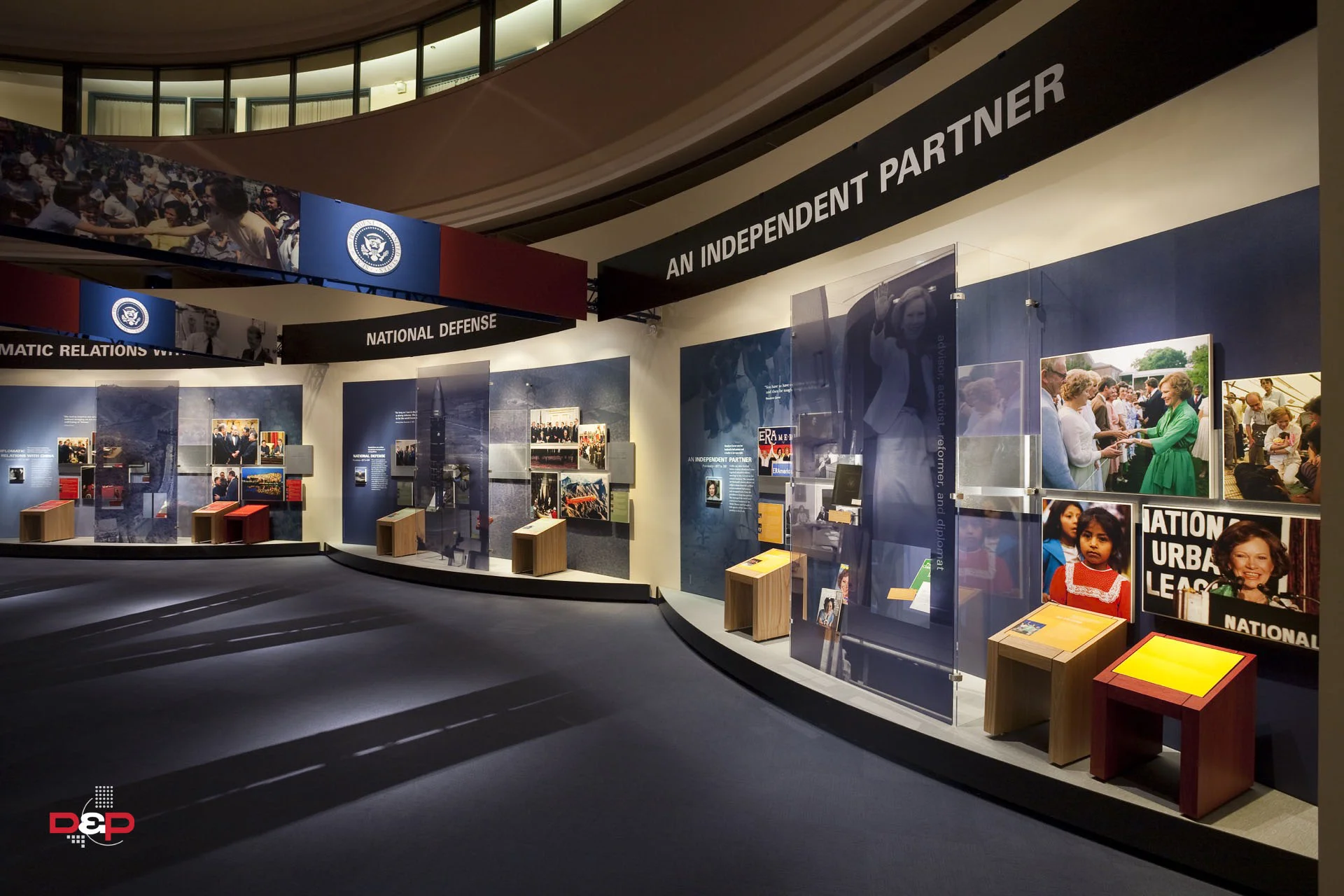
You’re driving through Atlanta, maybe stuck in that legendary I-75/85 connector traffic, and you see the signs for the Jimmy Carter Presidential Library and Museum. Most people think of these places as dusty vaults for guys who used to be in charge. But honestly? The Jimmy Carter museum Atlanta experience is weirdly personal. It’s not just a hall of fame for a former president; it’s basically a massive, interactive diary of a man who went from a peanut farm in Plains to the Oval Office and then spent forty years building houses for people who needed them.
It sits on about 35 acres of rolling hills. The view of the Atlanta skyline from the gardens is, frankly, one of the best in the city. You’ve got these Japanese gardens and reflecting pools that feel a million miles away from the honking horns of Ponce de Leon Avenue just down the road.
Most presidential libraries are built to scream "I was important." This one feels more like it’s asking "What are you doing with your life?" It’s a bit of a gut punch, but in a good way.
What actually happens inside the museum
When you walk in, you’re greeted by the usual stuff—gifts from foreign heads of state, fancy plates, and high-end memorabilia. But then you get into the meat of it. There’s a full-scale replica of the Oval Office. It’s exact. You can see the scale of the room where the Camp David Accords were hammered out.
Speaking of Camp David, that’s where the museum gets intense.
They’ve got these exhibits that detail the 13 days of grueling negotiations between Carter, Menachem Begin of Israel, and Anwar Sadat of Egypt. It wasn't some easy handshake deal. It was a mess. They show the handwritten notes, the frustrations, and the moments where it almost fell apart completely. It makes the history feel less like a textbook and more like a high-stakes thriller. You see the human cost of peace. It’s stressful just looking at the documents.
Then there’s the Nobel Peace Prize. It’s just sitting there. Seeing it in person makes you realize that Carter is the only president to really use the "Ex-President" title as a full-time career for global good.
The Peanut Farm Beginnings
You can't understand the man without the dirt. The museum spends a lot of time on Plains, Georgia. It was a tiny town. Still is. They’ve got a display of his childhood, and it’s basically a lesson in rural Southern life during the Depression.
It’s easy to forget that this guy was a nuclear physicist in the Navy. Yeah, he was a "peanut farmer," but he was also a highly educated engineer who worked on the early nuclear submarine program. The museum doesn't shy away from that contrast. It’s sort of a "how did this happen?" story. One minute he’s scrubbing out a nuclear reactor after a partial meltdown in Canada (true story—look up the Chalk River incident), and the next he’s running for the school board.
The 1976 Campaign Trail
Politics used to look different. There’s a section of the museum dedicated to the "Whistle Stop" tour and the grass-roots effort that put an outsider in the White House.
They have the original campaign materials. The "Why Not the Best?" slogan. It was a weird time for America. Post-Watergate, the country was exhausted. People wanted someone who wouldn't lie to them. Carter’s whole brand was "I will never lie to you."
The museum shows the TV ads from back then. They’re grainy and awkward by today’s standards, but you can feel the sincerity. It’s a snapshot of a country trying to find its soul again after a decade of Vietnam and Nixon.
It isn't all sunshine and roses
A good presidential library shouldn't be a puff piece. The Jimmy Carter museum Atlanta site actually acknowledges the rough patches.
The Iran Hostage Crisis.
The energy crisis.
The "Malaise" speech (which he never actually called the Malaise speech).
The exhibits show the 444 days of the hostage crisis in a way that feels heavy. You see the telegrams, the news clips of Walter Cronkite counting the days, and the failed rescue attempt, Operation Eagle Claw. They don't hide the failures. It’s refreshing, honestly. Most politicians try to bury their L's, but here, they’re laid out as part of the narrative. It makes the man feel more real. Less like a statue, more like a guy who had a really, really hard job during a terrible four-year stretch.
The Carter Center’s Global Reach
Connected to the museum is The Carter Center. This is the non-profit wing. While the museum looks back, the Center looks forward.
They do some incredible work.
- Guinea Worm disease.
- Election monitoring in over 100 countries.
- River blindness treatment.
They are on the verge of making Guinea Worm the second human disease in history to be eradicated (after smallpox). When Carter started, there were millions of cases. Now? It’s down to a handful. Seeing the maps and the photos of their health workers in remote villages is arguably more impressive than the Oval Office replica. It’s a legacy that isn't about power; it’s about service.
Why you should actually go
If you’re a history nerd, obviously you’re going. But if you’re just a tourist in Atlanta, it’s worth the stop for the grounds alone.
The garden is called the Garden of the Five Senses. It’s designed to be accessible to everyone, including the visually impaired. There are waterfalls, native plants, and a koi pond. It’s one of those spots in the city where you can actually hear yourself think.
The museum also hosts amazing events. Authors, historians, and activists are constantly passing through for lectures.
Location and Logistics
It’s located at 441 John Lewis Freedom Parkway NE.
Parking is free, which, if you know Atlanta, is basically a miracle. You can park your car and not worry about a $30 garage fee.
The admission prices are pretty standard for a major museum—around $12 for adults, with discounts for seniors, students, and military. Kids under 16 usually get in for free.
The hours are typically 10:00 AM to 4:30 PM, but always check their website because they occasionally close for private events or holiday shifts.
The legacy nobody talks about
People talk about the policy, but they forget the vibe of the Carter years. He was the first president to really push for solar panels on the White House (Reagan took them down later). He was talking about environmental conservation and energy independence long before it was a mainstream talking point.
The museum has a section on the National Monuments and the Alaska National Interest Lands Conservation Act. He doubled the size of the National Park System. Think about that. Double.
It was a huge deal that often gets overshadowed by the economic woes of the late 70s. But looking at the maps of the protected land today, you realize how much of the American wilderness we owe to his pen.
Practical Tips for Your Visit
Don't rush.
Give yourself at least two to three hours. If you try to blow through it in 45 minutes, you’ll miss the nuance in the letters and the personal artifacts.
Wear comfortable shoes. The walk from the parking lot and through the gardens involves some slight hills.
Eat before you go. There isn't a massive cafeteria inside, though there are some great spots nearby in Virginia Highland or the Old Fourth Ward. Krog Street Market is just a short drive or a decent walk away if you want some of the best food in the city after you’re done with the history.
Check out the gift shop. Seriously. It’s not just cheesy pens. They have some great books on Southern history and some really unique handmade items from the countries where the Carter Center works.
Getting the most out of the experience
To really get the full weight of the Jimmy Carter museum Atlanta, start with the film. Most people skip the introductory movies in museums because they're boring. Don't skip this one. It sets the stage for the personal stakes involved in his presidency.
Look at the photographs taken by Rosalynn Carter. She was a powerhouse in her own right, particularly regarding mental health advocacy. The museum does a great job showing that they were a team. It wasn't just "Jimmy." It was a partnership that lasted over 75 years.
Actionable Steps for Planning Your Trip
- Check the Calendar: Visit the official website before you head out to ensure there aren't any special closures for Carter Center events.
- Combine your visit: The museum is located right off the Freedom Park Trail. You can easily rent a bike or walk from the museum to the Martin Luther King Jr. National Historical Park. It creates a powerful "Human Rights" tour of Atlanta.
- Review the 1970s history: If you're bringing kids or people who didn't live through the era, a quick 5-minute primer on the Cold War and the 1973 oil crisis will make the exhibits make way more sense.
- Bring a camera for the skyline: The view from the circle behind the museum, looking back toward downtown and Midtown, is one of the best photo ops in the state of Georgia.
- Respect the atmosphere: Remember that this is a working research facility and a place of international diplomacy. It’s generally quieter than your average tourist trap.
The Jimmy Carter museum Atlanta is a rare look at a man who prioritized his conscience over his popularity. Whether you agree with his politics or not, walking through his life story is a reminder that the presidency is a burden as much as it is a privilege. You’ll leave feeling a bit more connected to the idea that one person, starting from a tiny town with no running water, can actually move the needle for the whole world.