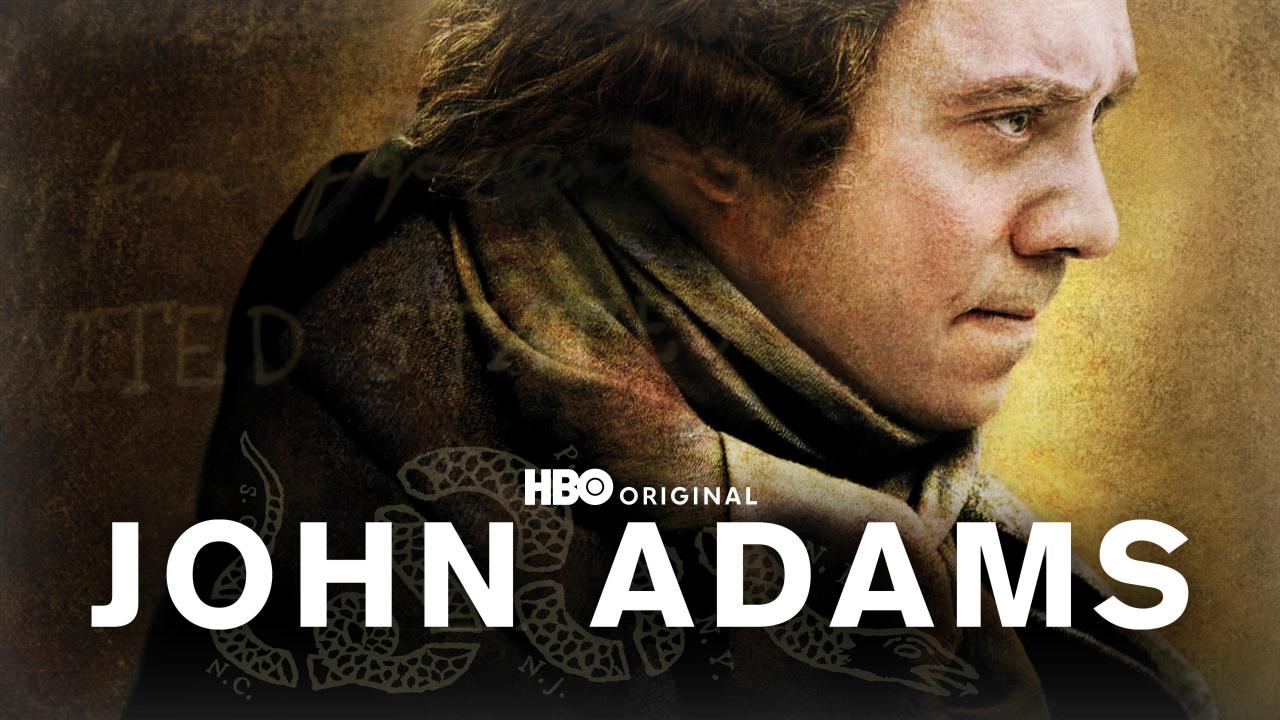
It is loud. It is muddy. It is surprisingly gross. Most historical dramas feel like they were filmed inside a sterilized museum gift shop, but the John Adams HBO miniseries feels like someone dropped a camera into a 1770s gutter. It smells of smallpox and damp wool.
Honestly, it’s a miracle this show exists.
Based on David McCullough’s massive biography, the seven-part epic didn't just win a record-breaking 13 Emmy Awards; it fundamentally changed how we visualize the founding of the United States. It stripped away the marble-statue dignity we usually associate with the Founding Fathers and replaced it with sweaty, neurotic, deeply flawed human beings. Paul Giamatti plays Adams not as a hero, but as a prickly, often annoying man who was desperately right about almost everything. It’s brilliant.
The John Adams HBO miniseries and the "ugly" revolution
Most people think of the Revolution as a series of oil paintings. You know the ones—men in powdered wigs standing around in pristine rooms. But director Tom Hooper and the crew behind the John Adams HBO miniseries went the opposite direction. They leaned into the filth.
Take the Boston Massacre scene.
It isn't a grand cinematic battle. It’s a chaotic, terrifying mess in the snow. You can almost feel the cold. When Adams defends the British soldiers in court afterward, he isn't doing it because he loves the King; he’s doing it because he’s obsessed with the law. That’s the core of his character. He’s stubborn. He’s vain. He’s "obnoxious and disliked," as the musical 1776 famously put it.
The show doesn't shy away from the physical cost of the era, either. One of the most harrowing sequences involves Abigail Adams (played with incredible steel by Laura Linney) and her children undergoing a crude, 18th-century smallpox inoculation. It involves actual pus from an infected patient being sliced into their arms. It is stomach-churning. Why include it? Because it reminds us that while Adams was in Philadelphia arguing about commas in the Declaration of Independence, his family was literally fighting for their lives in a world without modern medicine.
A cast that ruined historical drama for everyone else
If you’ve seen the John Adams HBO miniseries, you probably can’t picture these historical figures any other way. Paul Giamatti is the definitive Adams. He captures the man's intellectual brilliance and his crippling social insecurity in a way that feels incredibly modern. He’s the guy who does all the work but gets none of the credit, and he knows it.
Then there’s Stephen Dillane as Thomas Jefferson.
Dillane plays Jefferson as a quiet, enigmatic, almost ghostly figure. He stands in stark contrast to Giamatti’s loud, bumbling Adams. The chemistry between them is the heartbeat of the series. They are the "North and South" of the American soul—one a pessimistic realist, the other an idealistic dreamer. Their friendship, fall-out, and eventual reconciliation via letters is one of the most moving arcs in television history.
And we have to talk about David Morse as George Washington.
Washington is usually depicted as a god. Here, he’s a tired, aging soldier who looks like he’s carrying the weight of the entire world on his shoulders. He rarely speaks. When he does, people listen. Morse captures that "gravity" perfectly. He isn't a caricature; he’s a leader who is terrified that the whole experiment is going to fail the moment he steps away.
Why the politics feel so familiar (and frustrating)
Watching the John Adams HBO miniseries in 2026 is a weird experience. You start to realize that the petty bickering in the Continental Congress isn't all that different from what we see on the news today.
- They argued about money constantly.
- They couldn't agree on how much power the federal government should have.
- They were terrified of foreign influence.
- They kicked the can down the road on slavery, a moral failure that the show acknowledges with heavy, looming silence.
The second episode, "Independence," is basically a legal procedural. It’s just men in a hot room talking. Yet, it’s more tense than most action movies. The stakes are total. If they lose, they’re hanged. If they win, they have to figure out how to run a country, which turns out to be much harder than winning a war.
The series covers a massive amount of ground—from the streets of Boston to the opulent courts of France, the chilly canals of Holland, and finally to the unfinished, swampy mess of the early Washington D.C. Each location feels distinct. The French scenes are particularly striking; the decadence of the French aristocracy is framed as something alien and suffocating compared to Adams’ simple New England sensibilities.
The Abigail Adams factor
A lot of historical shows treat the wives as "the person waiting at home." Not here. Laura Linney’s Abigail is the moral and intellectual backbone of the story. She is Adams’ primary advisor. Without her, he would have likely self-destructed in a fit of rage or ego.
Their relationship is the soul of the show. It’s a marriage of equals, which was radical for the time and remains a highlight of the script. The scenes where they are apart—which happened for years at a time—are filled with the reading of their actual letters. It adds a layer of authenticity that you just don't get in scripted fiction.
Accuracy vs. Entertainment
Is it 100% accurate? Nothing is. Historians have pointed out that the timeline of the "Join or Die" flag is a bit wonky, and some of the political confrontations are condensed for drama. But in terms of vibe and character, it’s as close as we’ve ever gotten.
The show captures the specific tragedy of John Adams: he was the man between the giants. He wasn't the "father" of the country like Washington, and he wasn't the "author" like Jefferson. He was the guy who stayed late to finish the paperwork. The John Adams HBO miniseries finally gives him his due, not by making him a saint, but by showing us exactly how difficult he was to live with.
How to watch and what to look for
If you’re diving into the John Adams HBO miniseries for the first time, or if you're due for a rewatch, keep an eye on the camera work. Tom Hooper uses a lot of "Dutch angles" (tilted shots). Some people hate it. They find it distracting. But it’s intentional—it’s meant to make you feel as off-balance and stressed as Adams himself feels.
- Episode 1-2: Focus on the legal tension.
- Episode 3-4: Watch the contrast between the grime of the war and the glitter of France.
- Episode 5-7: The bittersweet reality of power and the loneliness of old age.
Actionable Insights for History Buffs
If you want to get the most out of the series, don't just binge it like a sitcom. It’s dense.
- Read the letters: After you finish an episode, look up the "Adams-Jefferson Letters." Most of the dialogue in the final episode is ripped directly from their real-life correspondence.
- Compare the portraits: Look at the Gilbert Stuart or John Trumbull portraits of these men. Then look at the actors. The costume design and makeup teams worked tirelessly to match the physical aging process documented in those paintings.
- Visit the sites: If you’re ever in Quincy, Massachusetts, visit Peacefield (the Old House). Seeing the actual library where Adams and Jefferson’s friendship was memorialized in books makes the final scenes of the series hit ten times harder.
The John Adams HBO miniseries isn't just "good for a history show." It’s an essential piece of television that reminds us that countries aren't born from destiny—they’re built by grumpy, brilliant, exhausted people who refused to give up.
To fully appreciate the scope of the production, check out the "Making of" featurettes usually found in the extras section of the streaming platform. They detail how they recreated 18th-century Philadelphia in Hungary and the lengths the actors went to for historical immersion. Knowing the logistical hurdles makes the final product even more impressive.