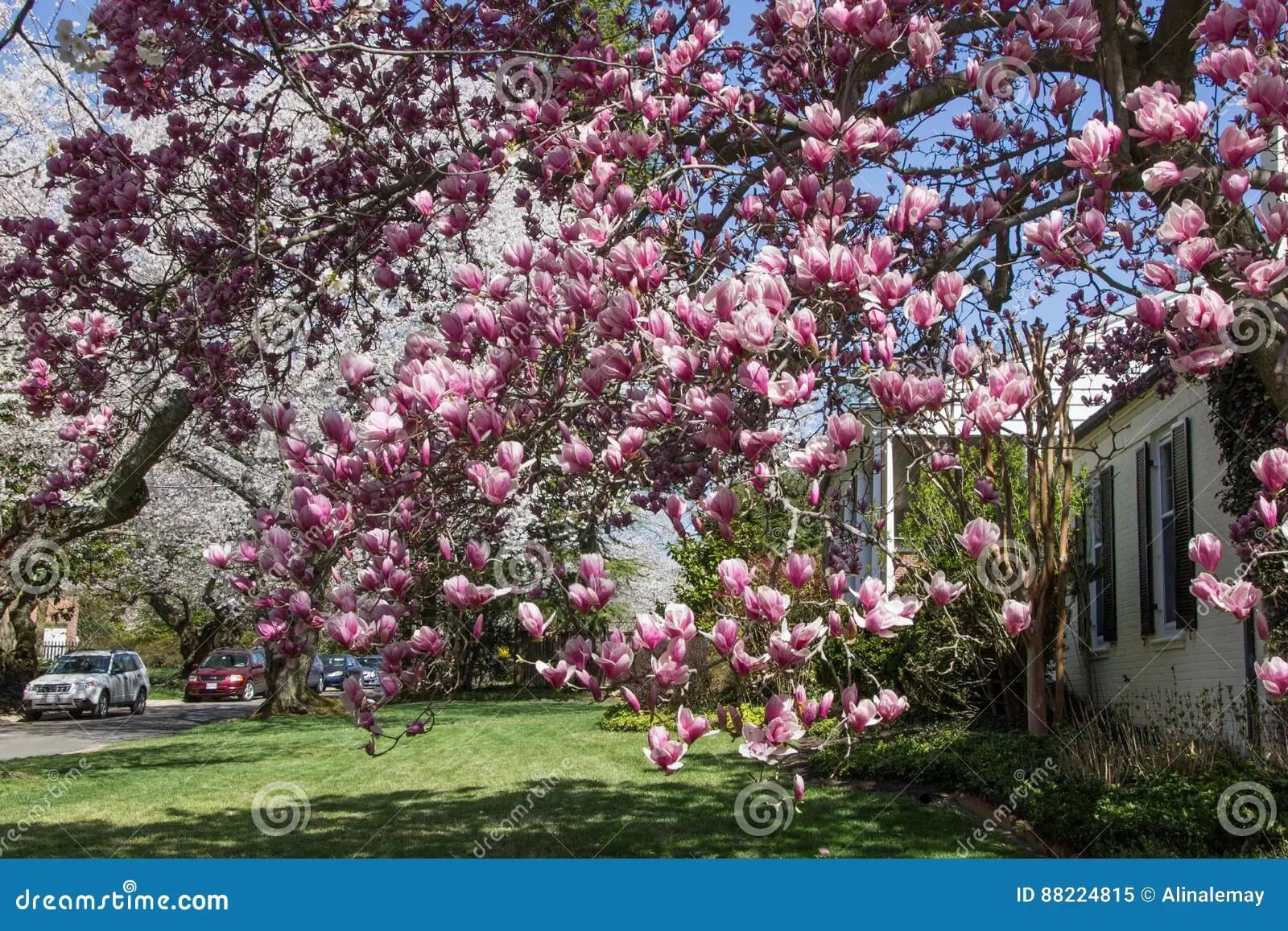
If you’ve ever tried to see the cherry blossoms at the Tidal Basin in D.C., you know the drill. It’s a nightmare. You’re fighting for an inch of sidewalk, dodging selfie sticks, and paying $20 for a lukewarm hot dog. It’s chaotic. But just a few miles away, tucked into a quiet pocket of Chevy Chase, Maryland, there’s this place called Kenwood. It’s different. Honestly, the Kenwood cherry blossom community feels like a fever dream because it’s basically a neighborhood where every single street is arched over by thousands of Yoshino trees. No monuments. No crowds of ten thousand people. Just pink petals and suburban quiet.
Most people stumble upon it by accident or through a hushed recommendation from a local. It isn't a park. It’s a living, breathing neighborhood where people actually mow their lawns and get their mail, all while living inside a botanical masterpiece.
The Kenwood Cherry Blossom Community Isn't Your Typical Tourist Trap
You won’t find a visitor center here. There are no official "blossom rangers" or gift shops selling plastic monuments. Kenwood is a private residential subdivision that happens to have the densest concentration of Yoshino cherry trees in the region. We’re talking about roughly 1,200 trees lining just a handful of streets like Kennedy Drive, Dorset Avenue, and Highland Drive.
Why are they even there? It wasn't some government project. Back in the late 1920s and early 30s, the developers—Kennedy-Chamberlin Development Company—wanted to sell houses. Simple as that. They realized that if they planted these Japanese Yoshino trees, the same ones the Mayor of Tokyo gifted to D.C. in 1912, they could create an "instant" luxury vibe. It worked. The trees grew, the houses sold, and now, nearly a century later, we have this massive canopy that turns the entire community into a pink tunnel every March or April.
It’s worth noting that these trees are old. Yoshinos typically have a lifespan of 50 to 70 years, but many in Kenwood have survived longer thanks to obsessive care from the local residents and the "Kenwood Garden Club." They actually have a dedicated tree committee. That’s how serious they are. When a tree dies, they don't just leave a gap; they replant a new one to ensure the continuity of the "tunnel" effect.
Timing the Bloom Without Losing Your Mind
Predicting the peak bloom is a bit like playing the stock market. You're at the mercy of the Maryland weather, which, as we know, is moody. Usually, the Kenwood cherry blossom community peaks about three to five days after the Tidal Basin. Why? Because the neighborhood is slightly further north and doesn't have the "urban heat island" effect or the temperature-regulating water of the Potomac River to speed things up.
If the National Park Service says the Tidal Basin is at peak, wait a few days. Then head to Kenwood.
- Check the "Capital Weather Gang" or the local Kenwood community blogs.
- Look for three consecutive days of 60-degree weather.
- If it rains or gets windy right at peak, it's over. The petals drop like snow and the "green" starts showing.
The Reality of Visiting (The "Don't Be That Person" Guide)
Let's be real: living in Kenwood during peak bloom must be a mix of pride and pure annoyance. Imagine trying to pull out of your driveway and there's a family of five having a full-blown photoshoot on your curb.
The Kenwood cherry blossom community is open to the public, but it's not a public park. The streets are public, but the yards are private. This is the biggest point of friction. Every year, the Montgomery County Police have to set up "Local Traffic Only" signs or "No Parking" zones on one side of the street to keep the ambulances and fire trucks from getting stuck in the gridlock.
If you're going, park at the Westbard Shopping Center or somewhere nearby and walk in. It’s a much better experience. You can hop on the Capital Crescent Trail, which runs right along the edge of the neighborhood. You get some exercise, you see the trees, and you don't get a parking ticket.
Why Yoshinos?
You might wonder why they didn't plant Kwanzan trees or Oaks. Yoshinos are the "celebrities" of the cherry world because they produce a single-petal white-to-pink flower that blooms before the leaves come out. This is key. Because there are no green leaves to distract you, the entire tree looks like a cloud. In Kenwood, because the houses are set back from the road, these "clouds" hang over the asphalt, creating a natural cathedral.
It’s actually a bit of a monoculture, which is risky. If a specific pest or disease hits Yoshinos, the whole neighborhood loses its identity. That's why the local horticulturalists have started looking at "Afterglow" or other hardy varieties that look similar but offer more biological diversity.
Little Known Details About Kenwood's History
The architecture in Kenwood is just as interesting as the trees. You'll see a mix of Tudors, Colonials, and French Provincials. These aren't cookie-cutter homes. Many were built by the same developers who did the trees, and they were designed to be grand.
During the mid-20th century, Kenwood became a hub for the D.C. elite—diplomats, politicians, and high-level lobbyists. The cherry blossoms were a status symbol. It was a way of saying, "I live in the most beautiful place in Maryland for two weeks a year."
Interestingly, the neighborhood has managed to keep its character despite the massive development in nearby Bethesda. While Bethesda grew up with skyscrapers and condos, Kenwood stayed low-slung and leafy. The trees are the armor that protects the neighborhood's aesthetic.
Comparison: Kenwood vs. The Tidal Basin
| Feature | Tidal Basin | Kenwood Community |
|---|---|---|
| Vibe | National Monument / Festival | Quiet Suburban / Residential |
| Crowds | Massive, shoulder-to-shoulder | Moderate, mostly walkers |
| Photo Ops | Water and Jefferson Memorial | Arched tree tunnels and gardens |
| Access | Metro (Smithsonian) | Walking/Biking from Bethesda |
| Food | Food trucks/Vendors | None (bring your own) |
The Logistics of a Perfect Visit
Honestly, go on a Tuesday morning at 8:00 AM. If you go on a Saturday afternoon, you're going to be frustrated. The light is better in the morning anyway—soft, golden light hitting the pink blossoms makes for much better photos than the harsh midday sun.
Bring water. There are no public fountains. And for the love of everything, don't climb the trees. These Yoshinos are brittle. The branches snap easily, and since many are quite old, a broken limb can lead to rot that eventually kills the whole tree. Residents will—and do—call people out for being disrespectful.
If you’re coming from D.C., take River Road. It’s a straight shot. If you’re coming from Virginia, take the Beltway to the River Road exit. But again, park outside the immediate residential zone. The walk in from the Capital Crescent Trail near the Little Falls Parkway intersection is gorgeous and sets the mood.
What Most People Get Wrong
People think the "Cherry Blossom Festival" covers Kenwood. It doesn't. The official National Cherry Blossom Festival is a D.C. thing. Kenwood is entirely independent. There are no parades here. No stage performances. No fireworks.
Another misconception is that the bloom lasts for weeks. It doesn't. From the moment the "puffy white" stage starts to the moment the petals fall, you usually have a window of 7 to 10 days. If a heavy rainstorm hits at day 4, the season is basically over. You have to be ready to move at a moment's notice.
Sustaining the Beauty
The maintenance of the Kenwood cherry blossom community is a massive financial undertaking. While the county handles basic road work, the "beautification" is largely on the homeowners. They pay extra for specialized arborists who understand the specific needs of Japanese cherries. These trees need pruning to maintain that "arch" over the road, otherwise, they’d just grow into power lines or block the street.
There’s also the issue of soil compaction. With thousands of people walking over the root zones every spring, the soil gets packed down, making it hard for the trees to "breathe" and absorb water. The community has had to implement mulching programs to protect the root systems of the oldest trees.
Actionable Steps for Your Visit
To get the most out of the Kenwood blossoms without the stress, follow this plan:
- Monitor the "Indicator Tree": Follow local Maryland gardening forums. There is usually one tree in the area that blooms first; once that happens, you have about five days.
- Ditch the Car: Use the Capital Crescent Trail. Bike in from Bethesda or walk in from the Bethesda Pool area.
- Respect the "Pink Line": Stay on the pavement or the public right-of-way. Avoid walking deep into people's lawns for "that perfect shot."
- Check the Wind Forecast: If the forecast calls for 20mph winds, go the day before. Yoshino petals are incredibly delicate and will blow off in a stiff breeze.
- Explore the Side Streets: Everyone flocks to Dorset Avenue because it’s the main entrance. Kennedy Drive and Brookside Drive are often just as pretty but half as crowded.
- Bring a Real Camera: While iPhones are great, the depth of field you get from a real lens makes the "tunnel" effect look even more dramatic.
- Visit at Dusk: If you can’t make the morning, the "blue hour" just after sunset makes the white blossoms glow in a way that feels almost supernatural.
The Kenwood cherry blossom community remains one of the best-kept secrets in the D.C. metro area, even if it's not much of a secret to locals anymore. It offers a moment of genuine peace and natural beauty that the high-traffic tourist areas just can't match. As long as visitors continue to respect the neighborhood and the health of these aging trees, this "pink city" will continue to be a Maryland staple for the next century.