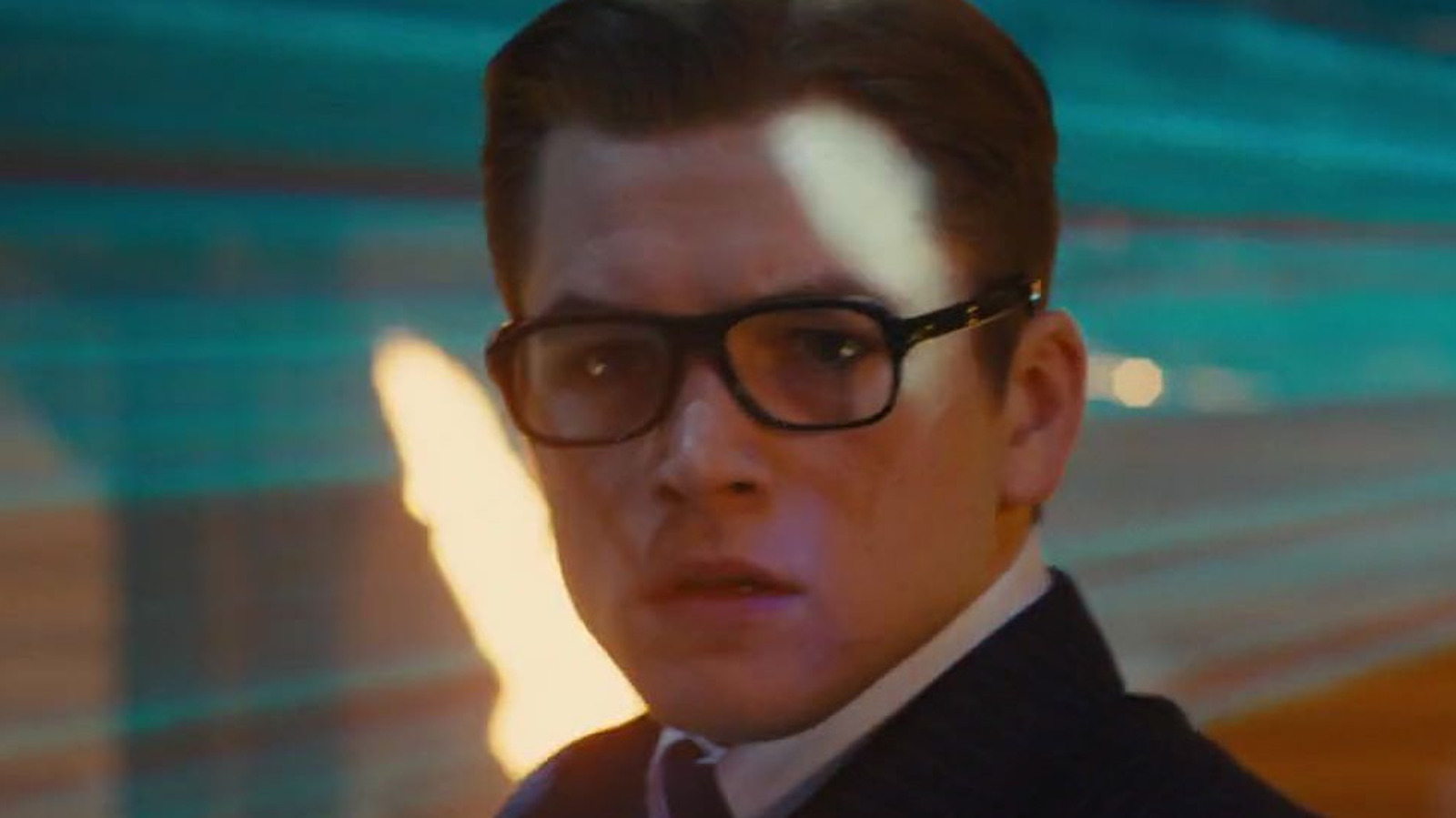
Honestly, it shouldn't have worked. By the time we get to the Kingsman The Secret Service ending, the movie has already pivoted from a "My Fair Lady" spy riff into a full-blown psychedelic fever dream. You've got Samuel L. Jackson wearing a neon tracksuit and a side-cocked hat while trying to murder the entire planet with free SIM cards. It’s absurd. Yet, somehow, director Matthew Vaughn managed to stick a landing that felt both incredibly satisfying and deeply controversial.
The finale isn't just a shootout. It’s a tonal explosion.
If you remember sitting in the theater back in 2014, the atmosphere changed the second those heads started popping. We need to talk about why that specific sequence—the "head explosion" symphony—remains a masterclass in subverting expectations. Most spy movies end with a gritty fistfight or a countdown on a digital bomb. Kingsman ended with Pomp and Circumstance and literal human fireworks.
The Valentine Plan and the SIM Card Chaos
Richmond Valentine’s plan was basically a dark take on environmentalism. He wasn't a "money and power" villain; he was a "save the planet by killing the virus (humans)" villain. It’s a classic Gaia hypothesis gone wrong. He gives out free SIM cards that emit a signal, triggering the neurological impulse for aggression in everyone. People start tearing each other apart. It's bleak.
But Vaughn refuses to let it be grim.
When Eggsy—played by a then-unknown Taron Egerton—breaks into the mountain bunker, the stakes are global. We see footage of world leaders and ordinary people losing their minds. Most movies would show this with shaky-cam and screaming. Instead, Kingsman gives us a frantic, colorful sprint through the base. It’s "The V-Day," and the clock is ticking.
Why the Head Explosions Changed Everything
Let’s be real. The most talked-about part of the Kingsman The Secret Service ending is the colorful mushroom clouds. When Merlin hacks the system, he doesn't just shut down the signal. He triggers the fail-safe chip implanted in the "elites" who sided with Valentine.
This is where the movie earns its R-rating in the most flamboyant way possible.
Instead of showing gore, Vaughn gives us a kaleidoscopic display of colors. Heads explode to the tune of Elgar's Pomp and Circumstance. It’s a middle finger to the establishment. Every politician, billionaire, and traitorous Kingsman (looking at you, Arthur) gets vaporized in a synchronized dance of neon smoke. It’s violent, sure, but it’s presented as a celebratory release. It’s the ultimate "eat the rich" moment before that phrase became a tired trope.
The sheer audacity of this scene is what helped the film gross over $400 million worldwide. It proved that audiences were tired of the "dark and gritty" Bond era. They wanted something that felt like a comic book come to life. Dave Gibbons, the artist of the original The Secret Service comic, has often spoken about how the film captured the "punk rock" spirit of his work while adding a layer of cinematic polish that the page couldn't quite replicate.
The Problematic Princess Tilde Joke
We can't discuss the Kingsman The Secret Service ending without addressing the elephant in the room: the Princess Tilde gag. After Eggsy saves the world, he visits the imprisoned Princess of Sweden. The resulting joke—involving a certain "back door" offer—split audiences down the middle.
Some saw it as a throwback to the chauvinistic tropes of 1960s Bond films. It was meant to be a parody of the "spy gets the girl" ending, dialed up to eleven. Others found it jarring and crude, a sharp left turn from the slick action that preceded it. Even Matthew Vaughn admitted in later interviews that the joke was intended to be "juvenile" as a way to contrast Eggsy's new gentleman status with his working-class roots. It’s a polarizing moment that still sparks debates on Reddit and film forums today. Does it ruin the movie? Probably not. Does it age well? That’s up for debate.
Eggsy’s Evolution and the Final Confrontation
The fight between Eggsy and Gazelle (Sofia Boutella) is arguably the technical peak of the finale. Gazelle, with her prosthetic blade legs, is one of the most visually striking henchwomen in cinema history. The choreography here is insane.
Eggsy uses his training, but he also uses his "street" smarts. He wins not by being a better fencer, but by using the hidden blade in his oxford shoe—poisoned, of course. This is the moment Eggsy truly becomes a Kingsman. He honors Harry Hart (Colin Firth) by using the very tools Harry taught him to master.
The death of Valentine is equally satisfying. There’s no long monologue. Valentine, who can't stand the sight of blood, is killed by a thrown prosthetic leg. It’s ironic, fast, and messy.
What This Ending Meant for the Franchise
The Kingsman The Secret Service ending did something very few origin stories do: it actually finished the origin. By the time the credits roll, Eggsy is no longer a kid from the council estate. He’s wearing the bespoke suit. He’s drinking the martini (stirred for ten seconds while glancing at an unopened bottle of vermouth).
It set a bar that the sequels, The Golden Circle and The King's Man, struggled to clear. The first film had the element of surprise. We didn't know the movie was going to be that "insane."
Key Takeaways from the Secret Service Finale
If you're looking to understand why this ending stuck the way it did, look at these specific choices:
- Music as a Narrative Tool: Using classical music for a massacre turned a horror scene into a comedy set-piece.
- Color Palette: The use of bright, saturated colors during the bunker raid separated it from the drab, grey aesthetic of other 2010s action films.
- Subverting the "Safe" Ending: Most movies wouldn't dare kill off dozens of world leaders in a comedy beat.
- The Harry Hart Legacy: Even though Harry "died" earlier (or so we thought), his presence is felt in every gadget Eggsy uses in the final twenty minutes.
Actionable Insights for Your Next Rewatch
To truly appreciate what Vaughn and co-writer Jane Goldman did with the Kingsman The Secret Service ending, keep an eye on the background details during the SIM card riot. You can see the choreography of the "regular" people in the streets mirroring the chaotic energy of the church fight from earlier in the film.
Also, pay attention to the framing of the shots when Eggsy returns to the pub in the very last scene. It’s a shot-for-shot mirror of Harry Hart’s introduction. "Manners maketh man." When Eggsy locks that door and swings the umbrella, the transformation is complete.
If you want to dive deeper into the technical side, look up the "making of" featurettes regarding the head explosion visual effects. The team used a mix of fluid simulations and practical lighting to get that specific "confetti" look, ensuring it didn't look like a standard digital explosion. It’s that attention to detail that keeps the movie relevant a decade later.
Watch the film again with the sound muted during the finale—the visual storytelling alone tells you everything you need to know about Eggsy’s journey from a lost kid to a lethal gentleman. It’s a masterclass in pacing that hasn't been topped in the spy genre since.
Next Steps for Kingsman Fans:
Explore the original 2012 comic miniseries by Mark Millar and Dave Gibbons. You'll find that while the movie follows the basic "spy school" premise, the ending in the book is significantly different, involving a massive skiing chase and a much more grounded (if you can call it that) resolution to the satellite plot. Comparing the two provides a fascinating look at how a director's vision can completely reshape a story's DNA.