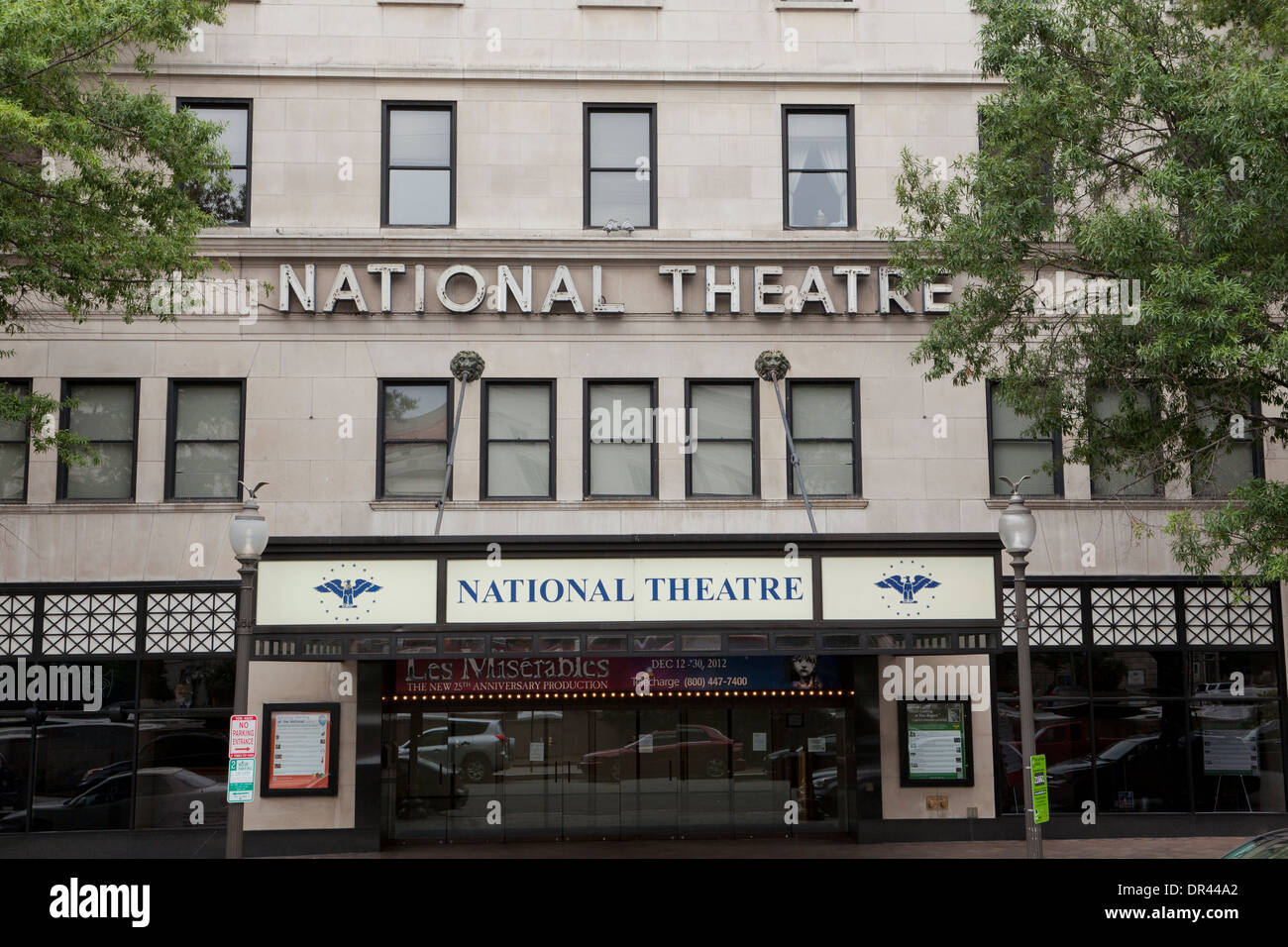
If you walk down Pennsylvania Avenue, just a few blocks from the White House, you'll see a building that looks a bit more corporate than you’d expect for a legendary playhouse. That’s the National Theatre Washington DC. It doesn't have the soaring white marble of the Kennedy Center or the gritty, repurposed industrial feel of some of the newer spots at The Wharf. But honestly? It has more ghosts and more history than almost any other stage in the country. Since 1835, this place has been the "Theatre of the Presidents." Every sitting president since Andrew Jackson has attended a performance here. Imagine that for a second. While the country was wrestling with the Civil War, Reconstruction, and two World Wars, actors were on this specific plot of land trying to make people laugh or cry. It’s wild.
People often get it confused with the Kennedy Center, but they’re totally different vibes. The National is older. Much older. It’s actually been destroyed by fire five times. Each time, it just... came back. It’s the ultimate survivor in a city that usually prefers to tear things down and build luxury condos.
The Weird History of the National Theatre Washington DC
Most folks think of theater history as a dry list of dates. Not here. The National Theatre Washington DC has seen things that sound like they're out of a movie. Take the night of April 14, 1865. While Abraham Lincoln was being assassinated at Ford’s Theatre, his young son, Tad, was actually watching a performance of Aladdin and the Wonderful Lamp right here at the National. When the news broke, the manager had to announce it from the stage. You can only imagine the chaos.
It’s also played a massive role in the civil rights movement. For a long time, like much of DC, the theater was segregated. But in the late 1940s, Actors' Equity stood their ground. They basically told the management: "Either you integrate the audience, or we stop performing here." The theater actually shut down for a few years and operated as a movie house rather than give in. Thankfully, by 1952, it reopened as an integrated live theater. That's the kind of baggage and triumph this building holds. It’s not just a place for "show tunes." It’s a place where the social fabric of Washington was actually tested.
The current structure isn't the 1835 original—physics and fire didn't allow for that—but the 1920s-era interior is stunning. It’s got that old-school, "New York Broadway" feel. Tight seating, gold leaf everywhere, and a sense of intimacy that you just don't get in those massive 2,000-seat modern halls.
What it’s Like Seeing a Show Today
Walking in feels like stepping back. The lobby is narrow. It gets crowded. You’re rubbing elbows with lobbyists in suits and tourists in zip-up hoodies. It’s a strange, very "DC" mix. But once you’re in your seat, the acoustics are incredible. Because the theater is vertically stacked, even if you’re in the balcony, you feel like you’re right on top of the performers.
The National specializes in "Broadway at the National." This is where the big touring hits land. We're talking Beetlejuice, Six, Tina, and Mean Girls. Often, shows will do their "pre-Broadway" tryouts here. That’s a big deal. Producers use the DC crowd to see if a joke lands or if a song needs to be cut before they take the risk of opening in Manhattan. You might be watching a scene that gets deleted two weeks later. It's like being part of a live focus group for high-stakes art.
The Logistics of the Visit
Parking is a nightmare. Truly. If you try to park on the street, you’re going to spend forty minutes circling the block only to realize you’re in a "No Parking After 6:30 PM" zone and your car will be towed by the time the curtain falls. Just don't do it. Use the Metro. Federal Triangle or Metro Center are both a short walk away.
If you're hungry, the immediate area is a bit of a "food desert" for quick, high-quality bites late at night, but Old Ebbitt Grill is right around the corner. It's the oldest saloon in DC. Pro tip: if you’re going there after a show, make a reservation way in advance or prepare to stand at the bar for an hour.
Why it Matters More Than Ever
In an era where we can stream everything on a 4K screen from our couches, why do people still flock to the National Theatre Washington DC? It’s the "liveness" of it. There is no "undo" button. If an actor trips, or hits a soaring high note that shakes the chandeliers, you’re experiencing a one-time event.
Also, the National Theatre Corporation (the non-profit side) does a lot of cool stuff that people ignore. They have "Saturday Morning Live" for kids and "Community Stage" programs. They’re trying to make sure it’s not just a playground for people who can afford $150 tickets.
How to Actually Get Cheap Tickets
Look, theater is expensive. But there are ways to beat the system at the National.
- The Lottery: Most big shows have a digital lottery. You enter online, and if you win, you get tickets for like $30 or $40. It’s a gamble, but it works.
- Student/Senior Discounts: They exist, but they aren't always advertised on the main page. You usually have to call the box office or show up in person with an ID.
- The Balcony is Fine: Honestly, at the National, the balcony isn't a "nosebleed" section. Because the theater is compact, the view is actually quite good. Avoid the extreme sides if you can, though, or you'll be looking at the side of a speaker stack.
- The Newsletter: It sounds boring, but they send out "no-fee" Wednesday codes or early bird specials.
Realities of the Experience
Don't expect the glitz of the Lincoln Center. The bathrooms are small. The lines at intermission are long. The legroom? If you're over six feet tall, your knees are going to be touching the seat in front of you. That’s just the reality of 1920s architecture. People were smaller then, I guess.
But when the lights go down and the orchestra starts—usually tucked into a tiny pit right in front of the front row—all that stuff fades away. There’s a specific smell to the National. It’s a mix of old wood, floor wax, and expensive perfume. It smells like "a night out."
Actionable Steps for Your Visit
If you’re planning to go, do these things to make it not suck:
- Arrive 45 minutes early. Security is tight because of the location (near the White House). You will go through a metal detector.
- Check the bag policy. They are strict. If you bring a giant backpack from work, you might have to check it, and that’s a hassle.
- Skip the drink line. Most shows let you pre-order your intermission drink. Do it. You’ll feel like a genius when you walk past 50 people to grab your plastic cup of Chardonnay that’s already waiting for you.
- Explore the "President’s Gallery." There’s some cool memorabilia in the hallways that chronicles the various presidents who have visited. It’s worth the five-minute stroll.
- Wear what you want. People ask "what’s the dress code?" Honestly, in DC, it’s everything from ballgowns to cargo shorts. Just wear what makes you feel good.
The National Theatre Washington DC isn't just a building. It's a weird, resilient, slightly cramped, incredibly beautiful piece of American history. It has survived fires, civil unrest, and the rise of Netflix. Go see a show there. Not because it’s the "prestigious" thing to do, but because there’s nothing quite like hearing a live audience gasp at the same time in a room that’s been hosting those same gasps for nearly 200 years.