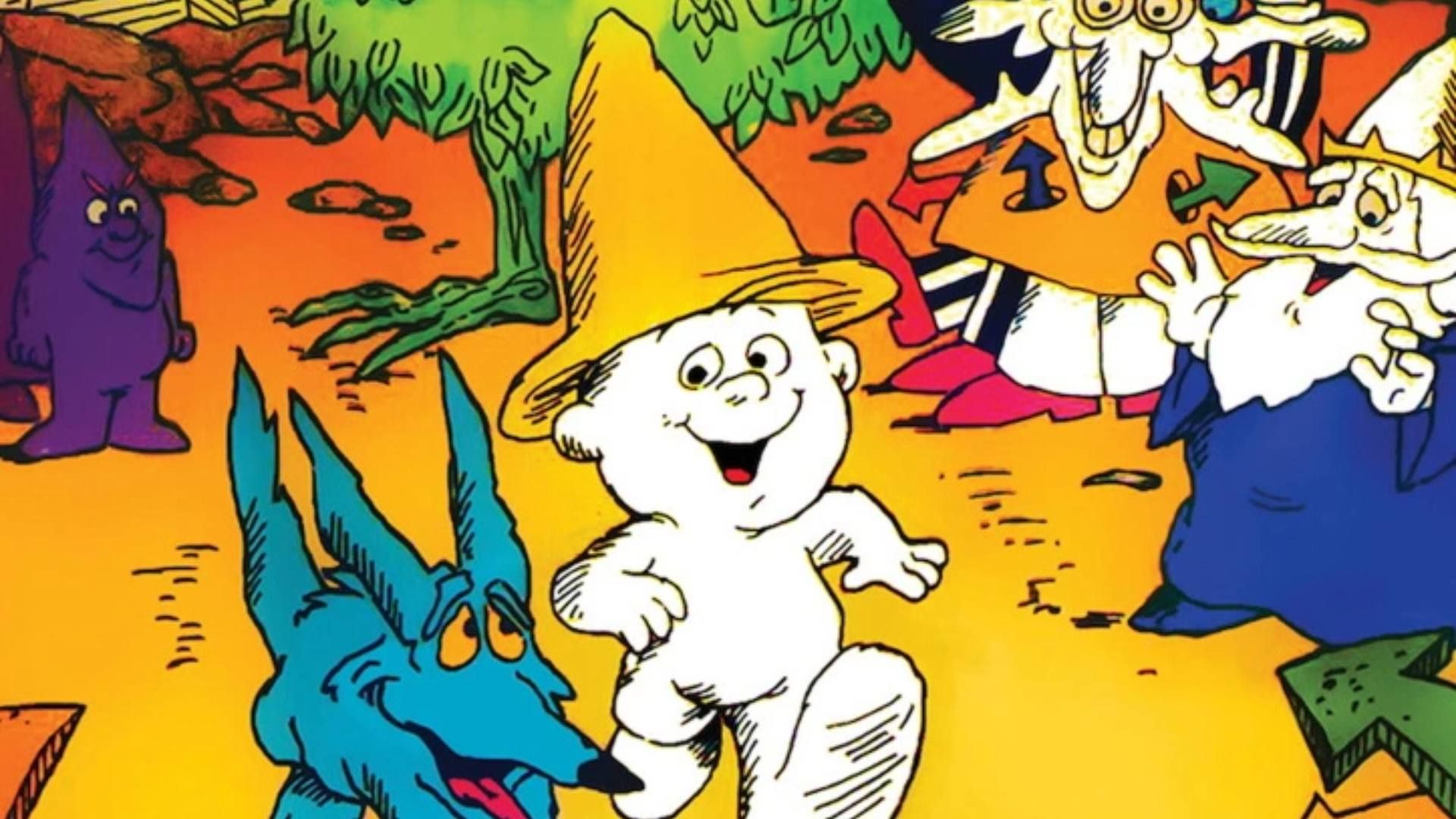
If you grew up in the seventies or had a parent who obsessed over acid-folk records, you’ve probably seen a round-headed kid named Oblio wandering through a jagged, psychedelic landscape. Most people just call it the "pointed head movie." But The Point movie 1971 was actually a massive cultural pivot point. It was the first-ever animated feature film created specifically for American television. Think about that for a second. Before Pixar, before the Disney Renaissance, and long before Netflix originals, Harry Nilsson basically convinced ABC to air a 74-minute parable about a kid being banished for having a dull skull.
It’s weird. It’s trippy. Honestly, it’s a little heartbreaking.
The film follows Oblio, the only "round" person in the Land of Point, where everything—the buildings, the trees, the people—is required by law to have a point. It’s a classic "outsider" story, but it avoids the usual clichés. It doesn’t feel like a corporate board room trying to teach kids about diversity. It feels like a weird, late-night conversation with a musician who’s seen too much.
The Nilsson Connection and the Birth of a Cult Classic
Harry Nilsson was at the absolute height of his powers in 1970. He was hanging out with John Lennon, winning Grammys, and apparently, doing a lot of acid. Legend has it—and Nilsson confirmed this in several interviews—that the idea for the movie hit him while he was tripping in a forest and realized that all the trees and bushes came to a "point." He wasn't just talking about geometry. He was talking about purpose.
Nilsson wrote the story and all the music. If you remove the songs, the movie still works, but it loses its soul. "Me and My Arrow" became a legitimate hit for a reason. It captures that specific, lonely, but comfortable feeling of having a dog as your only real friend.
The production was a total scramble. Fred Wolf, the director who would later work on the Teenage Mutant Ninja Turtles series, had to figure out how to make a feature film on a TV budget. They used a "squiggle-vision" style long before Dr. Katz ever did. The backgrounds look like watercolor paintings left out in the rain. It’s messy. It’s beautiful. It’s human.
The Mystery of the Narrator (Who Did You Hear?)
If you talk to someone about The Point movie 1971, you might get into an argument about who narrated it. You're both probably right. This is one of the most confusing parts of the film's history because the narration has been re-recorded four different times.
- Dustin Hoffman: This was the original voice for the 1971 ABC telecast. Because of licensing issues, his voice was only used for that initial broadcast.
- Alan Barzman: When the movie aired again later that year, Barzman took over.
- Alan Thicke: Yes, the Growing Pains dad. He narrated a version in the mid-80s.
- Ringo Starr: This is the version most people know. Ringo recorded the narration for the home video release and the 1985 television airings.
Ringo’s voice fits the vibe perfectly. He sounds like a tired, kind father telling a bedtime story to his son. It grounds the surrealism. When you're watching a "Pointed Man" argue with himself in the middle of a forest, you need a Liverpudlian accent to keep you tethered to reality.
Why the Land of Point Matters Today
The Land of Point isn't just a fantasy world. It’s a bureaucracy. The Count, the main antagonist, isn't some evil sorcerer. He’s just a jerk who cares about the letter of the law. He uses the law to banish Oblio because Oblio's existence challenges the status quo.
"Everything has a point," the King says.
Oblio’s journey into the Pointless Forest is where the movie gets deep. He meets creatures that make no sense. The Rock Man. The Pointed Man. The Bee. He realizes that "pointless" doesn't mean "without value." It’s a heavy concept for a cartoon. Most kids' movies today are loud and fast. The Point is slow. It lets you sit with the silence. It lets you feel the confusion of being a kid in a world that demands you look and act a certain way.
It’s about the difference between having a physical point and having a point to your life.
The Animation Style That Broke the Rules
In 1971, animation was mostly Hanna-Barbera. It was stiff. It was recycled. Fred Wolf and his team at Murakami-Wolf Films did something different. They used "pencil tests" and cel animation in a way that felt organic.
The Pointless Forest is a masterpiece of 70s psychedelic art. It’s not "clean." There are lines that bleed over, colors that shift, and character designs that feel like they were pulled straight from a sketchbook. This wasn't because they were lazy. It was an aesthetic choice to match Nilsson's music.
If you look closely at the scene where Oblio meets the Rock Man, the movement is fluid but heavy. It’s got weight. They weren't just making a cartoon; they were making an experimental film for the masses.
The Legacy of the Soundtrack
You can’t talk about this movie without talking about the album. The Point! (the album) actually came out before the movie. It reached the top 30 on the Billboard 200.
- "Everything's Got 'Em"
- "Think About Your Troubles"
- "Are You Sleeping?"
- "Life Line"
These aren't just kids' songs. "Think About Your Troubles" is a legitimately complex song about the water cycle and how your tears eventually end up in the tea of a "giant who is drinking from a tea cup." It’s morbidly beautiful.
What Most People Get Wrong About the Ending
People often misremember the ending as Oblio getting a pointed head. That’s not quite it.
He returns to the Land of Point, and the Count tries to have him arrested again. But when Oblio's hood is removed, everyone sees he's still round. However, the revelation is that the Land of Point itself is changing. The points are disappearing. The King realizes that Oblio has a point after all—it’s just not a physical one.
It’s a meta-commentary on perception. The movie doesn't want you to change to fit the world. It wants you to change the way the world sees you. Or better yet, change how the world sees itself.
How to Watch It Now
Finding a high-quality version of The Point movie 1971 is surprisingly difficult. For years, it was stuck in a rights limbo. There was a DVD release in 2004, but it was grainy.
In 2020, MVD Rewind Collection released a "Ultimate Edition" on Blu-ray. They did a 2K restoration from a 16mm film print. If you’ve only ever seen the blurry versions on YouTube, this is a revelation. You can actually see the texture of the paint on the cells. It includes the Ringo Starr narration, which is the gold standard for most fans.
Actionable Ways to Experience The Point
- Listen to the album first: Before watching the movie, put on the Harry Nilsson album The Point! with headphones. The narration on the album (by Nilsson himself) is different from the movie and gives you a much better sense of the story's rhythm.
- Track down the Ringo version: If you're a first-timer, seek out the 1985/Home Video version. The Dustin Hoffman version is a neat historical artifact, but Ringo's warmth is what makes the film stick.
- Look for the "Point" in your own life: The movie's core message is about intrinsic value. Take a look at a project or a hobby you've been told is "pointless." Does it have a point to you? That's the only point that matters.
- Introduce it to a kid: This isn't just for nostalgic adults. Kids today are under immense pressure to "have a point" (grades, sports, social media). Showing them a movie where the hero is literally celebrated for being "pointless" is a great conversation starter.
There isn't a "conclusion" here because the movie is an ongoing experience. It’s a piece of art that changes every time you watch it. In 1971, it was a stoner's fable. Today, it’s a necessary reminder that we don't all have to be sharp to be important.