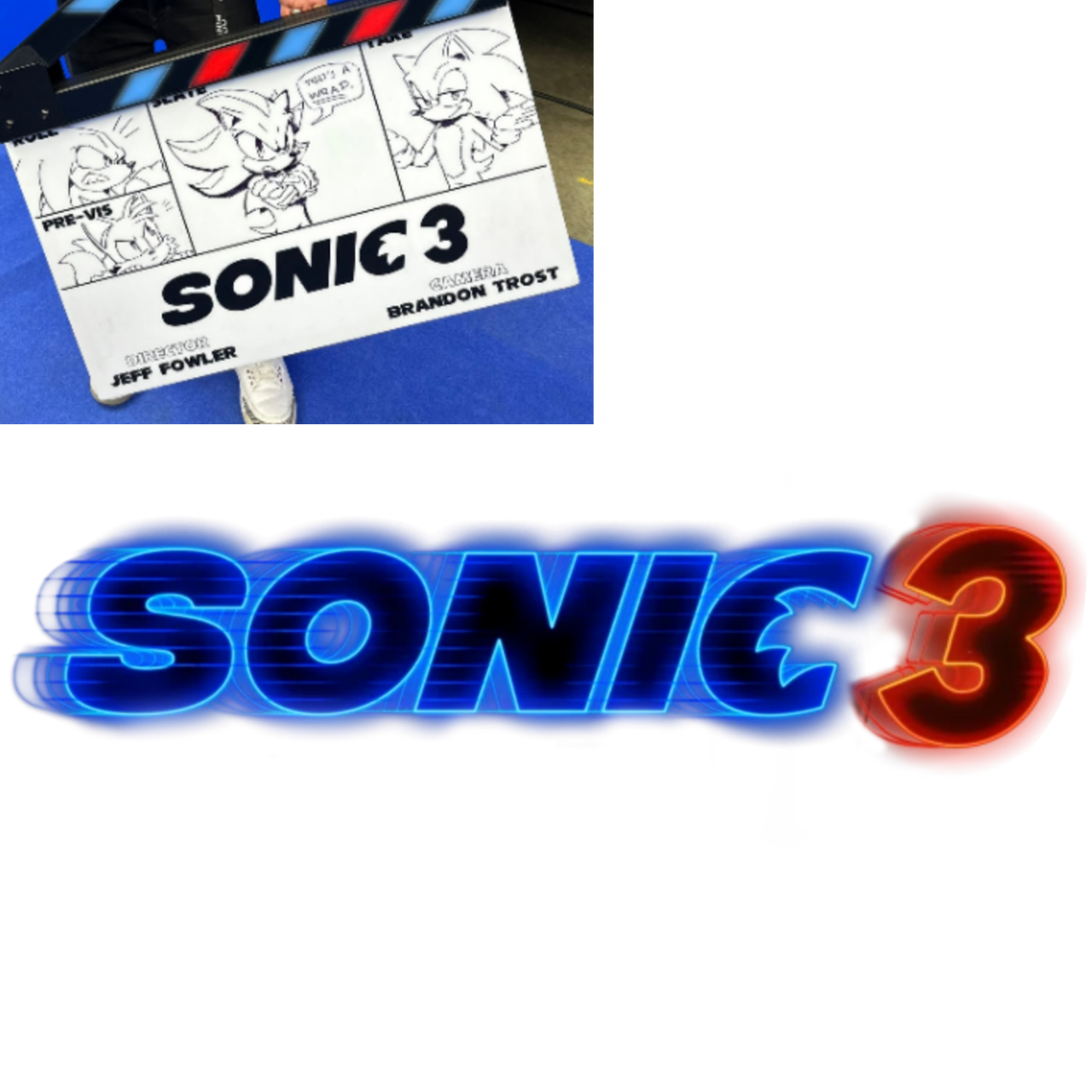
It finally happened. After months of grainy leaked photos from film sets and vague tweets from producers, Paramount finally dropped the official Sonic Movie 3 logo, and honestly, it’s exactly what the fans needed to see. It isn’t just a number "3" slapped onto the old branding. Not even close. If you look at the colors, the textures, and the specific way that "3" is styled, it tells you everything you need to know about where this trilogy is heading. It’s dark. It’s moody. It screams Shadow the Hedgehog.
Blue and red. That’s the core of it. We’ve moved past the simple, bright aesthetic of the first film where everything felt like a standard "fish out of water" comedy. This new logo leans heavily into the duality of Sonic and his new rival. People are losing their minds because this specific design choice directly references Sonic Adventure 2, the game that introduced Shadow back in 2001. Paramount isn't hiding their influences anymore. They know their audience.
The Shadow Effect: Breaking Down the Design
The most striking thing about the Sonic Movie 3 logo is the color split. You have the classic Sonic blue on one side and a deep, aggressive crimson on the other. This isn't just a random creative choice made by a graphic designer in a vacuum. It’s a visual shorthand for the "Live and Learn" era of the franchise. For those who didn't grow up with a Dreamcast or a GameCube, that red represents Project Shadow, the "Ultimate Lifeform" created by Gerald Robotnik.
Look at the texture on the number three. It isn't smooth. It has these metallic, almost weathered edges that suggest something more industrial and perhaps more tragic than the previous films. This isn't the lighthearted romp of the first movie where Sonic was just looking for a friend to play baseball with. The logo suggests stakes. Real ones.
Interestingly, the font choice for the "3" mirrors the sharp, angular aesthetic seen in the original Sonic Adventure 2 title card. It’s a direct callback. Fans noticed this within seconds of the teaser dropping on social media. It’s a way of signaling to the hardcore fanbase: "Yes, we read the lore. We get it."
Why the Colors Matter More Than You Think
In marketing, color theory is king. Sonic is blue—calm, fast, heroic. Shadow is black and red—chaos, intensity, and trauma. By blending these into the Sonic Movie 3 logo, Paramount is effectively promising a clash of ideologies, not just a physical fight.
Usually, movie logos for sequels just add a digit. Think Iron Man 2 or John Wick 4. But the Sonic team is treating these logos like character reveals. When the second movie's logo added Tails' twin tails to the number "2," it was a cute nod. This time, the "3" feels heavy. It feels like a threat.
Drawing From the Source Material
To understand why this logo is a big deal, you have to look at the history of SEGA’s branding. Throughout the early 2000s, Sonic Team experimented with darker themes. The Sonic Movie 3 logo seems to be pulling directly from that "Dark Era" energy but polishing it for a modern cinematic audience.
- Sonic Adventure 2 (2001): The primary inspiration. The split blue/red motif started here.
- Shadow the Hedgehog (2005): While a divisive game, it solidified the red-on-black aesthetic that the movie logo leans into.
- Sonic Generations: The way they handle "Legacy" logos influenced how Paramount approaches these reveals.
Director Jeff Fowler has been very vocal about his love for the source material. He started his career as an animator on the Shadow the Hedgehog game's opening cinematic. Think about that for a second. The guy directing the movie literally helped create the cinematic language of Shadow over twenty years ago. When you see the Sonic Movie 3 logo, you're seeing Fowler come full circle. It’s a passion project disguised as a blockbuster.
The Keanu Reeves Factor
We can't talk about the logo without talking about the voice behind the red streaks. Keanu Reeves voicing Shadow is the kind of casting that feels like a fever dream. The logo’s darker, more mature tone fits Keanu’s "John Wick" energy perfectly. You wouldn't use this logo if you were casting a high-pitched, goofy actor. You use this logo when you have an icon playing a brooding anti-hero.
It's about synergy. The logo looks like something Keanu Reeves would have on a t-shirt. It’s gritty. It’s cool. It moves the franchise away from being "just for kids" and into that "all ages" sweet spot where Spider-Man: Into the Spider-Verse lives.
Marketing Genius or Just Fan Service?
Some skeptics might say it’s just a logo. Who cares, right? Well, in the age of "the algorithm," the Sonic Movie 3 logo is a masterclass in engagement.
Paramount released the logo reveal video with a snippet of "Live and Learn" by Crush 40 playing in the background. That song is the anthem of the Sonic fandom. By pairing the visual of the logo with that specific audio cue, they guaranteed that the video would go viral. It wasn't just a graphic; it was a sensory trigger for millions of people who spent their childhoods trying to get an 'A' rank on the Final Rush stage.
The logo also serves a practical purpose. It distinguishes the film from the Knuckles spin-off series on Paramount+. While the Knuckles branding was tribal and orange-heavy, the Sonic Movie 3 logo is tech-focused and sleek. It establishes a hierarchy. This is the "Main Event."
What the Logo Doesn't Show
Funny enough, what's missing is just as important. There’s no hint of Amy Rose or Rogue the Bat in the logo design. Fans have been scouring every pixel of the Sonic Movie 3 logo looking for pink or pinkish-purple accents that might hint at Amy's arrival. So far? Nothing.
This suggests the movie is going to be laser-focused on the Sonic vs. Shadow dynamic. It’s a duel. The logo's symmetry reinforces that. It’s a 1v1 battle for the fate of the planet, or at least for the legacy of the Robotnik family.
The Evolution of Sonic's Cinema Branding
If you line up all three logos, you see a clear evolution.
- Sonic 1: Simple, blue, electric. It was about speed.
- Sonic 2: Added yellow/orange. It was about partnership and the "duo" of Sonic and Tails.
- Sonic 3: Red and Blue. It's about conflict and reflection.
The Sonic Movie 3 logo represents the "Empire Strikes Back" phase of this journey. It’s the part where things get complicated. Shadow isn't a villain in the traditional sense like Dr. Eggman. He’s a tragic figure. The logo reflects that complexity. It’s not "Evil Sonic," it’s Shadow. There’s a difference, and the design team clearly understood the assignment.
Honestly, the hype is real. You don't get this much discussion over a number unless the brand has earned it. SEGA and Paramount have spent five years rebuilding Sonic's reputation after the "Ugly Sonic" disaster of 2019. That original disaster feels like a lifetime ago now. The sleekness of the current branding is a testament to how far they've come.
Actionable Insights for Fans and Collectors
If you're following the rollout of the film, the logo is just the beginning. Here is how you can actually use this information as the release date approaches:
- Watch the Merch: The specific red gradient in the Sonic Movie 3 logo is the exact pantone you'll see on the upcoming Jakks Pacific figures. If the red looks "off" on a toy, it’s probably a bootleg.
- Soundtrack Clues: Keep an eye on Johnny Gioeli (the lead singer of Crush 40). He’s been teasing involvement. The logo’s vibe confirms the movie will likely feature high-energy rock rather than the pop-heavy tracks of the first film.
- Trailer Teasers: Usually, the first full trailer drops about 4–5 months after the logo reveal. Based on the timing of this logo's debut, expect a major trailer during a big sporting event or a major holiday window.
- The Adventure Connection: If you want to know the plot, play Sonic Adventure 2. The logo confirms they are sticking close to the "Bio-Lizard" and "Space Colony ARK" storyline.
The Sonic Movie 3 logo is a promise. It’s a promise of a darker story, a faster rival, and a deeper dive into the lore that made Sonic a household name in the 90s and 2000s. It’s a bridge between the old-school gamers and the new generation of kids who only know Sonic from the movies. It’s rare to see a piece of graphic design do that much heavy lifting, but here we are. The blue blur is back, but this time, he’s sharing the spotlight with a shadow.